
Ingredients
The dough
- 500 gplain flour
- 200 gbutter, softened
- or 200 g lard
- 4egg yolks
- 1 tablespoonanise seeds
- toasted and lightly crushed
- 1 teaspoonbaking powder
- half a teaspoon salt
- about 100 ml anise-infused water
- or 100 ml water
- plus 1 tablespoon anisette
The syrup
- 500 gchancaca
- or panela, or dark brown sugar
- 500 mlwater
- 1whole orange, quartered
- 1apple, quartered
- 1quince, quartered, if available
- 1pineapple skin, washed
- optional
- 2 stickscinnamon
- 6whole cloves
- a few fig leaves, if available
- a strip of lime peel
To decorate
- coloured sugar sprinkles
- grageas, or hundreds and thousands
- in several colours
Equipment
- a large baking tray
- a rolling pin
- a wide deep dish to assemble in
- a sieve, for the syrup
- a sharp knife
Directions
- Toast the anise seeds briefly in a dry pan. Toast until they smell strongly aromatic. Crush them lightly in a mortar. Do not grind them to a powder. Rub the butter into the flour by hand. Work quickly with cool fingertips.
- Rub until it looks like coarse breadcrumbs. Add the baking powder, salt and anise seeds. Make a well and add the egg yolks. Add the anise water gradually. Mix with a knife rather than your hands. Stop as soon as it comes together.
- Wrap it and chill it for thirty minutes. Take pieces of dough and roll them by hand. Roll each into a rope about a centimetre thick. Cut them into lengths of about fifteen centimetres. Keep them all roughly the same size. Lay them on lined baking trays. Leave a little space between them. Heat the oven to one hundred and eighty degrees.
- Bake for about twenty to twenty-five minutes. They should be pale golden and firm. Cool them completely on a rack. Put the water in a large heavy pan. Add the quartered orange, apple and quince.
- Add the washed pineapple skin if you have it. Add the cinnamon, cloves and lime peel. Add fig leaves if you can get them. Bring it to a boil and simmer it. Simmer for about thirty minutes. The fruit should be soft and the liquid fragrant.
- Press the fruit gently to release the liquid. Discard the fruit and the spices. Return the strained liquid to the pan. Break the block up before adding it. Chop them carefully with a heavy knife.
- Heat it gently until it dissolves. This takes twenty to thirty minutes. Drop a little of the syrup in. It should form a soft ball you can lift. Cool it for a full twenty minutes. Keep children well away from the pan. Work while the syrup is still hot and pourable.
- Lay a layer of sticks in a wide dish. Lay them all in the same direction. Pack them closely side by side. Pour the syrup over to coat them. Turn it ninety degrees to the layer below. Pour syrup over that layer as well. Continue for three or four layers. Finish with a generous pour of syrup on top. Scatter them generously over the whole surface.
- Leave it at room temperature for several hours. Overnight is better if you can wait. Use a large sharp knife for cutting. Press down firmly in one motion. It keeps a week in an airtight tin.
Technique
- The dough contains no sugar at all. All the sweetness comes from the syrup, and the plain dry sticks are what stop the finished sweet being sickly. That contrast is deliberate.
- The syrup must reach soft ball stage — a ball in cold water that holds its shape but stays pliable, around 115 degrees. Too thin and the sticks turn to mush; too thick and it sets like rock. A thermometer makes this much easier.
- Bake the sticks until genuinely dry and biscuit-like. Underbaked sticks go soggy under the syrup and the whole thing collapses.
- Stack each layer at ninety degrees to the one below. That crosswise lattice is what holds the assembled turrón together.
- Boiling sugar syrup burns worse than boiling water because it is hotter and it sticks. Never taste from the pan or lean over it; cool a splash under running water for a full twenty minutes.
- Do not refrigerate it while setting or afterwards. Cold makes the syrup hard and brittle; it needs several hours at room temperature, ideally overnight.
- The tradition credits Josefa Marmanillo, an enslaved woman from Cañete, who is said to have recovered the use of her paralysed arms after praying at the Lord of Miracles and to have made this sweet in thanks. The atlas records that as tradition — it has found no contemporary documentation — and records it with respect, because it names an enslaved woman as a creator where most such stories name nobody at all.
- The Señor de los Milagros image was painted in the seventeenth century, by tradition by an enslaved Angolan man, and survived the 1655 Lima earthquake that destroyed the wall around it. The October procession it inspired is one of the largest in the Americas and is deeply tied to Afro-Peruvian communities.
- Fig leaves in the syrup are traditional and give a faint coconut-like note. If you cannot get them, the syrup still works.
Substitutions
- Panela, piloncillo or dark muscovado replace chancaca; all are unrefined whole cane sugar under different names.
- Lard replaces butter in the dough and is the more traditional fat, giving a shorter stick.
- Anisette or any anise liqueur replaces some of the water and strengthens the flavour.
- Quince and fig leaves are traditional but often unavailable; apple, orange and pineapple skin alone make a good syrup.
- Hundreds and thousands replace Peruvian grageas directly.
- Ground anise replaces toasted whole seeds, though whole cracked seeds give better flavour.
Variations
- Some bakeries make a version with a thicker, darker syrup that sets almost like toffee.
- A version with the sticks rolled flat and cut into strips is quicker and gives square edges.
- Champús and mazamorra morada are the other Peruvian October sweets sold alongside it.
- Some cooks add a splash of pisco to the syrup, which is a modern touch.
- Individual small turrones, assembled in paper cases, are sold by some vendors.
- A version made with a spelt or wholemeal dough appears in some modern bakeries.
History
Anise nougat eaten in October during the Lord of Miracles procession; tradition credits Josefa Marmanillo, an enslaved woman, who made it in thanks.
Frequently asked questions
What is Turrón de Doña Pepa?
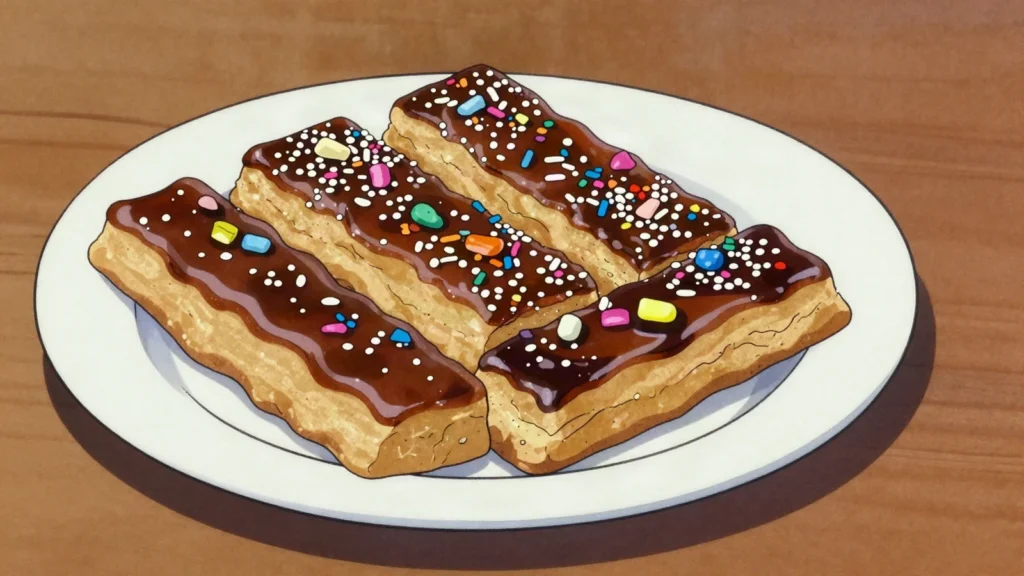
Turrón de Doña Pepa is a dessert from Peru: anise shortbread bars glazed with fruit syrup, October procession sweet. Anise nougat eaten in October during the Lord of Miracles procession; tradition credits Josefa Marmanillo, an enslaved woman, who made it in thanks.
How long does Turrón de Doña Pepa take to make?
Turrón de Doña Pepa takes 1 hour of preparation and 45 minutes, plus setting of cooking. The recipe makes makes about 20 pieces. It is rated hard to make.
What can I substitute in Turrón de Doña Pepa?
Yes, within limits. Panela, piloncillo or dark muscovado replace chancaca; all are unrefined whole cane sugar under different names. Lard replaces butter in the dough and is the more traditional fat, giving a shorter stick. Anisette or any anise liqueur replaces some of the water and strengthens the flavour. Quince and fig leaves are traditional but often unavailable; apple, orange and pineapple skin alone make a good syrup. Hundreds and thousands replace Peruvian grageas directly. Ground anise replaces toasted whole seeds, though whole cracked seeds give better flavour.
What is the most important thing to get right in Turrón de Doña Pepa?
Toast the anise seeds briefly in a dry pan. Toast until they smell strongly aromatic. Crush them lightly in a mortar. Do not grind them to a powder. Rub the butter into the flour by hand. Work quickly with cool fingertips.