
Ingredients
Rice cakes
- 600 ggaraetteok, cylindrical rice cakes
Broth
- 700 mlanchovy and kelp stock
- 6dried anchovies, gutted
- 1 piecedried kelp, dasima
Sauce
- 4 tbspgochujang
- 1 tbspgochugaru, chilli flakes
- 2 tbspsugar or corn syrup
- 1 tbspsoy sauce
- 3 clovesgarlic, minced
To add
- 200 geomuk, fish cakes, sliced
- 1onion, sliced
- 3spring onions, in lengths
- 2hard-boiled eggs, optional
- half a cabbage, optional
To finish
- toasted sesame seeds
- sesame oil
To serve
- hot, from a street cart
Directions
- Use garaetteok, the thick cylindrical rice cakes, which are sold fresh, refrigerated or frozen. Fresh ones are best and need no preparation.
- Soak refrigerated or frozen rice cakes in warm water for 20 to 30 minutes before cooking. Simmer the dried anchovies and kelp in the water for 15 minutes, then strain.
- Gut the anchovies by pulling out the dark innards first, since they make the stock bitter. Take the kelp out before it boils hard, which turns the stock slimy. Bring it to a boil in a wide shallow pan.
- Use a wide pan rather than a deep pot, since the sauce needs to reduce and the rice cakes should sit in a single layer. Simmer, stirring often, for 10 to 15 minutes.
- Stir regularly and scrape the base, since rice cakes release starch and the sauce catches readily. That is why the sauce goes from thin and watery to thick and glossy as it cooks, and why stirring matters.
- Take it off while the sauce still moves. Cooked too far it goes gluey and the rice cakes turn mushy, and there is a fairly narrow window. Add a splash of stock if it thickens too fast. Add the spring onions and hard-boiled eggs near the end.
- Taste it and adjust the sugar. Street tteokbokki is noticeably sweet as well as hot, and that sweetness is part of it rather than a fault. Finish with sesame oil and sesame seeds off the heat. Serve it immediately, in a bowl or straight from the pan. It must be eaten hot.
Technique
- Gungjung tteokbokki, the soy-braised court version, contains no chilli.
- Sindang-dong in Seoul is still known for tteokbokki.
- Frying rice in the leftover sauce is standard practice.
Substitutions
- Sliced rice cakes, tteokguk-tteok, in place of cylinders.
- Water with a little fish sauce if you have no anchovy stock.
Variations
- Gungjung tteokbokki, the soy version.
- Rabokki, with instant noodles added.
- Cheese tteokbokki, with melted cheese on top.
History
Chewy rice cakes simmered in a sauce, most commonly a sweet and spicy gochujang-based sauce today, though the dish’s oldest documented form, dating to the Joseon dynasty royal court, was savory rather than spicy, seasoned with soy sauce rather than chili paste. The now-dominant spicy red version is a considerably more recent development, generally credited to street vendor Ma Bok-rim, who is said to have created the gochujang-based version in Sindang-dong, Seoul, in 1953, in the years immediately following the Korean War, when cheap street food was in high demand. That spicy street-food version spread widely enough over the following decades to largely eclipse the older, milder royal-court original in most Koreans’ everyday experience of the dish.
Frequently asked questions
What is Tteokbokki?
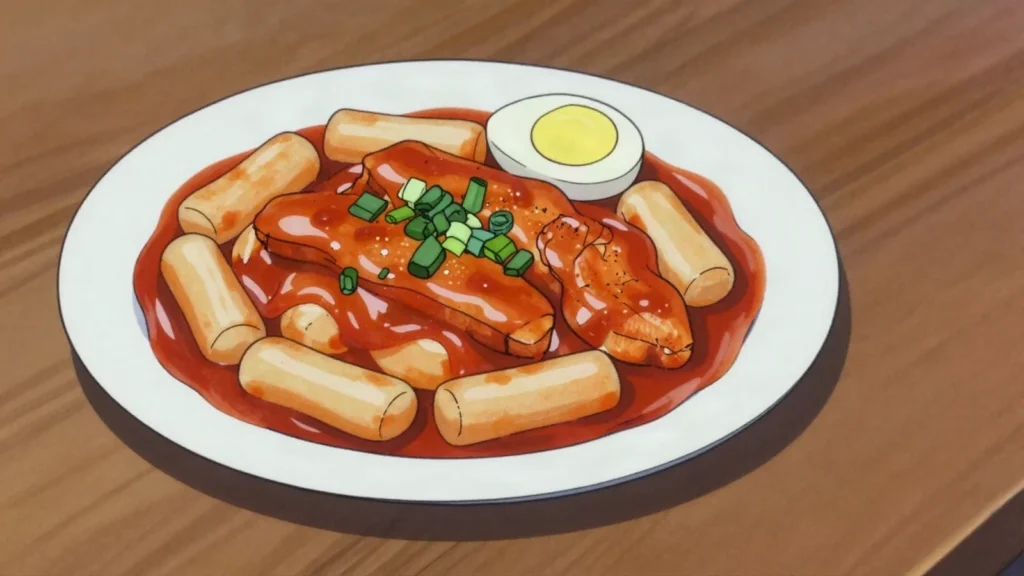
Tteokbokki is a street food from South Korea: chewy rice cakes simmered in sweet-spicy gochujang sauce with fish cakes. Chewy rice cakes simmered in a sauce, most commonly a sweet and spicy gochujang-based sauce today, though the dish’s oldest documented form, dating to the Joseon dynasty royal court, was savory rather than spicy, seasoned with soy sauce rather than chili paste. The now-dominant spicy red version is a considerably more recent development, generally credited to street vendor Ma Bok-rim, who is said to have created the gochujang-based version in Sindang-dong, Seoul, in 1953, in the years immediately following the Korean War, when cheap street food was in high demand. That spicy street-food version spread widely enough over the following decades to largely eclipse the older, milder royal-court original in most Koreans’ everyday experience of the dish.
How long does Tteokbokki take to make?
Tteokbokki takes 15 min of preparation and 20 min of cooking. The recipe makes 4 servings. It is rated easy to make.
What can I substitute in Tteokbokki?
Yes, within limits. Sliced rice cakes, tteokguk-tteok, in place of cylinders. Water with a little fish sauce if you have no anchovy stock.
What is the most important thing to get right in Tteokbokki?
Use a wide pan rather than a deep pot, since the sauce needs to reduce and the rice cakes should sit in a single layer. Simmer, stirring often, for 10 to 15 minutes.