
Ingredients
Brine
- 6meju blocks, dried and mould-ripened
- 8 litreswater
- 1.6 kgcoarse sea salt — about 18% brine
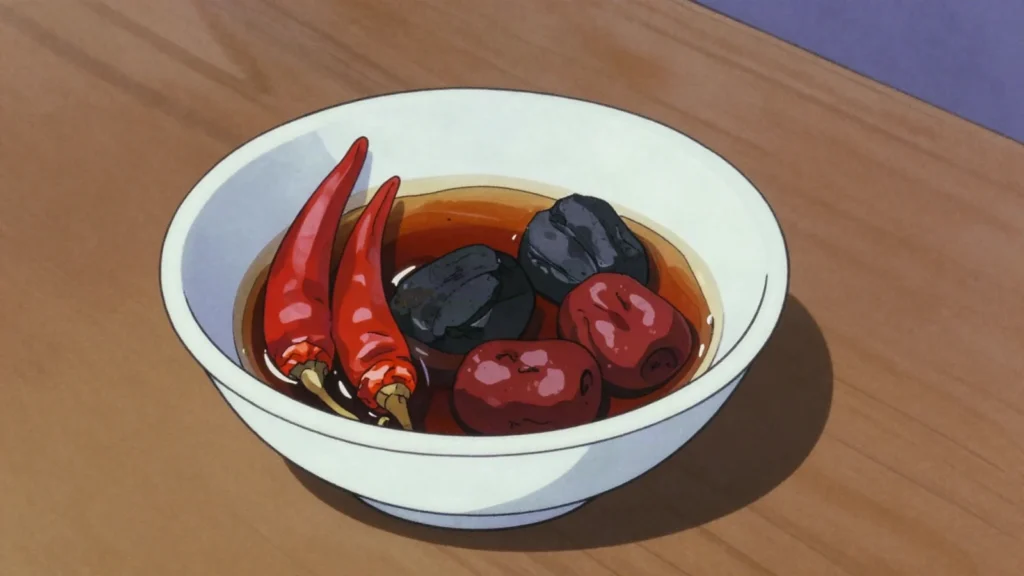
- 5dried red chillies
- a lump of charcoal, heated red hot
- a few jujubes
Equipment
- a large earthenware crock (onggi)
- a raw egg, for testing the brine
- muslin, to cover
Directions
- Wash the surface of the meju blocks with a brush and a little water, then dry them in the sun for a day.
- Dissolve the salt in the water. Test it the traditional way: float a clean raw egg in it — a coin-sized circle of shell should sit above the surface. Too weak and the crock spoils; too strong and it never ferments. This test is more reliable than measuring, because sea salt varies.
- Put the meju into a scrubbed onggi crock and pour over the brine. The blocks will float, which is expected.
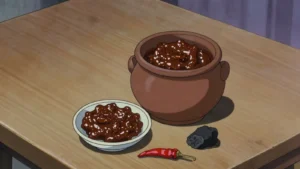
- Heat a lump of charcoal until red hot and drop it into the brine, then add the dried chillies and jujubes. The charcoal is not superstition — it sterilises the surface and absorbs off-flavours as it hisses out.
- Cover the crock with muslin and keep it outdoors in the sun. Open it on dry sunny days and cover it at night and in rain. Sunlight on the surface is part of the process and it is why Korean crocks stand on open platforms.
- After two to three months the liquid will be dark brown and salty-savoury. Strain it off through muslin — this liquid is the ganjang.
- Boil the strained liquid for 20 minutes, skimming, then cool and bottle. Boiling stops the ferment and stabilises it.
- Mash the solids left behind, pack them into a separate crock with a layer of salt on top, and age them for months more — that is doenjang. The two products come from one crock and are made together.
- Age the ganjang in a covered jar for at least six months; households keep some going for decades, topping it up rather than finishing it.
Technique
- The egg test decides the brine. Salt varies too much to trust a number alone.
- Sun and air on dry days, covered at night. A sealed crock goes wrong.
- This is a months-long project made once a year in late winter, not a weekend recipe.
Substitutions
- Bought meju blocks, which are sold in Korean groceries and save the two-month drying stage.
- A large glass jar in place of an onggi, though the porous clay is genuinely better.
Variations
- Guk-ganjang, the young light soup soy, is the first draw; jin-ganjang is aged for years and much darker.
- Doenjang is the solid half of the same crock.
History
Made in the same crock as doenjang, the liquid and solid separating after months; aged household ganjang is heirloom property.
Frequently asked questions
What is Ganjang?
Ganjang is a fermented & pickled from South Korea: korean soy sauce drawn off fermenting meju brine; darker and saltier than Japanese. Made in the same crock as doenjang, the liquid and solid separating after months; aged household ganjang is heirloom property.
How long does Ganjang take to make?
Ganjang takes 1 hour plus 2 to 3 months brining and months of ageing of preparation and 30 min of cooking. The recipe makes makes about 3 litres, plus doenjang. It is rated hard to make.
What can I substitute in Ganjang?
Yes, within limits. Bought meju blocks, which are sold in Korean groceries and save the two-month drying stage. A large glass jar in place of an onggi, though the porous clay is genuinely better.
What is the most important thing to get right in Ganjang?
Dissolve the salt in the water. Test it the traditional way: float a clean raw egg in it — a coin-sized circle of shell should sit above the surface. Too weak and the crock spoils; too strong and it never ferments. This test is more reliable than measuring, because sea salt varies.