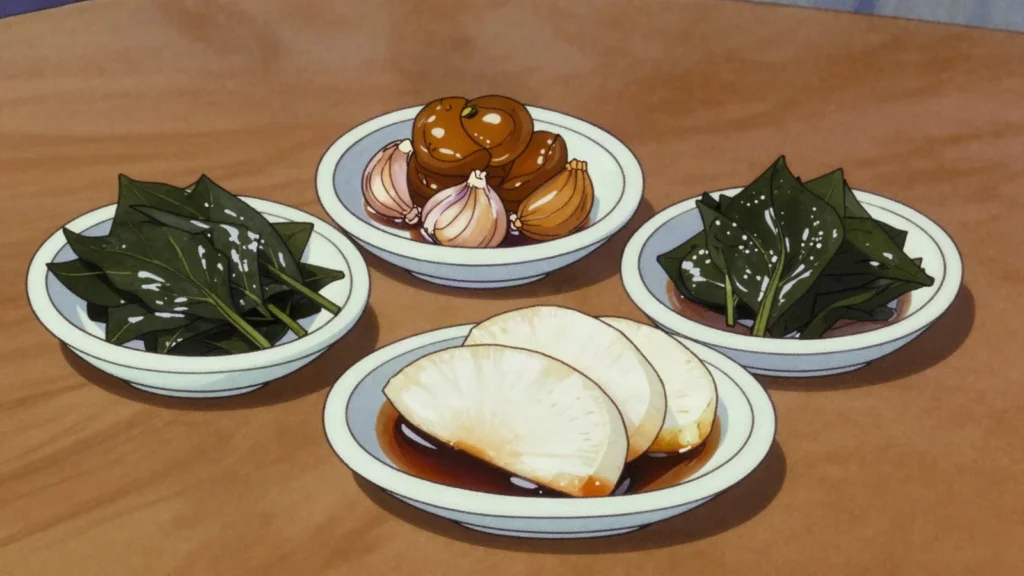

Ingredients
Vegetables
- 600 gfirm vegetables — perilla leaves, garlic scapes, cucumber, chilli or radish
Soy pickle
- 300 mlsoy sauce
- 200 mlwater
- 150 mlrice vinegar
- 150 gsugar
- 1 piecekombu, 10 cm
- 1dried chilli
Alternative: doenjang cure
- 500 gdoenjang or gochujang, for burying the vegetables in
Directions
- Wash the vegetables and dry them completely. Water clinging to them dilutes the pickle and shortens its life.
- Prick chillies and whole cucumbers, or score them, so the pickle can get inside rather than sitting on the skin.
- Bring the soy sauce, water, vinegar, sugar, kombu and chilli to a boil, then simmer two minutes and take out the kombu.
- Cool the liquid completely before pouring. Hot soy pickle poured over fresh vegetables cooks them limp, and limp jangajji is the usual disappointment.
- Pack the vegetables into a clean jar and pour over the cold pickle so everything is submerged. Weight anything that floats.
- Refrigerate. Leafy things like perilla are ready in a week; cucumber and radish take two; garlic scapes take a month or more.
- Many Korean cooks drain the liquid off after a few days, boil it again, cool it and pour it back. That re-boiling drives off the water the vegetables have released and stops the pickle going thin and cloudy — it is worth doing once or twice in the first fortnight.
- For the doenjang version instead, salt the vegetables overnight, squeeze them dry, and bury them completely in soybean paste in a crock for one to two months.
Technique
- Cool the liquid before it goes over. The single most common mistake.
- Re-boil and cool the pickle once or twice in the first two weeks. It is what keeps the jar clear and firm.
- Everything under the liquid, and always a dry spoon.
Substitutions
- Any firm vegetable — onion, mushroom, jalapeño, green plum — using the same liquid.
- Less sugar for a sharper, more savoury pickle.
Variations
- Maneuljjong jangajji, made with garlic scapes, is among the most prized.
- The doenjang-buried version is older than the soy one and considerably saltier.
History
A winter preserving method older than chilli kimchi, using the household jang crocks that stand outside every home.
Frequently asked questions
What is Jangajji?
Jangajji is a fermented & pickled from North Korea: vegetables cured in soy sauce or soybean paste; salty long-keeping side dish. A winter preserving method older than chilli kimchi, using the household jang crocks that stand outside every home.
How long does Jangajji take to make?
Jangajji takes 30 min plus 1 week to 2 months of preparation and 10 min of cooking. The recipe makes fills a 1-litre jar. It is rated easy to make.
What can I substitute in Jangajji?
Yes, within limits. Any firm vegetable — onion, mushroom, jalapeño, green plum — using the same liquid. Less sugar for a sharper, more savoury pickle.
What is the most important thing to get right in Jangajji?
Prick chillies and whole cucumbers, or score them, so the pickle can get inside rather than sitting on the skin.