
Ingredients
The meat
- 1.2 kgbeef or lamb
- bone-in pieces, well marbled
- chuck, shin or shoulder
- cut into large pieces
The rof stuffing
- a large bunch flat-leaf parsley
- 6 clovesgarlic
- 1hot chilli
- 1stock cube
- or 1 teaspoon salt
- a little black pepper
The base
- 250 mlgroundnut oil
- or other vegetable oil
- 3large onions, sliced
- 4 tablespoonstomato purée
- 3ripe tomatoes, chopped
- 2 tablespoonsnététou
- fermented locust bean, optional
- 1stock cube
- salt and black pepper
The vegetables
- 1small cabbage, in wedges
- 2carrots, in large pieces
- 1aubergine, quartered
- 2sweet potatoes, in chunks
- 1 piececassava, peeled
- 3small bitter aubergines, diakhatou
- optional
- 1whole Scotch bonnet
- left unbroken
The rice
- 1 kgbroken rice
- riz brisé
- rinsed until the water runs clear
- or long-grain rice
To serve
- lime wedges
- raw onion in vinegar, optional
- a shared platter
Directions
- Pound the parsley, garlic and chilli in a mortar. Add the stock cube or salt and the pepper. Pound it into a coarse green paste. Do not make it completely smooth. Use your finger to push it well in. Let the stuffed meat stand for thirty minutes. An hour is better if you have the time.
- Brown the meat in the hot oil in batches. Do not crowd the pot or it will steam. Lift the meat out and set it aside. Add the sliced onions to the same oil. Cook them slowly until soft and golden. That takes a good fifteen minutes. Add the tomato purée and fry it well. Fry it for a full five minutes at least. This is a step Senegalese cooks take seriously.
- Add the chopped fresh tomatoes now. Cook until the oil separates and rises. That separation is the sign it is ready. Return the meat to the pot with any juices. Add water to cover the meat generously. Add the stock cube and season carefully.
- Bring it to a boil and then lower the heat. Simmer it covered for about an hour. The meat should become properly tender. Add the whole Scotch bonnet on top. Leave it completely unbroken at this stage. A burst one makes the whole pot very hot. Simmer until every vegetable is tender. That takes about twenty to thirty minutes. Lift out the meat and all the vegetables.
- Set them aside somewhere warm and covered. They must not overcook while the rice goes in. Adjust the salt and the pepper properly now. Measure the liquid if you want to be certain. Add water or remove some to reach that. Now rinse the rice until the water runs clear.
- Add the rinsed rice to the seasoned liquid. Stir it once and then bring it to a boil. Cover the pot with a tight fitting lid. Cook it for about twenty-five minutes. Do not lift the lid to look inside. Turn off the heat and let it rest ten minutes. Now serve it, which is done on a shared platter. Spread the rice across a large round dish. Arrange the meat in the centre of the rice.
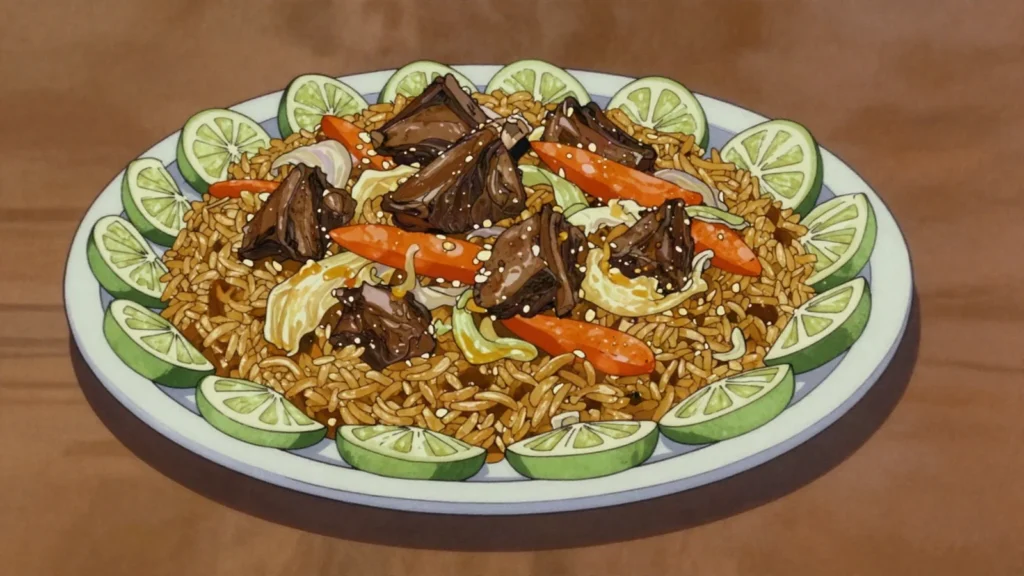
- Arrange the vegetables around the meat. Spoon over any remaining sauce. Put lime wedges around the edge. Eating is done with the right hand only. Wash hands before and after the meal. Leftovers keep three days in the fridge.
Technique
- Season the cooking liquid before the rice goes in, and season it harder than seems right. The rice takes all its flavour from that liquid and dilutes it considerably. This is the single moment that decides whether the dish works.
- Broken rice is not a compromise, it is the point. The fragments absorb more liquid and give the soft, sticky texture Senegalese cooks want. Long-grain rice makes a perfectly good dish but a noticeably different one.
- Broken rice reached Senegal as cheap milling waste imported from French Indochina, while colonial policy pushed land into groundnuts for export instead of food. A cheap colonial import became the preferred grain and was made genuinely Senegalese. That history is part of the dish.
- Leave the Scotch bonnet whole. Unbroken it perfumes the pot; burst it makes everything fiercely hot. Diners who want the heat crush it on their own plate, which is the polite way.
- The quantity of oil looks alarming and it is not excess — the rice cooks in it. Skimming some off before the rice goes in is what many households do; reducing it drastically gives a dry, flat result.
- Xoon, the crust on the bottom of the pot, is prized and shared out, not scraped into the bin. Brown it, do not burn it — the line between the two is narrow.
- The rof, a pounded parsley and garlic paste pushed into slits in the meat, seasons from the inside out. It is the same technique used for the fish version and it is what gives thieb its depth.
- Thieboudienne, the fish version, was inscribed by UNESCO as intangible cultural heritage in 2021. Thiebou yapp is the meat version of the same dish and is the standard for Tabaski, when a household has a great deal of mutton to cook.
Substitutions
- Lamb or mutton replaces beef and is what most households use at Tabaski.
- Long-grain rice replaces broken rice; reduce the liquid slightly, since it absorbs less.
- Nététou can be left out if you cannot find it. The dish loses a distinctive savoury depth but still works. Dawadawa or iru from a West African grocer is the same ingredient under other names.
- Any neutral oil replaces groundnut oil, though groundnut is traditional.
- Bitter aubergines, diakhatou, are traditional but optional; regular aubergine covers the role adequately.
- A habanero replaces a Scotch bonnet closely.
- Stock cubes are near-universal in Senegalese kitchens; salt and a good home stock will do the same job.
Variations
- Thieboudienne, or ceebu jën, is the fish version and the more famous of the two, made with stuffed fish and dried fish alongside the fresh.
- Thiebou ganaar uses chicken and is quicker and cheaper than the red-meat version.
- Thiebou yapp bou weex is the white version, made without tomato, giving a paler and more delicate dish.
- Yassa, chicken or fish in a sharp onion and lemon sauce, is the other great Senegalese dish and is often served alongside at large gatherings.
- Gambian benachin is essentially the same dish across the border, a shared Wolof and Mandinka tradition.
- Some households add a scoop of nététou and a piece of dried fish even to the meat version, for depth.
History
The meat version of the national rice dish, cooked in the same tomato and oil base; it is the standard dish for Tabaski, Senegal’s Eid al-Adha.
Frequently asked questions
What is Thiebou yapp?
Thiebou yapp is a main from Senegal: festive rice cooked in seasoned oil with beef or lamb. The meat version of the national rice dish, cooked in the same tomato and oil base; it is the standard dish for Tabaski, Senegal’s Eid al-Adha.
How long does Thiebou yapp take to make?
Thiebou yapp takes 40 minutes of preparation and 1 hour 45 minutes of cooking. The recipe makes serves 8. It is rated medium to make.
What can I substitute in Thiebou yapp?
Yes, within limits. Lamb or mutton replaces beef and is what most households use at Tabaski. Long-grain rice replaces broken rice; reduce the liquid slightly, since it absorbs less. Nététou can be left out if you cannot find it. The dish loses a distinctive savoury depth but still works. Dawadawa or iru from a West African grocer is the same ingredient under other names. Any neutral oil replaces groundnut oil, though groundnut is traditional. Bitter aubergines, diakhatou, are traditional but optional; regular aubergine covers the role adequately. A habanero replaces a Scotch bonnet closely. Stock cubes are near-universal in Senegalese kitchens; salt and a good home stock will do the same job.
What is the most important thing to get right in Thiebou yapp?
Pound the parsley, garlic and chilli in a mortar. Add the stock cube or salt and the pepper. Pound it into a coarse green paste. Do not make it completely smooth. Use your finger to push it well in. Let the stuffed meat stand for thirty minutes. An hour is better if you have the time.