
Ingredients
The meat
- 2.5 kgbone-in lamb shoulder
- or lamb leg, cut into large pieces
- or a whole lamb shoulder, left in one piece
- fat left on, not trimmed away
The rub
- 2 tablespoonscoarse salt
- 1 tablespoonblack peppercorns
- coarsely crushed
- 2 teaspoonsground cumin
- or 1 tablespoon whole cumin seeds
- 1 tablespoonground coriander
- 1 teaspoonground paprika
Sometimes added
- 4 clovesgarlic, crushed
- 1 tablespoondried mint
- or 1 teaspoon dried thyme
- half a teaspoon ground turmeric
- 3 tablespoonsplain yoghurt
The seal, if using a tandir
- 500 gplain flour
- about 250 ml water
- wet clay or thick mud
- a wide sheet of clean cloth
To serve
- non or tandir bread
- raw onion, sliced very thinly
- sumac, to scatter
- fresh dill and coriander
- green tea
Directions
- Cut the meat into pieces of about five hundred grams. Score the fat side in a shallow diamond pattern. Cut through the fat but not into the meat below. Scoring helps the fat render and the rub penetrate. Crush the peppercorns coarsely in a mortar. Toast whole cumin seeds briefly in a dry pan. Toast them until they smell strongly of cumin. Watch them closely because they burn quickly.
- Crush them roughly once they have cooled down. Mix the salt, pepper, cumin and coriander together. Add the paprika and the turmeric if you are using it. Add the crushed garlic and the dried herbs now. Some cooks add yoghurt to make a thick paste.
- Rub the mixture hard into every surface of the meat. Work it under any loose flaps of meat as well. Put the meat into a deep dish or a large bag. Cover it and refrigerate it overnight if you can. Twelve hours is ideal but four hours will do. Take the meat out an hour before you cook it. Fridge-cold meat cooks unevenly at the centre.
- Heat the oven to two hundred and forty degrees. Put the meat on a rack over a deep roasting tin. Pour a centimetre of water into the tin below. The water stops the dripping fat from burning. Roast at that high heat for twenty-five minutes.
- Cover the whole tin tightly with a double layer of foil. Seal the foil firmly around the rim of the tin. Roast it sealed for a further two hours at least. Very large pieces may need closer to three hours.
- Check it once after two hours and then judge. The meat is done when it yields to a fork easily. Lift the far edge first so the steam goes away from you. Turn the oven back up to two hundred and forty. Return the uncovered meat for ten to fifteen minutes.
- Take it out and let it rest for fifteen minutes. Fire the tandir with hardwood until it is very hot. Set a metal tray below to catch the dripping fat. Cover the mouth with a metal lid or a stone slab.
- Seal every gap with dough, wet clay or thick mud. The seal must be complete with no gaps at all. Leave it sealed for two to three hours undisturbed. Break the seal carefully and stand well back. A blast of very hot air comes out immediately. Lift the meat out with long hooks or long tongs.
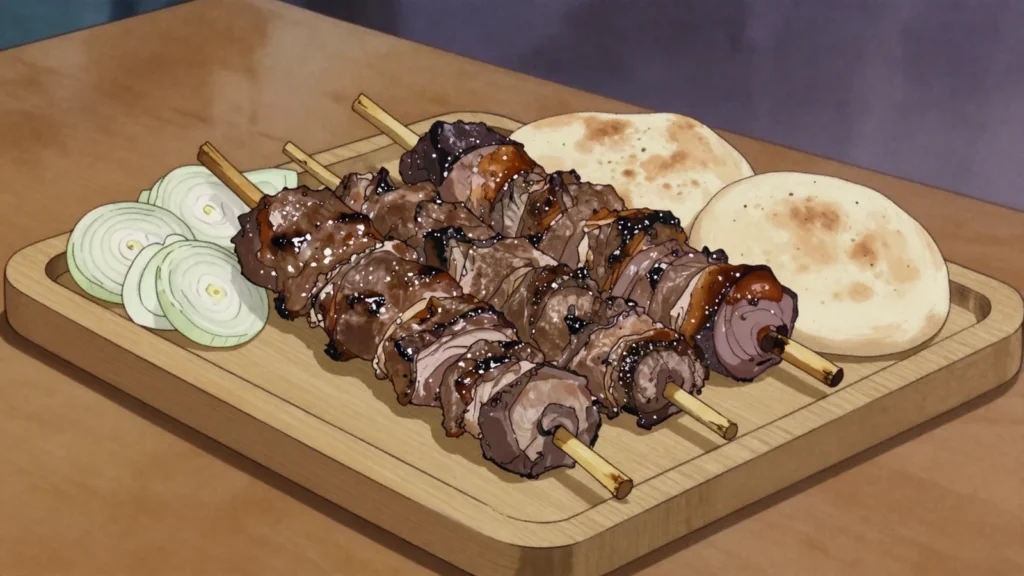
- Let it rest for fifteen minutes before carving. Serve the meat torn or cut into large pieces. Scatter the onion with sumac for sharpness. Leftovers keep for three days in the fridge.
Technique
- Despite the name, this is not a skewered kebab. The meat cooks in large pieces in a sealed clay oven, and the closest Western comparison is a slow sealed roast rather than a grill.
- A tandir is an outdoor oven. Burning wood inside an enclosed clay chamber produces carbon monoxide, which has no colour, smell or taste. Never fire one indoors, and never bring a still-glowing oven inside.
- Breaking the seal on a hot tandir releases a blast of superheated air that burns faces and singes hair. Stand to the side and open it away from yourself. The same applies on a much smaller scale to lifting foil off a hot roasting tin.
- Shoulder is the right cut because its fat and connective tissue survive long cooking. Leg is leaner and dries out, which is why roadside tandir kitchens favour shoulder and whole young animals.
- The tray of rice or potatoes set beneath the hanging meat is not an afterthought. It catches the rendering fat and is treated as part of the dish.
- Undercooked lamb shoulder is tough; overcooked lamb shoulder is merely very soft. When in doubt, give it longer.
Substitutions
- Goat replaces lamb directly and is used in some households. It is leaner, so watch the timing.
- Beef short rib or brisket works with the same rub and method, though it is not the traditional meat.
- A whole bone-in lamb shoulder left in one piece is closer to the original than cut pieces, if your oven will take it.
- Ground cumin replaces whole seeds; use about two thirds the volume, since toasting and crushing whole seeds gives a stronger result.
- Yoghurt in the rub is optional. Without it the rub is drier and clings less, but the flavour is the same.
- Sumac gives the sharpness on the onion; a squeeze of lemon juice does a similar job.
Variations
- Whole-lamb tandir, cooked with the animal hung entire inside the oven, is the festival version and the one roadside specialists are known for.
- Some Fergana cooks wrap the meat in cloth before sealing it, which keeps it paler and even more tender.
- A tray of rice set under the hanging meat produces a rich, fat-soaked rice served alongside as part of the same dish.
- Kazakh and Kyrgyz cooks make closely related sealed-oven lamb dishes with the same technique and different spicing.
- Tandir gosht in Pakistan and northern India is a related sealed-oven meat, spiced very differently.
- Restaurant versions in Tashkent often finish the meat under a fierce grill for extra crust.
History
A speciality of the Fergana valley and roadside stops, where the oven is sealed with dough and clay.
Frequently asked questions
What is Tandir kabob?
Tandir kabob is a main from Uzbekistan: whole pieces of lamb sealed in a clay tandir and roasted in its heat. A speciality of the Fergana valley and roadside stops, where the oven is sealed with dough and clay.
How long does Tandir kabob take to make?
Tandir kabob takes 30 minutes plus overnight marinating of preparation and 2 hours 30 minutes of cooking. The recipe makes serves 6. It is rated medium to make.
What can I substitute in Tandir kabob?
Yes, within limits. Goat replaces lamb directly and is used in some households. It is leaner, so watch the timing. Beef short rib or brisket works with the same rub and method, though it is not the traditional meat. A whole bone-in lamb shoulder left in one piece is closer to the original than cut pieces, if your oven will take it. Ground cumin replaces whole seeds; use about two thirds the volume, since toasting and crushing whole seeds gives a stronger result. Yoghurt in the rub is optional. Without it the rub is drier and clings less, but the flavour is the same. Sumac gives the sharpness on the onion; a squeeze of lemon juice does a similar job.
What is the most important thing to get right in Tandir kabob?
Cover the whole tin tightly with a double layer of foil. Seal the foil firmly around the rim of the tin. Roast it sealed for a further two hours at least. Very large pieces may need closer to three hours.