
Ingredients
The recado
- 6tomatoes
- 2dried guajillo chillies
- 2dried pasilla chillies
- 1 tablespoonachiote paste
- 50 gpumpkin seeds, toasted
- 50 gsesame seeds, toasted
- 1 slicestale bread
- or a corn tortilla
- 1onion, 4 garlic cloves
The masa
- 1 kgfresh corn masa
- or 700 g masa harina
- plus warm water
- 200 glard
- salt
The filling
- 800 gpork shoulder
- or chicken, cooked and cut
- olives, capers
- sweet pepper strips
- prunes or raisins, optional
The wrapping
- plantain leaves
- softened over a flame
- kitchen string
- or leaf strips
Directions
- Keep the leaf moving constantly as you soften it. Never leave it unattended over the heat. Wash your hands thoroughly after handling them. Do not breathe over them as they toast.
- Toast the chillies briefly in a dry pan. Press them flat against the hot pan. Give them about twenty seconds each side. Take them off while still pliable. Soak the toasted chillies in hot water. Cover them with hot water for twenty minutes. Keep a little of the soaking water.
- Toast the pumpkin and sesame seeds separately. Toast each kind on its own in a dry pan. Shake the pan constantly as they toast. Sesame seeds turn golden within a minute. Take each off as soon as it colours. Tip them straight onto a cold plate. Char the tomatoes, onion and garlic in a dry pan. Turn them as they char on each side. Leave the garlic in its skin to char.
- Toast the bread or tortilla until dark. It should be genuinely dark rather than golden. Break it up before it goes in to blend. Blend everything together with the achiote. Add the soaked chillies and their water. Add the charred vegetables and the seeds. Add the toasted bread and the achiote paste.
- Blend it all to a smooth thick sauce. It must be genuinely smooth rather than gritty. Blend it for several minutes if needed. Strain it through a sieve for certainty. Fry the blended sauce in a little lard. Pour it into hot fat and let it sizzle. Cook it down for about twenty minutes.
- Stir it constantly, since it catches easily. Do not skip that stage at all. Season the recado well with salt. Beat the lard until light and creamy. Beat it for several minutes until fluffy. Add warm water or stock as you work. The masa should be soft and spreadable. Drop a small ball into cold water. If it sinks, beat it considerably more. Season the masa generously with salt.
- Taste the raw masa to check it. It should taste clearly seasoned. Keep it moving constantly as you do. Cut the leaves into large rectangles. About thirty centimetres square is right. Cut along the grain of the leaf. Cut a few extras in case some tear.
- Spread masa in the centre of each leaf. Use a large spoonful and spread it flat. Make a rectangle about a centimetre thick. Leave a wide border all the way round. Put the meat and recado in the centre. Lay a piece or two of the cooked meat on.
- Spoon a generous amount of recado over it. Add olives, capers and pepper strips. Add a prune or raisins if using them. Do not be at all sparing with it. Fold the leaf over from both long sides. Bring the two sides together over the filling.
- Fold them down together to seal. Tie each packet with string or leaf strips. Tie it once each way like a parcel. Do not tie it so tight it squeezes out. Steam the tamales for about two hours. Stack them in a large steamer or pot. Lay them flat in overlapping layers. Cover the pot tightly with a lid.
- Keep the water boiling steadily throughout. Check the water level every half hour. Top it up with boiling water as needed. A dry pot burns and ruins the whole batch. Return them to steam if it sticks. Let the tamales rest before unwrapping. Give them about twenty minutes off the heat. Serve the tamales in their leaves. It also keeps it warm on the plate. Steam them again to reheat them.
Technique
- Do not let the dried chillies blacken when toasting — burnt chillies turn the whole recado bitter and they go from toasted to burnt in seconds. Give them about twenty seconds a side pressed flat and take them off while still pliable. Wash hands thoroughly afterward and never rub your eyes.
- Plantain leaves catch fire over a flame. Keep the leaf moving constantly, never leave it unattended, and have a way to smother a flame nearby.
- Check the steamer water every half hour and top it up with boiling water — a dry pot burns and ruins the whole batch. Two hours is a genuine minimum for these large tamales, and longer does no harm; undercooked masa is pasty and tastes raw.
Substitutions
- Chicken replaces pork directly. Prunes or raisins are optional and used in some households. A corn tortilla replaces the slice of stale bread as the thickener.
- Maize tamales long predate the Spanish arrival and are among the oldest documented Mesoamerican maize preparations. Pork, olives, capers and raisins arrived with the Spanish and were absorbed into an existing indigenous form — the atlas records both halves of that history without crediting the Spanish with the tamale or pretending the fillings are ancient.
Variations
- Toast everything dry before blending: the chillies, the pumpkin and sesame seeds separately since they cook at different rates, the tomatoes, onion and garlic charred in patches, and the bread until genuinely dark. That toasting is essential rather than optional, and untoasted ingredients give a flat sauce. Seeds thickening a sauce is a genuinely pre-Hispanic technique.
- Fry the blended recado in hot lard for about twenty minutes, stirring constantly since it catches easily — that cooks out the raw taste and deepens the colour, and is standard practice rather than something to skip. It should be thick enough to hold on a spoon.
- Beat the lard light and creamy before working the masa into it, then test by dropping a small ball into cold water: properly aerated masa floats, and if it sinks, beat it more. Wrap each tamale in a second leaf set at right angles, which is standard in Guatemala and makes them far more secure, and rest them twenty minutes before unwrapping.
History
Sunday and Christmas tamales coloured with achiote recado and wrapped in plantain leaf; maize tamales long predate the Spanish arrival.
Frequently asked questions
What is Tamales colorados?
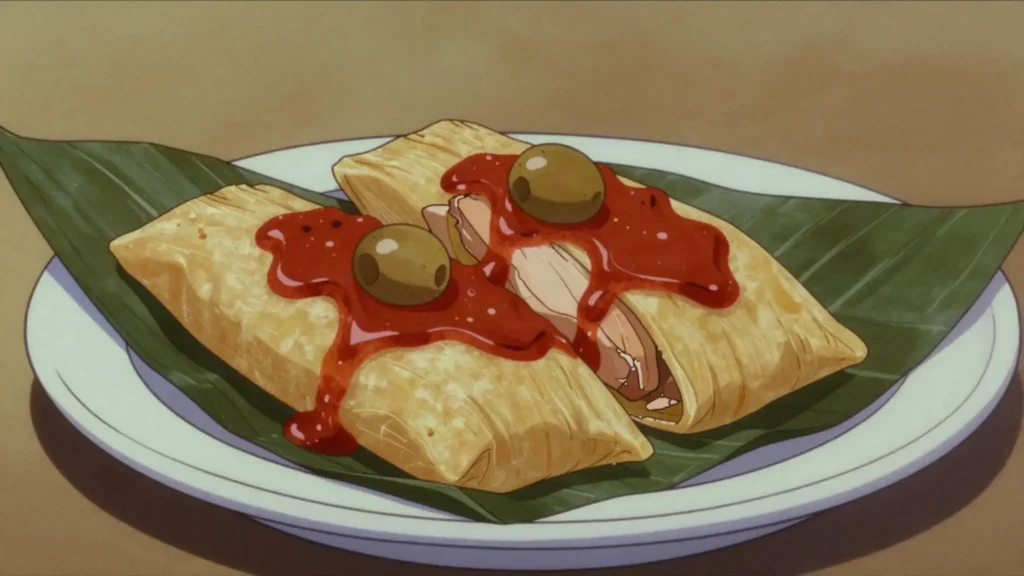
Tamales colorados is a main from Guatemala: red recado tamales in banana leaves, Saturday tradition. Sunday and Christmas tamales coloured with achiote recado and wrapped in plantain leaf; maize tamales long predate the Spanish arrival.
How long does Tamales colorados take to make?
Tamales colorados takes 1 hour 30 minutes of preparation and 2 hours of cooking. The recipe makes makes about 12. It is rated hard to make.
What can I substitute in Tamales colorados?
Yes, within limits. Chicken replaces pork directly. Prunes or raisins are optional and used in some households. A corn tortilla replaces the slice of stale bread as the thickener. Maize tamales long predate the Spanish arrival and are among the oldest documented Mesoamerican maize preparations. Pork, olives, capers and raisins arrived with the Spanish and were absorbed into an existing indigenous form — the atlas records both halves of that history without crediting the Spanish with the tamale or pretending the fillings are ancient.
What is the most important thing to get right in Tamales colorados?
Keep the leaf moving constantly as you soften it. Never leave it unattended over the heat. Wash your hands thoroughly after handling them. Do not breathe over them as they toast.