
Ingredients
Dough
- 700 gstrong white flour
- 450 mlwarm water
- 10 gfine salt
- 7 ginstant dried yeast
- 3 tbspextra virgin olive oil
- 1 tspsugar
Filling and top
- 700 gmuzzarella, coarsely grated or torn (the Argentine cheese is drier and saltier than Italian mozzarella)
- 4large onions (about 800 g), sliced into thin half-moons
- 2 tspfine salt, for the onions
- 2 tbspdried oregano
- 1 tspchilli flakes, optional
- 3 tbspolive oil, for the top
- 2 tbspgreen olives, sliced, optional
The tin
- 1deep round pizza tin or cake tin, 30 cm, heavily oiled
Directions
- Mix the flour, yeast, sugar and water, leave 10 minutes, then add the salt and oil and knead 8–10 minutes to a smooth, slack dough. Prove covered 2 hours until doubled.
- Salt the sliced onions in a colander and leave 30 minutes, then squeeze them firmly in your hands. This is the step most home cooks skip, and skipping it floods the pizza with onion water.
- Oil the tin generously, almost as if deep-frying; a fugazzeta is fried as much as baked on its base.
- Divide the dough in two, one piece slightly larger. Press the larger piece into the tin and up the sides by 3 cm, working from the centre out with oiled fingers.
- Spread all the cheese over the base in an even layer right to the edge, leaving no gaps, then stretch the second piece of dough to a disc and lay it over the top.
- Pinch the two edges together firmly all round and roll the rim inwards to seal. If the seal fails, the cheese escapes and welds to the tin.
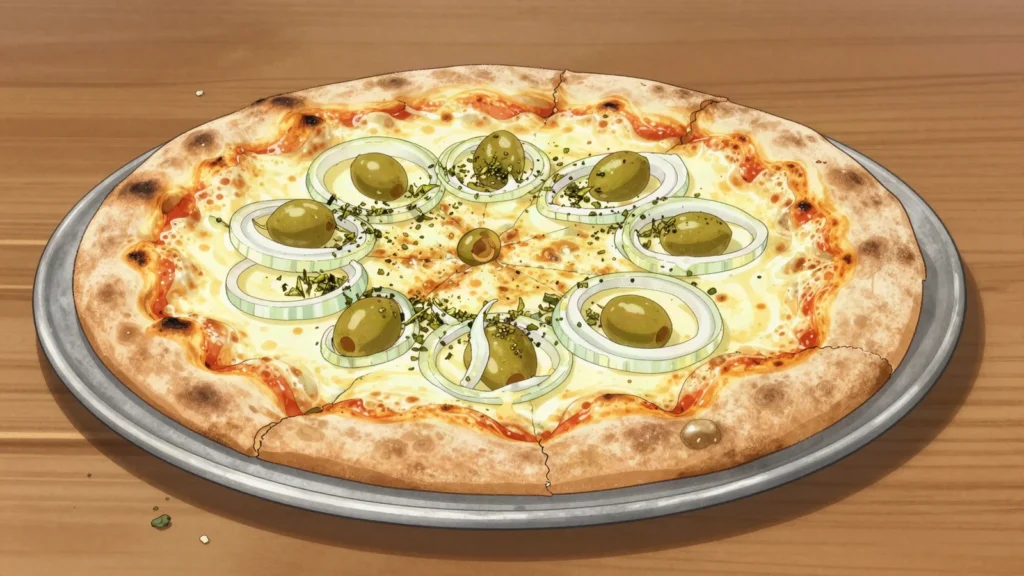
- Scatter the squeezed onions over the top in a thick blanket, drizzle with olive oil, add the olives if using and prove another 45 minutes.
- Bake at 230°C (450°F) for 30–35 minutes, until the onions are golden at the tips and still soft beneath and the base is deep brown and crisp when you lift an edge with a palette knife.
- Sprinkle with oregano and chilli the moment it comes out, rest 5 minutes so the cheese sets enough to cut, and serve in wedges.
Technique
- Buenos Aires pizza is its own tradition, thick-crusted and heavy with cheese, brought by Genoese and Neapolitan immigrants and then taken much further. Fugazzeta is the stuffed version of fugazza, itself descended from focaccia.
- Muzzarella here means the dry Argentine pizza cheese. Fresh Italian mozzarella carries too much water and will make the filling soupy; if that is all you have, tear it and dry it on paper for an hour.
- The onions are not caramelised beforehand. They go on raw and soften in the oven, keeping a sweet, sharp bite that is the signature of the pizza.
- Rest before cutting or the molten cheese runs out and the slice collapses.
Substitutions
- No Argentine muzzarella: use low-moisture block mozzarella, or a mix of mozzarella and mild provolone for a closer salt level.
- For a quicker version, make fugazza: a single layer of dough with onions on top and no cheese inside.
- A little cream cheese blended into the muzzarella keeps the filling softer if your oven runs hot.
Variations
- Fugazzeta rellena, the stuffed pizza described here.
- Fugazza a la piedra, thin and crisp, onions only, no cheese.
- Fugazzeta with roquefort and walnut, a Buenos Aires pizzeria variation.
History
A thick, doughy pizza filled and topped with a generous quantity of mozzarella cheese and caramelised onion, developed in Buenos Aires, reflecting the substantial Italian immigrant influence, particularly from Genoa, that shaped much of Argentine baking and culinary tradition following major waves of Italian immigration during the late 1800s and early 1900s. Its name and thick, focaccia-like base trace directly to the Genoese fugassa, or focaccia, brought to Argentina by Ligurian immigrants and subsequently adapted into a distinctly Argentine style, layered generously with mozzarella and onion in a way not typically found in the original Italian version. Fugazzeta remains one of Buenos Aires’s most iconic pizza styles, closely tied to the city’s strong Italian immigrant culinary heritage.
Frequently asked questions
What is Fugazzeta?
Fugazzeta is a main from Argentina: cheese-stuffed, onion-topped pizza, Buenos Aires porteño pride. A thick, doughy pizza filled and topped with a generous quantity of mozzarella cheese and caramelised onion, developed in Buenos Aires, reflecting the substantial Italian immigrant influence, particularly from Genoa, that shaped much of Argentine baking and culinary tradition following major waves of Italian immigration during the late 1800s and early 1900s. Its name and thick, focaccia-like base trace directly to the Genoese fugassa, or focaccia, brought to Argentina by Ligurian immigrants and subsequently adapted into a distinctly Argentine style, layered generously with mozzarella and onion in a way not typically found in the original Italian version. Fugazzeta remains one of Buenos Aires’s most iconic pizza styles, closely tied to the city’s strong Italian immigrant culinary heritage.
How long does Fugazzeta take to make?
Fugazzeta takes 40 min of preparation and 45 min, plus 3 hr proving of cooking. The recipe makes 1 deep pizza, 6 slices. It is rated medium to make.
What can I substitute in Fugazzeta?
Yes, within limits. No Argentine muzzarella: use low-moisture block mozzarella, or a mix of mozzarella and mild provolone for a closer salt level. For a quicker version, make fugazza: a single layer of dough with onions on top and no cheese inside. A little cream cheese blended into the muzzarella keeps the filling softer if your oven runs hot.