
Ingredients
The peanuts
- 400 graw peanuts
- skinned
- or roasted unsalted
- roughly chopped
- or left whole
The syrup
- 400 gbrown sugar
- or cane sugar
- 150 mlwater
- a pinch of salt
Sometimes added
- half a teaspoon ground ginger
- a pinch of cinnamon
- grated lime zest
- a splash of vanilla
To shape
- a greased tray
- or a greased marble slab
- a metal spoon
- for dropping
Directions
- Rub the roasted nuts in a cloth to loosen them. They add bitterness if left on. Keep children and pets out of the kitchen. Have a bowl of cold water ready first. Hold a sugar burn under cold running water.
- Keep it there for at least twenty minutes. Do not pull hardened sugar off the skin. Brown or raw cane sugar is traditional here. Tablèt should be hard and brittle. Roast the raw peanuts in a dry pan or oven. Spread them in a single layer.
- Roast them at about one hundred and eighty degrees. Give them ten to twelve minutes. Shake the tray once or twice as they roast. They should be golden and smell strongly nutty.
- Take them out while just golden. Rub the warm peanuts in a clean cloth. Wrap them in the cloth and rub firmly. Chop the peanuts roughly if you prefer. Keep them fairly coarse if chopping. Grease a tray or marble slab thoroughly. There is no time once it is ready.
- Use a neutral oil and spread it generously. Put the sugar and water in a heavy saucepan. Use a genuinely heavy based pan. Thin pans give hot spots that burn the sugar. Use one considerably larger than it seems to need. Warm it gently until the sugar dissolves. Stir it only until it is entirely clear. Then stop stirring completely. Swirl the pan gently instead if needed.
- Boil the syrup until it reaches hard crack. Hard crack is about one hundred and fifty degrees. Drop a little syrup into cold water. It should set into hard brittle threads. Brown sugar makes that harder to judge. It takes about fifteen minutes at a steady boil.
- Take it off the moment it is right. Tip the peanuts into the caramel at once. Take the pan off the heat before they go in. Add them all at once rather than gradually. Stand back slightly as you add them.
- Stir the peanuts through the caramel quickly. Stir fast until every nut is coated. Use a sturdy wooden or metal spoon. It stiffens within about a minute. Stir in ginger, cinnamon or lime zest. Add them with the peanuts rather than later. Drop spoonfuls onto the greased tray. Work quickly, since it sets within minutes.
- Drop rough rounds about six centimetres across. Use a metal spoon dipped in oil. Do not touch it with your hands at all. Pour the whole mixture out and spread it flat. Then score it into squares while still warm.
- Score the slab while it is still soft. Score it deeply before it sets. Let the tablèt cool completely and harden. It sets hard within about half an hour. Let it cool at room temperature. Do not refrigerate it to speed the setting.
- Keep it in an airtight container once cold. An airtight tin keeps it crisp for weeks. Seal it well wherever you are. It is genuinely hard and needs real biting. Take care with fillings and dental work. It keeps two weeks in an airtight container. Keep it sealed and away from any damp.
Technique
- Caramel reaches temperatures far above boiling water, sticks to skin instantly and keeps burning — this is the most dangerous stage of the recipe. Never touch or taste it hot, keep children out of the kitchen, and have cold water ready. Hold any sugar burn under cold running water at least twenty minutes, do not pull the hardened sugar off, and seek medical help for anything beyond very minor.
- This sweet is almost entirely peanuts and peanut allergy can be severe — obvious as that is, say so clearly and never leave it unlabelled on a shared table.
- Boil the syrup to hard crack, about 150°C, or it will be soft and chewy rather than brittle — that is the commonest fault. Test by dropping a little into cold water: it should set into hard threads that snap rather than bend. Brown sugar makes the colour hard to judge, so rely on the water test. The syrup goes from right to burnt in seconds, so never walk away.
Substitutions
- Roasted unsalted peanuts replace raw ones and skip the roasting step. Coconut, cashew and sesame versions of tablèt are all made in Haiti by the same method, the peanut one being best known.
- White sugar replaces brown or raw cane for a paler cleaner caramel; both are genuinely used. Ground ginger is the most common flavouring addition, with cinnamon, lime zest and vanilla also used.
Variations
- Grease the tray and have everything measured before you start the caramel: once it is ready the mixture sets within a couple of minutes and there is no time to prepare anything. Add the peanuts all at once off the heat, standing back as it bubbles, and stir fast until every nut is coated.
- Stop stirring as soon as the sugar dissolves, swirling the pan instead if needed — stirring a boiling syrup causes crystallisation and ruins the batch.
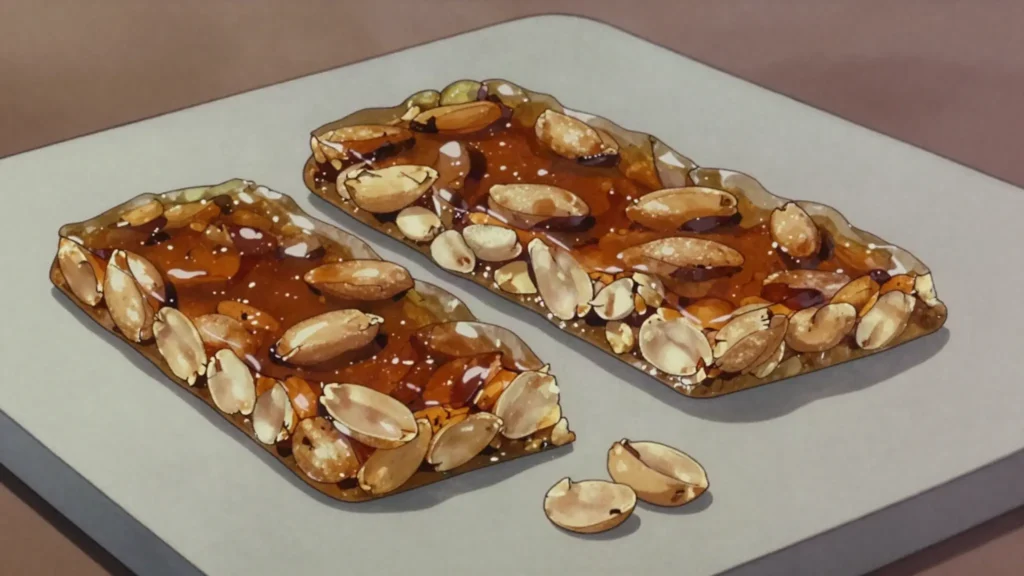
- Drop rough spoonfuls with an oiled metal spoon, or pour the whole lot out flat and score it into squares while still warm, snapping along those lines once hard — cutting set brittle just shatters it. Both forms are genuinely sold in Haiti. Let it cool at room temperature rather than in the refrigerator, where condensation makes it sticky.
History
Sold from head-carried trays and roadside tables in Haiti; pistach is the Creole word for peanut.
Frequently asked questions
What is Tablèt pistach?
Tablèt pistach is a snack from Haiti: brittle slab of peanuts set in caramelised cane sugar. Sold from head-carried trays and roadside tables in Haiti; pistach is the Creole word for peanut.
How long does Tablèt pistach take to make?
Tablèt pistach takes 15 minutes of preparation and 25 minutes of cooking. The recipe makes makes about 20. It is rated medium to make.
What can I substitute in Tablèt pistach?
Yes, within limits. Roasted unsalted peanuts replace raw ones and skip the roasting step. Coconut, cashew and sesame versions of tablèt are all made in Haiti by the same method, the peanut one being best known. White sugar replaces brown or raw cane for a paler cleaner caramel; both are genuinely used. Ground ginger is the most common flavouring addition, with cinnamon, lime zest and vanilla also used.
What is the most important thing to get right in Tablèt pistach?
Keep it there for at least twenty minutes. Do not pull hardened sugar off the skin. Brown or raw cane sugar is traditional here. Tablèt should be hard and brittle. Roast the raw peanuts in a dry pan or oven. Spread them in a single layer.