
Ingredients
The beans
- 400 gblack-eyed peas
- soaked overnight
- skins rubbed off
The blend
- 1onion, chopped
- 2red peppers, chopped
- 2hot chillies
- or to taste
- 3 tablespoonsred palm oil
- 1stock cube
- about 200 ml warm water
- salt
Sometimes added
- 1boiled egg per parcel
- halved
- smoked fish, flaked
- or ground crayfish
To wrap and steam
- banana leaves
- wilted over a flame
- or foil, or small tins
- string, to tie
Directions
- Rinse the beans and pick them over. Cover them well with cold water. Leave them all to soak overnight. Eight hours is the bare minimum. Rub handfuls of beans between your palms. Work them firmly against each other. Rub them as though washing clothes. Work in handfuls rather than the whole lot. Be firm with them rather than gentle.
- Cover the rubbed beans with water. Stir them and let them settle. Pour the water and skins off carefully. Repeat the rubbing and floating. Keep going until no skins remain. It usually takes four or five rounds. Pick off any that will not come. Judging it takes a careful look.
- Put the skinned beans in a blender. Add the onion, peppers and chillies. Add a little warm water to start it. Add as little as will let it blend. Too much water gives a batter that will not set. Add it just a splash at a time. Blending it takes real patience. Blend it to a completely smooth batter. Blend it far longer than seems needed. It should be like a thick smooth cream.
- Pour the batter into a large bowl. Stir in all of the red palm oil. Add the crumbled stock cube to it. Season the whole batter with salt. Warm the palm oil slightly first. Cold palm oil is semi-solid in the tin. Stir it through the batter thoroughly. Judging the batter takes a look.
- Adjust it with a little water if needed. Cut the banana leaves into squares. A few seconds each side is enough. Fold a leaf into a cone or a cup. Hold it steady in your one hand. It must hold liquid without leaking.
- Spoon the batter into the leaf. Fill it about three quarters full. Leave room for that expansion. Fold the leaf over the top of it. Tie it closed with a piece of string. It must hold all the batter in.
- Tie it firmly rather than loosely. Set the parcels in a large pot. Add water to come partway up them. The water must not cover them. Top it up as the water boils away. Cooking them takes about fifty minutes. Cover the pot and bring it to a boil. Let them steam for about fifty minutes. The batter needs real time to set.
- Steam them on for longer if it is. It should be firm but not rubbery. Let them rest for ten minutes. They firm up further as they cool. Serve them in or out of the leaf. They keep three days refrigerated. Steam them again briefly to reheat.
Technique
- The bean skins must come off, which is the tedious and essential part: soaked beans loosen their skins, so rub handfuls firmly between your palms as though washing clothes, then cover with water, stir, let the skins float and pour them off. It usually takes four or five rounds, and stubborn skins are picked off by hand. The beans should end uniformly pale with no dark flecks, since skins give a grey speckled result and a grainy texture.
- Add as little water as will let the blender turn: too much gives a batter that will not set. Blend it far longer than seems needed, scraping the sides, since any grittiness shows in the finished pudding — it should be a thick smooth cream that pours slowly. The beans set themselves as their protein coagulates, so no egg or starch is needed.
- Oleleh and Nigerian moin moin are the same dish under two national names, and the atlas records both rather than merging them silently — it lists dishes by country and each country names its own foods.
Substitutions
- Foil or small tins stand in for banana leaves but give none of the aroma; fresh leaf must be passed briefly over a flame until it darkens and softens, or it cracks when folded.
- Half a boiled egg or flaked smoked fish pushed into each parcel is common and makes it a fuller meal; the plain version is entirely standard.
Variations
- Red palm oil gives the deep orange colour and the distinct flavour and is essential; warm it slightly first, since cold palm oil is semi-solid and disperses badly.
- Fill each parcel about three quarters full, since the batter swells as it sets and overfilled ones burst.
- Steam rather than boil: the water should come only partway up the parcels and be topped up as it goes.
History
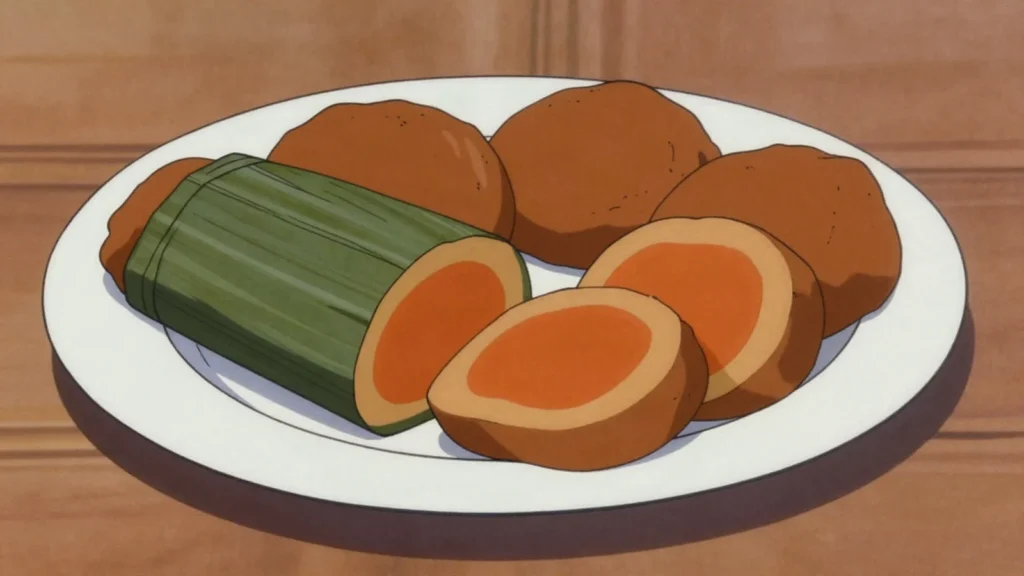
Steamed black-eyed pea pudding wrapped in banana leaf, the same dish as Nigerian moin moin, sold by street vendors in Freetown.
Frequently asked questions
What is Oleleh?
Oleleh is a snack from Sierra Leone: steamed black-eyed-pea and palm-oil pudding wrapped in leaves. Steamed black-eyed pea pudding wrapped in banana leaf, the same dish as Nigerian moin moin, sold by street vendors in Freetown.
How long does Oleleh take to make?
Oleleh takes 45 minutes plus soaking of preparation and 50 minutes of cooking. The recipe makes about 10 parcels. It is rated hard to make.
What can I substitute in Oleleh?
Yes, within limits. Foil or small tins stand in for banana leaves but give none of the aroma; fresh leaf must be passed briefly over a flame until it darkens and softens, or it cracks when folded. Half a boiled egg or flaked smoked fish pushed into each parcel is common and makes it a fuller meal; the plain version is entirely standard.
What is the most important thing to get right in Oleleh?
Rinse the beans and pick them over. Cover them well with cold water. Leave them all to soak overnight. Eight hours is the bare minimum. Rub handfuls of beans between your palms. Work them firmly against each other. Rub them as though washing clothes. Work in handfuls rather than the whole lot. Be firm with them rather than gentle.