
Ingredients
The fish
- 1fermented mandarin fish
- chou guiyu, about 800 g
- bought ready fermented
- rinsed and patted dry
- or fresh mandarin fish, see notes
The aromatics
- 100 gpork belly
- in small dice
- 4spring onions, sliced
- 5garlic cloves, sliced
- 3cm ginger, sliced
- 3dried chillies
- or fresh red chilli
The sauce
- 2 tablespoonsShaoxing wine
- 1 tablespoonlight soy sauce
- 1 teaspoondark soy sauce
- 1 teaspoonsugar
- 200 mlstock or water
- white pepper
To serve
- steamed white rice
- sliced spring onion
- hot from the pan
- in a shared dish
Directions
- Keep bought fermented fish refrigerated or frozen. Never leave it at room temperature at all. Use it by the date given on the package. Discard it if the packaging is swollen or damaged. Never taste anything from a swollen pack.
- Discard it entirely without opening it. Rinse the fermented fish briefly under cold water. Rinse it quickly rather than soaking it. Then pat it thoroughly dry with paper. Take real care with that step. Score the fish on both sides with a sharp knife. Cut diagonal slashes into the thickest parts.
- Cut down toward but not through the bone. That helps it cook evenly right through. Fry the fish in hot oil until golden on both sides. Get the oil genuinely hot before it goes in. Lay it away from you to avoid splashing. Give it about four minutes on each side. Wait until the oil shimmers before adding it. Then do not move it at all for two minutes.
- Turn it once only using two spatulas. Turn it confidently rather than hesitantly. Lift the fried fish out and set it aside. Set it on a plate and keep any juices. Fry the diced pork belly in the same pan. Cook it until the fat renders and it crisps. Give it about five minutes over a moderate heat. Pour off excess oil if there is a great deal. It also adds texture against the soft fish.
- Add the garlic, ginger and dried chillies. Give them about forty seconds in the hot fat. Add the white parts of the spring onion too. Pour the Shaoxing wine into the hot pan. Let it bubble away for about thirty seconds. Dry sherry is a workable substitute for it. Add the soy sauces, sugar and stock.
- Stir it all together and bring it to a simmer. The sauce should come partway up the fish. Spoon sauce over the exposed top of it. Do not fully submerge it in the liquid. Spoon the sauce over it every minute or two.
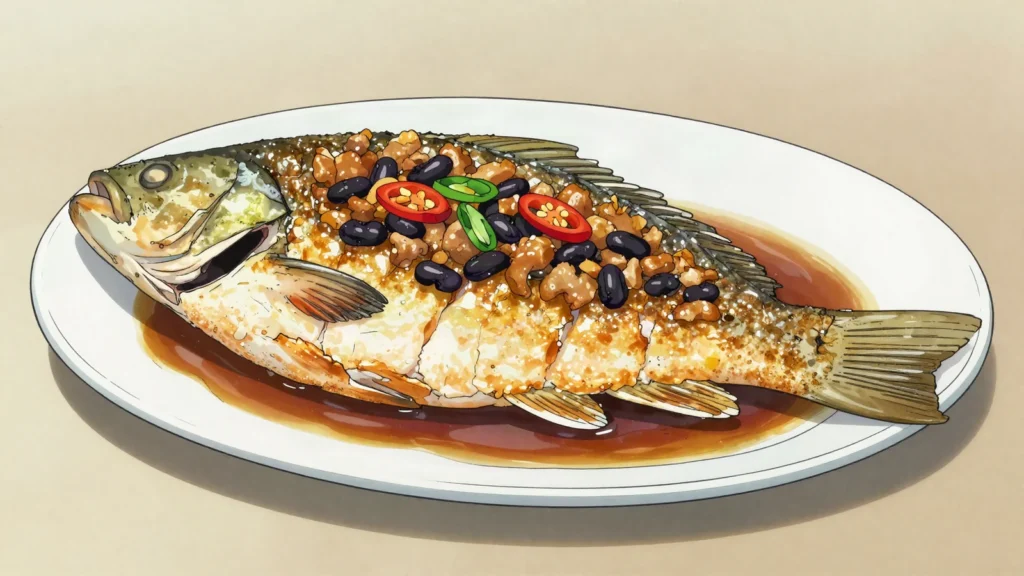
- Keep it at a gentle simmer rather than a boil. The flesh should separate into distinct petals. Lift the fish out onto a serving dish. Use two spatulas to keep it whole. Set it on a warm serving platter. It should thicken enough to coat the fish. Boil it hard for a minute or two. It should become glossy and slightly syrupy. Pour the reduced sauce over the fish.
- Pour it over the whole length of the fish. Those should sit on top of the fish. Scatter the green spring onion over the top. Add it raw at the very last moment. Serve it whole with plenty of steamed rice. Everyone takes pieces with their chopsticks.
Technique
- Do not ferment fish at home. Clostridium botulinum grows in exactly the low-oxygen salty conditions fermented fish creates, fermented fish preparations have caused documented deaths, and botulinum toxin cannot be seen, smelled or tasted — a dangerous batch can look and smell entirely normal, and there is no home test. The atlas records the traditional process as history and deliberately gives no method for it. Buy chou guiyu ready fermented: it is widely sold frozen and vacuum packed in Chinese supermarkets, made under controlled conditions, and that is the safe route by a very long way.
- Keep bought fermented fish refrigerated or frozen, never at room temperature, and use it by the date on the pack. Discard any swollen or damaged package entirely without opening it — a swollen vacuum pack indicates gas production, which can mean dangerous bacterial growth, and nothing from it should be tasted.
- Rinse the fish quickly rather than soaking it, which washes the flavour away, and pat it genuinely dry — wet fish steams and sticks instead of browning.
Substitutions
- Fresh mandarin fish cooked the same way makes a genuinely good dish, but a different one: it lacks both the smell and the changed texture, and the atlas records that difference honestly. Dry sherry replaces Shaoxing wine.
- Huizhou merchants salted river fish for a week-long carry over the mountains, and the mild fermentation that happened en route became the deliberate method — that trade, which ran across China from the Ming period onward, shaped the region’s cooking considerably.
Variations
- Fry the fish in genuinely hot oil and do not move it for the first two minutes — it releases itself once a crust has formed, and it sticks badly to a pan that is not hot enough. Turn it once only, supporting its whole length with two spatulas.
- Braise it gently for about ten minutes, spooning sauce over every minute or two, with the sauce coming only partway up rather than submerging it. Hard boiling breaks the fish apart.
- The flesh separating into distinct petal-like pieces is the whole point and only happens with properly fermented fish — fresh fish simply flakes. Most of the smell has gone by the time it is cooked and what remains is savoury, but warn anyone unfamiliar beforehand, since it is genuinely divisive for newcomers.
History
Huizhou merchants salted river fish for the week-long carry over the mountains; the mild fermentation en route became the region’s signature flavour.
Frequently asked questions
What is Stinky Mandarin Fish?
Stinky Mandarin Fish is a main from China: anhui river fish lightly fermented until pungent, then pan-fried with pork and chili. Huizhou merchants salted river fish for the week-long carry over the mountains; the mild fermentation en route became the region’s signature flavour.
How long does Stinky Mandarin Fish take to make?
Stinky Mandarin Fish takes 20 minutes of preparation and 30 minutes of cooking. The recipe makes serves 4. It is rated hard to make.
What can I substitute in Stinky Mandarin Fish?
Yes, within limits. Fresh mandarin fish cooked the same way makes a genuinely good dish, but a different one: it lacks both the smell and the changed texture, and the atlas records that difference honestly. Dry sherry replaces Shaoxing wine. Huizhou merchants salted river fish for a week-long carry over the mountains, and the mild fermentation that happened en route became the deliberate method — that trade, which ran across China from the Ming period onward, shaped the region’s cooking considerably.
What is the most important thing to get right in Stinky Mandarin Fish?
Keep bought fermented fish refrigerated or frozen. Never leave it at room temperature at all. Use it by the date given on the package. Discard it if the packaging is swollen or damaged. Never taste anything from a swollen pack.