
Ingredients
Meat
- 1 kglamb shoulder or neck on the bone, cut into 4 cm pieces
- 1 tspsalt
The onion base
- 4large onions, about 800 g, finely sliced
- 5 tbspvegetable oil or lamb fat
- 4garlic cloves, crushed
- 1 tspground coriander
- 1 tspturmeric
- 1 tspground cumin
- ½ tspblack pepper
- ½ tspground cinnamon
- 2 tbsptomato puree
- 2tomatoes, chopped
- 2 tspsalt
- 700 mlwater
Optional additions
- 150 gyellow split peas, soaked 1 hr (qorma-e dal nakhod)
- 2dried limes, pierced
- 1 tspchilli flakes
To serve
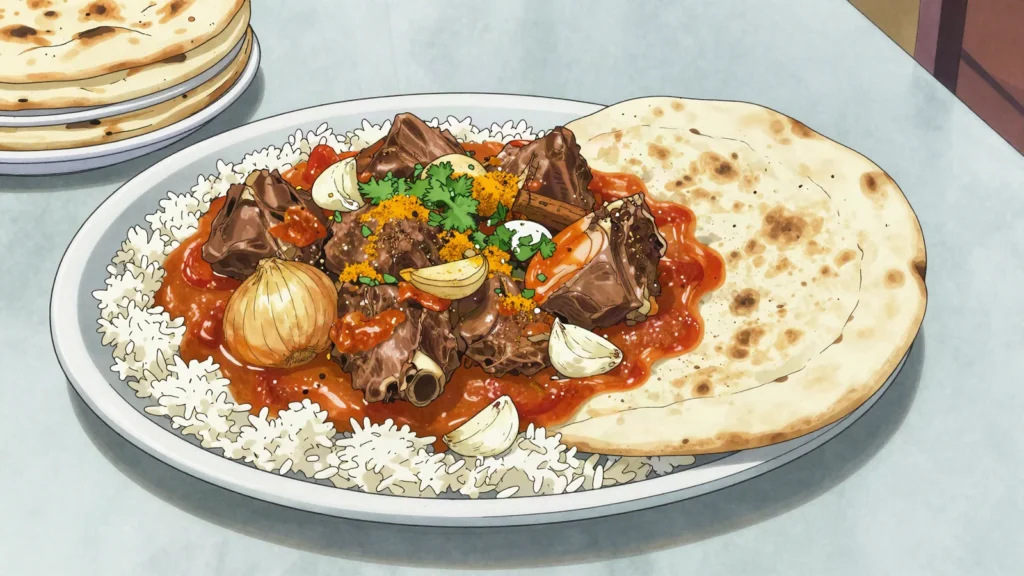
- chalaw (plain white Afghan rice) or naan
- chopped coriander
Directions
- Fry the sliced onions in the oil in a heavy pot over medium heat, stirring often, for 25 to 30 minutes. This is the recipe: the onions must go past golden to a deep, even mahogany brown and collapse to a fraction of their volume.
- Push the onions aside, raise the heat and brown the salted lamb in the same fat for 6 to 8 minutes, until it takes colour on all sides.
- Add the garlic and all the ground spices and stir for 1 minute, until they smell toasted rather than raw; if the pan looks dry, add a spoon of water rather than more oil.
- Stir in the tomato puree and the chopped tomatoes and cook 5 minutes until the mixture darkens to brick red and the oil starts to separate.
- Add the water, the salt and the dried limes if using, bring to a boil, then cover and simmer at the barest bubble for 1 hour 15 minutes.
- If you are making the split-pea version, add the drained peas after 45 minutes so they finish soft but whole.
- Uncover for the last 20 minutes and let the sauce reduce until it is thick, dark and glossy, and a slick of clear spiced oil rises to the surface. That oil separating is how Afghan cooks know a qorma is finished.
- Check the meat: it should give completely to a spoon and be falling from the bone. Taste and adjust the salt and the chilli.
- Rest the pot off the heat for 10 minutes so the fat settles and the sauce thickens further, then scatter with coriander.
- Serve spooned over chalaw, with the sauce and its oil poured across the white rice, or with naan for scooping.
Technique
- Qorma simply means a braise, and it is the everyday backbone of Afghan cooking rather than one fixed dish. The constant is the deeply browned onion base, which supplies almost all the colour, body and sweetness.
- There is no cream, no yoghurt and no nut paste in an Afghan qorma, which is what distinguishes it from the Indian korma it shares a name with.
- Cook the onions further than feels comfortable, but stop short of black. Burnt onion makes the whole pot bitter and cannot be corrected.
- The dried lime is optional but transforms the dish, giving the sour, faintly fermented top note found in Herati cooking.
Substitutions
- No lamb: this is made with beef, chicken or, in poorer households and in Ramadan, with only potato, split peas and spinach. Vegetable oil replaces the lamb fat without much loss.
Variations
- Qorma-e sabzi is made with spinach, coriander and dill instead of tomato.
- Qorma-e lawand thickens the sauce with yoghurt at the end.
- Qorma-e bamiya adds okra in the last 20 minutes.
History
A broad category of onion-based Afghan braises, in which meat or vegetables are slow-cooked in a base of heavily caramelised onion along with tomato and warm spices, until the sauce thickens and deepens in flavour, underpinning a very large share of everyday Afghan home cooking rather than describing one single fixed recipe. Its name is generally traced to the Turkic word qavurma, meaning to fry or braise, which also passed into other regional cuisines, including Indian korma, reflecting shared Central Asian and Turkic culinary vocabulary and technique spread across a wide geographic area through many centuries of trade, migration and empire. Different Afghan qorma varieties are distinguished by their specific main ingredient, whether spinach, aubergine, okra or a particular cut of meat, all built on that same fundamental onion-braising technique.
Frequently asked questions
What is Qorma?
Qorma is a main from Afghanistan: onion-based braise of meat or vegetables, eaten with rice or naan. A broad category of onion-based Afghan braises, in which meat or vegetables are slow-cooked in a base of heavily caramelised onion along with tomato and warm spices, until the sauce thickens and deepens in flavour, underpinning a very large share of everyday Afghan home cooking rather than describing one single fixed recipe. Its name is generally traced to the Turkic word qavurma, meaning to fry or braise, which also passed into other regional cuisines, including Indian korma, reflecting shared Central Asian and Turkic culinary vocabulary and technique spread across a wide geographic area through many centuries of trade, migration and empire. Different Afghan qorma varieties are distinguished by their specific main ingredient, whether spinach, aubergine, okra or a particular cut of meat, all built on that same fundamental onion-braising technique.
How long does Qorma take to make?
Qorma takes 25 min of preparation and 2 hr of cooking. The recipe makes 6 servings. It is rated medium to make.
What can I substitute in Qorma?
Yes, within limits. No lamb: this is made with beef, chicken or, in poorer households and in Ramadan, with only potato, split peas and spinach. Vegetable oil replaces the lamb fat without much loss.
What is the most important thing to get right in Qorma?
Fry the sliced onions in the oil in a heavy pot over medium heat, stirring often, for 25 to 30 minutes. This is the recipe: the onions must go past golden to a deep, even mahogany brown and collapse to a fraction of their volume.