
Ingredients
Filling
- 900 gbeef chuck or shin, in 4 cm cubes
- 350 gox kidney, or lamb kidney
- milk, for soaking the kidney
- 3onions, chopped
- 3 tbspplain flour
- 3 tbspbeef dripping or oil
- 2 tbsptomato paste
- 1 tbspWorcestershire sauce, which contains anchovy
- 300 mldark ale or stout
- 600 mlbeef stock
- 2bay leaves
- a few sprigs thyme
- salt and plenty of black pepper
Pastry
- 350 gplain flour
- 175 gcold butter, or half butter and half lard
- 1 tspsalt
- about 90 ml iced water
- 1egg, beaten, to glaze
To serve
- mashed potato
- peas or greens
- and more gravy
Directions
- Cut the kidney in half and cut out every trace of the white core and the tubes with a small sharp knife. Be thorough about this, since the core is unpleasantly chewy and carries much of the strong flavour.
- Soak the trimmed kidney in milk, or in salted water, for at least an hour, and two is better. Rinse it thoroughly and pat it completely dry afterwards. Change the liquid once if it is discoloured.
- Use roughly a quarter to a third kidney to beef by weight. Too much and it dominates the pie entirely, which is the other reason people avoid it. Use chuck or shin rather than anything lean, since the collagen breaks down into gelatine and gives the gravy its body.
- Cut it into large cubes, since it shrinks considerably over three hours. Pat the meat completely dry and brown it hard in batches, in dripping if you have it. Brown the kidney separately and briefly, since it toughens if overcooked at this stage. Fry the onions in the same pan until soft and golden, scraping the base.
- Stir in the flour and cook it for two minutes, then the tomato paste. Pour in the ale and scrape everything off the bottom of the pan. Let the ale reduce by half before adding the stock, which cooks off its raw bitterness.
- Return the beef, add the herbs and Worcestershire sauce, and season. Cook it covered at a bare simmer, or in a 150°C oven, for two and a half hours. Add the kidney for the last forty-five minutes only. Kidney cooked for three hours turns grainy and hard, so it goes in late, and this is a genuine improvement on older recipes.
- Reduce the liquid until it coats the meat heavily and holds a channel when you drag a spoon through it. A thin filling turns to steam in the oven, lifts the pastry off the top and gives a soggy base.
- Let it go cold before it goes anywhere near pastry, and refrigerating it overnight is better still. Warm filling melts the fat in the pastry before it reaches the oven, which gives a greasy, sunken, tough crust. Now the pastry, which must be cold.
- Rub the cold cubed butter into the flour and salt, leaving pea-sized pieces visible. Bind with iced water, using as little as will bring it together, and chill it for an hour. Fill a pie dish with the cold filling, mounded slightly in the middle.
- Brush the rim of the dish with beaten egg and lay a strip of pastry around it, then the lid on top. That collar of pastry on the rim gives the lid something to grip, which is why it stops sliding into the dish.
- Press the edges firmly, trim, and crimp them. Cut one or two holes in the lid. Steam must escape or it will lift the pastry and leave a raw layer underneath. Brush with beaten egg and bake at 200°C for thirty-five to forty minutes until deep golden. Rest it for ten minutes before serving, and serve with mashed potato, greens and more gravy.
Technique
- Steak and kidney pudding is a different dish with a steamed suet crust.
- Trimming and soaking the kidney is what makes it palatable.
- The filling must be completely cold before the pastry goes on.
Substitutions
- Lamb kidney in place of ox kidney, which is milder.
- Ready-made puff pastry, which is common and perfectly good.
Variations
- Steak and kidney pudding, in a steamed suet crust.
- Steak and ale pie, without the kidney.
- With mushrooms added to the filling.
History
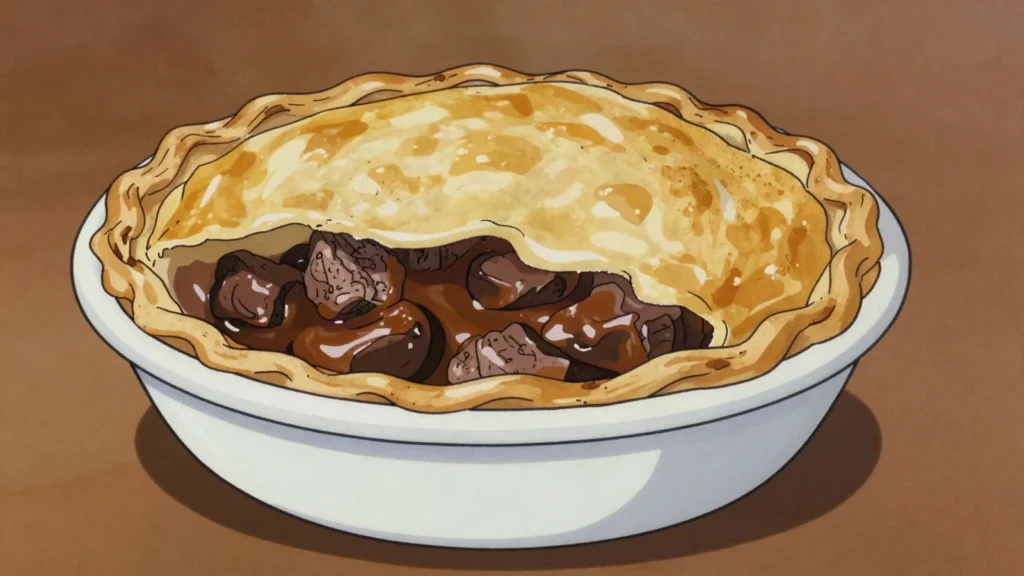
A baked pie, its filling combining diced beef steak and ox or lamb kidney in a rich gravy, encased in a pastry crust, documented across the United Kingdom for many generations as one of the country’s most traditional savory pies, reflecting a broader British culinary tradition of using offal, including kidney, as a valued and flavourful ingredient rather than discarding it. Its rich, deeply savory gravy, developed through slow-braising the meat and kidney together before baking beneath the pastry, reflects patient, traditional British pie-making technique passed down across generations. Steak and kidney pie remains one of the most iconic savory pies within traditional British cuisine.
Frequently asked questions
What is Steak and kidney pie?
Steak and kidney pie is a main from United Kingdom: beef and kidney in rich gravy baked in pastry. A baked pie, its filling combining diced beef steak and ox or lamb kidney in a rich gravy, encased in a pastry crust, documented across the United Kingdom for many generations as one of the country’s most traditional savory pies, reflecting a broader British culinary tradition of using offal, including kidney, as a valued and flavourful ingredient rather than discarding it. Its rich, deeply savory gravy, developed through slow-braising the meat and kidney together before baking beneath the pastry, reflects patient, traditional British pie-making technique passed down across generations. Steak and kidney pie remains one of the most iconic savory pies within traditional British cuisine.
How long does Steak and kidney pie take to make?
Steak and kidney pie takes 45 min of preparation and 3 hr of cooking. The recipe makes 6 servings. It is rated medium to make.
What can I substitute in Steak and kidney pie?
Yes, within limits. Lamb kidney in place of ox kidney, which is milder. Ready-made puff pastry, which is common and perfectly good.
What is the most important thing to get right in Steak and kidney pie?
Use roughly a quarter to a third kidney to beef by weight. Too much and it dominates the pie entirely, which is the other reason people avoid it. Use chuck or shin rather than anything lean, since the collagen breaks down into gelatine and gives the gravy its body.