
Ingredients
The beans
- 500 gdried black beans
- soaked overnight
- picked over for stones
- 2 litreswater
The base
- 2onions, chopped
- 1sweet pepper, chopped
- 6garlic cloves, crushed
- 3 tablespoonsoil
- 1 teaspoonground cumin
- 2bay leaves
- a bunch of coriander stalks
- salt and black pepper
The eggs
- 6eggs
- one per bowl
- poached in the soup
- or poached separately
To finish
- chopped coriander
- a squeeze of lime
- soured cream, optional
- white rice
- and tortillas
Directions
- Poach in water with a splash of vinegar. Eggs poached in thick soup can be hard to judge. Cook the egg fully through if that is a concern. A firm yolk is the simple alternative. Cook them until entirely soft with no hard core. Soak the beans overnight in plenty of water. Discard that soaking water afterward. Rinse them before cooking in fresh water.
- Pick the dried beans over for stones and debris. Spread them out on a tray and look them over. Discard anything that is not a sound bean. Cover the beans with cold water overnight. Use far more water than seems necessary. Cover them by ten centimetres at least.
- Boil the beans in fresh water until soft. Cover them by about five centimetres of water. Do not use more than you need. Keep hot water ready to top it up. Give them about ninety minutes at a simmer. Add salt only in the last twenty minutes. Salt added early toughens the bean skins.
- Add bay leaves and coriander stalks to the pot. Keep the coriander leaves back for the end. Heat oil in a pan and cook the onion and pepper. Give them about ten minutes until soft.
- Add the crushed garlic and the ground cumin. Garlic burns and turns bitter within a minute. Stir the sofrito into the cooked beans. Add a ladle of bean liquid to the pan first. Swirl it to lift everything from the base. Simmer everything together for twenty minutes.
- Stir it regularly so it does not catch. Blend about half of the soup until smooth. Lift out half the beans with a slotted spoon. Blend the rest with the liquid until smooth. Blending hot soup in a jug blender is dangerous. Steam expands and can force the lid off. Let it cool a little and fill the jug half full.
- Hold the lid down with a folded cloth. Blend part of the soup and leave the rest. Keep the blender head under the surface. Lifting it out while running sprays hot soup. Season the soup well with salt and pepper. Taste it carefully and add until it lifts. Bring the soup to a bare simmer for the eggs. It must be barely trembling rather than bubbling.
- Turn the heat right down before they go in. Crack each egg into a small cup first. Six eggs need a genuinely wide pot. Work in two batches if it is narrow. Give them about four minutes at a bare simmer.
- Cover the pot to help the tops set. Poach them separately if you prefer certainty. Poach the eggs in barely simmering water. Add a splash of vinegar to help them hold. Give them three minutes for a soft yolk.
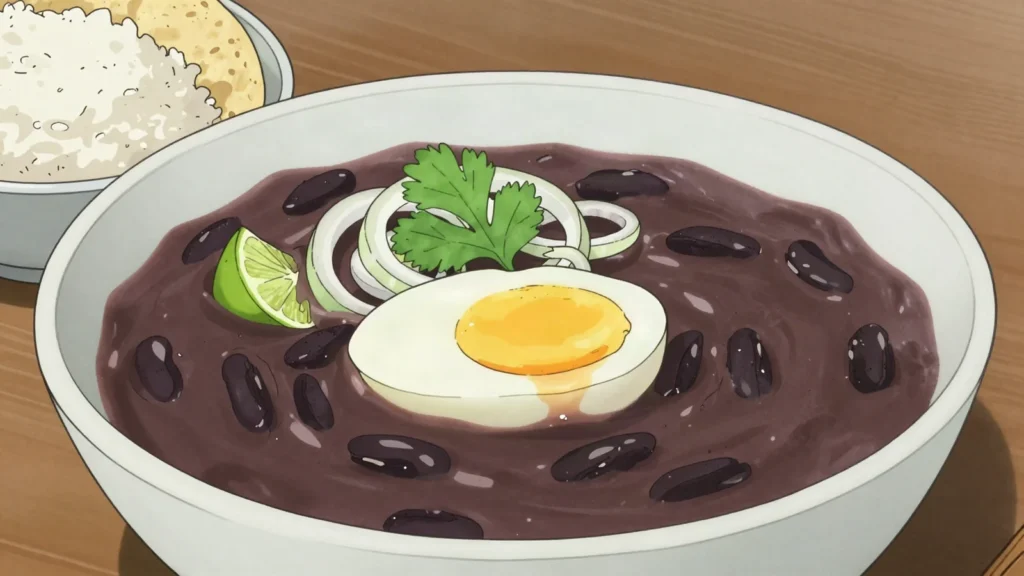
- Ladle the soup into bowls around each egg. Lift each egg out with a slotted spoon. Set it in the centre of a bowl. That keeps the egg whole and visible. Scatter chopped coriander over each bowl. Use the leaves kept back from the stalks. Add them at the last moment before serving.
- Squeeze lime over the bowl before eating. Put wedges on the table for each eater. Serve white rice and tortillas alongside. Break the yolk into the soup as you eat. The soup keeps four days refrigerated. Poach fresh eggs each time you serve it.
Technique
- A soft-poached yolk is not fully cooked and carries a small salmonella risk, which matters most for pregnant people, the very young and anyone immunocompromised. The risk from a fresh egg is genuinely small but not zero; pasteurised eggs remove it entirely, and cooking the yolk firm is the simple alternative.
- Blending hot soup in a jug blender is dangerous, since steam expands and can force the lid off — a stick blender used in the pot avoids that, kept under the surface since lifting it out while running sprays hot soup. If you must use a jug, fill it half full and hold the lid with a folded cloth.
- Add salt only in the last twenty minutes of cooking the beans: salt added early toughens the skins and slows the softening considerably. Cook them until entirely soft with no hard core, testing several rather than one.
Substitutions
- Poaching the eggs separately in barely simmering water with a splash of vinegar, then sliding them into the bowls, is far more reliable than poaching them in the soup — you cannot see them through the dark liquid, which makes timing genuinely hard. Both routes are used at home and the atlas gives both honestly.
- A spoonful of soured cream on top is added by some households, though it is optional rather than traditional everywhere.
Variations
- Never discard the bean cooking liquid: it carries both the colour and the flavour, and the soup should be genuinely dark, almost black. Use only enough water to cover the beans by five centimetres, since that water becomes the broth.
- Blend about half the soup and return the whole beans to the pot — that combination of thickened broth and whole beans is genuinely characteristic, rather than a smooth purée.
- For poaching in the soup, bring it to a bare tremble rather than a bubble, crack each egg into a small cup first so you can slide it in gently without breaking the yolk, space them well apart, and cover the pot for about four minutes to help the tops set. Ladle the soup around each egg rather than over it, so it stays whole and visible.
History
Black bean soup served with a poached egg, built on the beans that anchor the country’s everyday diet.
Frequently asked questions
What is Sopa negra?
Sopa negra is a soup & stew from Costa Rica: black bean soup with a soft-poached egg. Black bean soup served with a poached egg, built on the beans that anchor the country’s everyday diet.
How long does Sopa negra take to make?
Sopa negra takes 15 minutes plus soaking of preparation and 2 hours of cooking. The recipe makes serves 6. It is rated easy to make.
What can I substitute in Sopa negra?
Yes, within limits. Poaching the eggs separately in barely simmering water with a splash of vinegar, then sliding them into the bowls, is far more reliable than poaching them in the soup — you cannot see them through the dark liquid, which makes timing genuinely hard. Both routes are used at home and the atlas gives both honestly. A spoonful of soured cream on top is added by some households, though it is optional rather than traditional everywhere.
What is the most important thing to get right in Sopa negra?
Boil the beans in fresh water until soft. Cover them by about five centimetres of water. Do not use more than you need. Keep hot water ready to top it up. Give them about ninety minutes at a simmer. Add salt only in the last twenty minutes. Salt added early toughens the bean skins.