
Ingredients
Rye pastry
- 400 grye flour
- 100 gplain flour
- 100 gbutter, melted
- 200 mlhot water
- 1 tspsalt
- 1 tbspsugar
Potato layer
- 500 gfloury potatoes
- 50 gbutter
- 100 mlsour cream
- 1egg
- salt
Carrot layer
- 500 gcarrots
- 80 gsugar
- 100 mlsour cream
- 1egg
- 1 tspground caraway
- a pinch of salt
To finish
- sour cream, for brushing
- ground cinnamon or caraway
To serve
- with milk or tea
Directions
- Mix the rye and plain flour with the salt and sugar. Pour in the melted butter and the hot water and mix quickly to a firm dough. Use hot water rather than cold. Hot water gelatinises some of the rye starch, which is what gives this dough enough cohesion to be shaped at all.
- Work it just until it comes together and no more. Rest the dough for 30 minutes, covered. Meanwhile boil the potatoes and carrots separately until soft. Cook them separately, because they take different times and their purées must stay distinct. Mash the potatoes with the butter, sour cream, egg and salt into a smooth savoury purée.
- Mash them by hand or with a ricer, never in a processor, which turns potato to glue in seconds. Mash or blend the carrots with the sugar, sour cream, egg and caraway into a sweet purée. Both fillings should be thick enough to hold their shape on a spoon.
- Take a piece of dough and roll or press it into a round of about 12 cm and 3 mm thick. Now pinch the edge up all the way round to make a low wall of about 1.5 cm, like a small open tart case.
- Pinch the wall up firmly and evenly. Rye pastry is fragile and a thin or uneven wall collapses outward as it bakes and the filling escapes. Set the cases on a lined tray. Spoon the potato purée in first and level it. That is how it is defined and the two layers should be visibly distinct rather than mixed.
- Brush the carrot layer with sour cream. Dust with cinnamon or caraway. Bake at 200°C (390°F) for 25 to 30 minutes. The pastry should be firm and dry and the carrot layer set and lightly browned at the edges.
- Cool them on a rack before serving. They are eaten warm or at room temperature, and they keep two or three days. Serve them with milk or tea, and they are eaten with the hands.
Technique
- The TSG registration in 2013 fixed the recipe and the region.
- It is also called žograusis or dižrauši in some parts of Kurzeme.
- It was traditionally made for weddings, funerals and midsummer.
Substitutions
- A mix of rye and wholemeal wheat flour, which is easier to handle.
- Crème fraîche in place of sour cream.
Variations
- With more sugar in the carrot layer.
- Made smaller, as canapés.
- With cinnamon rather than caraway.
History
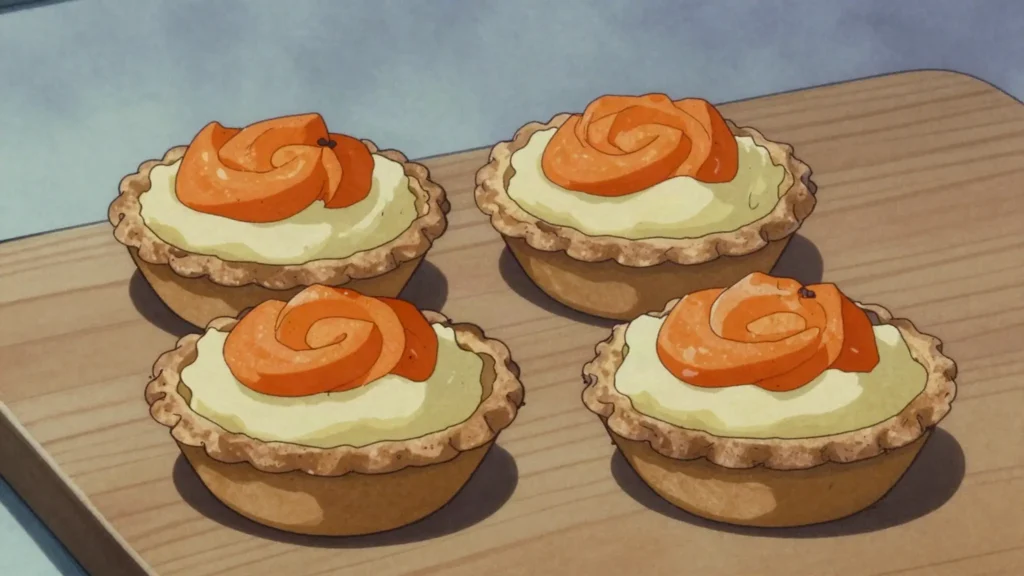
Rye pastry case filled with carrot and potato purée from Kurzeme; in 2013 it became the first Latvian food with EU traditional speciality status.
Frequently asked questions
What is Sklandrausis?
Sklandrausis is a dessert from Latvia: sweet rye tartlet of carrot and potato, Courland heritage. Rye pastry case filled with carrot and potato purée from Kurzeme; in 2013 it became the first Latvian food with EU traditional speciality status.
How long does Sklandrausis take to make?
Sklandrausis takes 1 hr plus 30 min resting of preparation and 30 min of cooking. The recipe makes 12 tartlets. It is rated medium to make.
What can I substitute in Sklandrausis?
Yes, within limits. A mix of rye and wholemeal wheat flour, which is easier to handle. Crème fraîche in place of sour cream.
What is the most important thing to get right in Sklandrausis?
Mix the rye and plain flour with the salt and sugar. Pour in the melted butter and the hot water and mix quickly to a firm dough. Use hot water rather than cold. Hot water gelatinises some of the rye starch, which is what gives this dough enough cohesion to be shaped at all.