
Ingredients
Bumbu
- 6shallots, peeled
- 4garlic cloves
- 4red long chillies, deseeded
- 3bird’s eye chillies
- 1 tspterasi (fermented paste), toasted
- ½ tspsalt
Fried rice
- 500 gcooked long-grain rice, cooled overnight in the refrigerator
- 3 tbspvegetable oil
- 150 gchicken thigh, diced small
- 3 tbspkecap manis (sweet soy sauce)
- 1 tbsplight soy sauce
- 2spring onions, sliced
- ½ tspwhite pepper
To serve
- 2eggs, for frying
- 1cucumber, sliced
- 1tomato, sliced
- krupuk udang (crackers)
- 3 tbspcrisp fried shallots
- sambal, on the side
Directions
- Pound the shallots, garlic, both chillies, toasted terasi and salt in a mortar to a coarse red paste, or blitz briefly with 1 tbsp oil.
- Break up the cold rice with wet fingers so there are no clumps. Day-old, dry, cold rice is essential; fresh rice steams and turns to porridge in the wok.
- Heat a wok over the highest heat until it smokes, add 2 tbsp oil and fry the chicken hard for 2 minutes until coloured, then push to the side.
- Add the remaining oil and the bumbu and fry, stirring, for 2–3 minutes until the paste darkens, loses its raw smell and the oil separates around it.
- Tip in the rice and toss hard, pressing it against the hot wok in stages, for 3–4 minutes until every grain is coated and you hear it crackle rather than hiss.
- Pour the kecap manis and soy down the side of the wok so they caramelise on the metal for a second before hitting the rice; toss until the rice is evenly brown, not blotchy.
- Add the spring onion and white pepper, toss once more, and taste for salt and sweetness.
- Fry the eggs separately in hot oil until the whites are lacy and crisp at the edges and the yolks still runny (telur mata sapi).
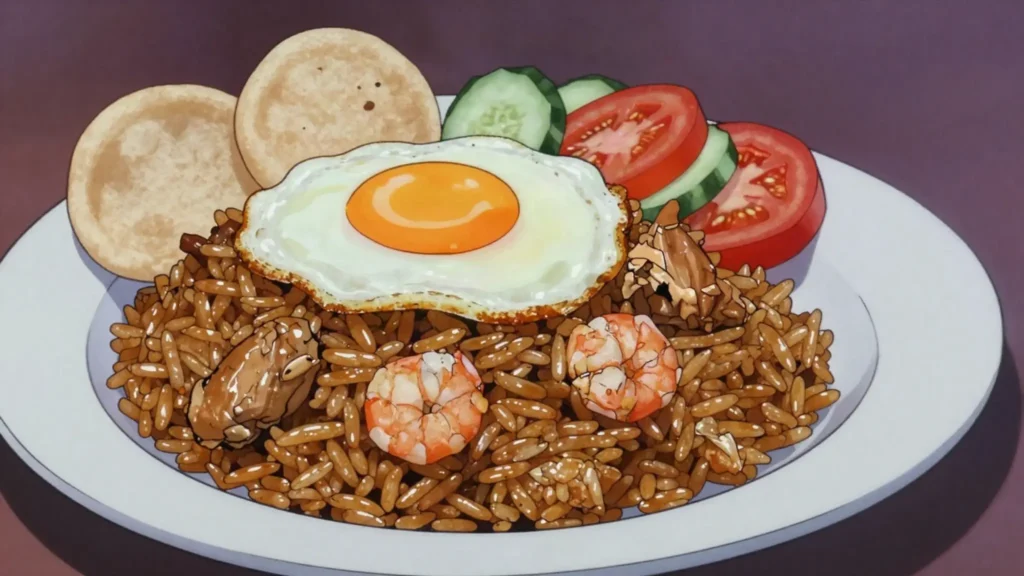
- Mound the rice on plates, top each with an egg, and serve with cucumber, tomato, crackers, fried shallots and sambal.
Technique
- Kecap manis is the signature: a thick, molasses-sweet soy that gives nasi goreng its brown colour and sticky gloss. Ordinary soy sauce with sugar is a poor stand-in but the usual emergency fix.
- Terasi is what separates Indonesian nasi goreng from other Asian fried rices. Toast it first in foil or a dry pan for 30 seconds until it smells pungent.
- Cook in small batches. A domestic hob cannot keep 1 kg of rice moving at wok temperature, and crowding steams the grains.
Substitutions
- No kecap manis: simmer 4 tbsp dark soy sauce with 3 tbsp palm sugar until syrupy.
- Terasi can be replaced by a small spoon of miso for savoury depth, though the character changes.
- The chicken can be swapped for prawns, added in the last 2 minutes.
Variations
- Nasi goreng kampung is the village version with anchovies, kangkung and more chilli.
- Nasi goreng jawa is spicier and includes candlenut and lemongrass in the bumbu.
- Nasi goreng pete adds pungent stink beans and is a Jakarta street favourite.
History
Grew out of an old Chinese culinary habit of frying leftover cooked rice rather than throwing it away, brought to the Indonesian archipelago by Chinese traders and immigrants over centuries of contact, well before Indonesia existed as a modern country. Indonesian cooks reworked the technique with local ingredients — kecap manis, a sweet, thick soy sauce specific to Indonesian cooking, along with shrimp paste, chili and local vegetables — turning a frugal way to use up rice into a dish distinct enough to be considered a national one. It was formally declared one of Indonesia’s national dishes in 2018, and street-level nasi goreng vendors selling it late into the night remain common across the country’s cities.
Frequently asked questions
What is Nasi Goreng?
Nasi Goreng is a main from Indonesia: sweet-soy fried rice with fried egg and krupuk; national favourite. Grew out of an old Chinese culinary habit of frying leftover cooked rice rather than throwing it away, brought to the Indonesian archipelago by Chinese traders and immigrants over centuries of contact, well before Indonesia existed as a modern country. Indonesian cooks reworked the technique with local ingredients — kecap manis, a sweet, thick soy sauce specific to Indonesian cooking, along with shrimp paste, chili and local vegetables — turning a frugal way to use up rice into a dish distinct enough to be considered a national one. It was formally declared one of Indonesia’s national dishes in 2018, and street-level nasi goreng vendors selling it late into the night remain common across the country’s cities.
How long does Nasi Goreng take to make?
Nasi Goreng takes 20 min of preparation and 15 min of cooking. The recipe makes 2 servings. It is rated easy to make.
What can I substitute in Nasi Goreng?
Yes, within limits. No kecap manis: simmer 4 tbsp dark soy sauce with 3 tbsp palm sugar until syrupy. Terasi can be replaced by a small spoon of miso for savoury depth, though the character changes. The chicken can be swapped for prawns, added in the last 2 minutes.
What is the most important thing to get right in Nasi Goreng?
Tip in the rice and toss hard, pressing it against the hot wok in stages, for 3–4 minutes until every grain is coated and you hear it crackle rather than hiss.