
Ingredients
Fish
- 300 gdried kapenta
- water, for rinsing
Pot
- 3 tbspoil
- 2onions, sliced
- 3tomatoes, chopped
- 2 clovesgarlic
- 1green chilli, optional
- salt
- black pepper
To serve
- nshima
- rape or pumpkin leaves
Directions
- Kapenta are small freshwater sardines from Lake Tanganyika and Lake Kariba, sun-dried whole and sold by the cup.
- Rinse them in two or three changes of water, rubbing them between your hands, and pick out any grit or sand.
- Rinse them but do not soak them for long. A few minutes takes away the dust and excess salt; half an hour turns them to mush and washes the flavour out.
- Drain them thoroughly and let them sit in a colander while you start the pot.
- Dry-fry the drained kapenta in a hot pan for 3 to 4 minutes, with no oil, until they smell toasted.
- That dry toasting is the step that separates good kapenta from a soggy grey pan of it. It drives off the last moisture and firms them up.
- Lift them out, then fry the onions in the oil until soft and golden.
- Add the garlic, then the tomatoes, and cook them down for 10 minutes into a thick sauce.
- Return the kapenta, add a splash of water, and simmer for 10 minutes.
- Season carefully and taste before adding any salt at all, because dried fish carries a great deal of its own.
- It should be thick and clinging rather than soupy, so it sits on the nshima.
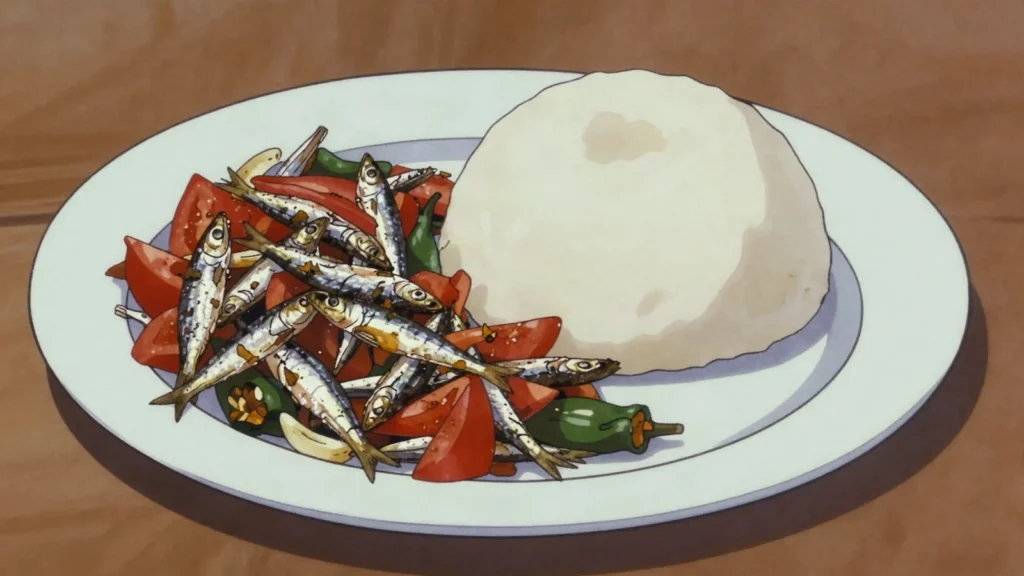
- Serve with nshima and a plate of greens.
- There are two grades sold: the smaller Tanganyika kapenta and the larger Kariba ones, and the small ones are eaten whole, heads and all.
Technique
- It is a cheap and important protein source across Zambia, Zimbabwe and Malawi, and it is not a poverty food so much as a daily one.
- The bones are soft enough to eat and are where much of the calcium is.
- Some cooks add a spoonful of peanut butter to the sauce, which is common in the north.
Substitutions
- Any small dried fish, including dried anchovy or ikan bilis.
- Fresh kapenta if you are near the lake, which needs no rinsing and much less cooking.
Variations
- With peanut butter stirred through.
- Deep-fried crisp and eaten as a snack.
- With more chilli, as it is made in Siavonga.
History
A small, sardine-like freshwater fish, dried and often fried or stewed, harvested primarily from Lake Kariba and Lake Tanganyika, whose presence in those specific lakes reflects a documented history of deliberate introduction: kapenta were introduced to Lake Kariba specifically in the 1960s, after the lake’s creation by the completion of the Kariba Dam, as a way to establish a viable fishery in what had previously been dry land before the dam flooded the valley. Dried kapenta became an important, affordable protein source across Zambia and neighboring Zimbabwe following that introduction, distinguishing kapenta from most other traditional African dishes with roots reaching back many centuries, since its very presence in the region is a comparatively recent, documented 20th-century development tied directly to a specific engineering project.
Frequently asked questions
What is Kapenta?
Kapenta is a main from Zambia: small dried Tanganyika sardines fried with tomato and onion. A small, sardine-like freshwater fish, dried and often fried or stewed, harvested primarily from Lake Kariba and Lake Tanganyika, whose presence in those specific lakes reflects a documented history of deliberate introduction: kapenta were introduced to Lake Kariba specifically in the 1960s, after the lake’s creation by the completion of the Kariba Dam, as a way to establish a viable fishery in what had previously been dry land before the dam flooded the valley. Dried kapenta became an important, affordable protein source across Zambia and neighboring Zimbabwe following that introduction, distinguishing kapenta from most other traditional African dishes with roots reaching back many centuries, since its very presence in the region is a comparatively recent, documented 20th-century development tied directly to a specific engineering project.
How long does Kapenta take to make?
Kapenta takes 15 min plus soaking of preparation and 25 min of cooking. The recipe makes 4 servings. It is rated easy to make.
What can I substitute in Kapenta?
Yes, within limits. Any small dried fish, including dried anchovy or ikan bilis. Fresh kapenta if you are near the lake, which needs no rinsing and much less cooking.
What is the most important thing to get right in Kapenta?
Rinse them but do not soak them for long. A few minutes takes away the dust and excess salt; half an hour turns them to mush and washes the flavour out.