
Ingredients
The fish
- 1 kgoily fish
- with heads and bones
- or fish heads and frames
- cleaned
The spicing
- 5cm ginger, grated
- 8garlic cloves, crushed
- 2 teaspoonsground turmeric
- 2 teaspoonsground cumin
- 1 teaspoonground coriander
- 1 teaspoontimur
- Nepali pepper, or Sichuan pepper
- 2hot chillies, chopped
- 3 tablespoonsmustard oil
The rest
- 2onions, finely chopped
- juice of 2 lemons
- chopped coriander
- salt
- about 1.5 litres water
To serve
- cold, in slices
- with beaten rice
- at a winter feast
Directions
- Cool it fast and keep it cold. Use a refrigerator rather than cold air. Cold night air varies enormously. Discard it if it smells at all off. Do not take chances with set fish. Discard it entirely if it does. It is usually heated until it smokes.
- Heat it until it just begins to smoke. Rinse the fish and heads thoroughly. Rinse away any blood entirely. Check inside the head cavities. Remove the gills if they are still there. Cut the gills out with scissors. Discard all of the gills entirely. Put the fish and heads in a pot. Cover them all with cold water. Understanding the cold start is worth explaining.
- Start it in cold rather than hot water. Bring it up gently to a simmer. Skim all the scum as it rises. Grey scum rises in the first ten minutes. Lift it off with a flat spoon. Keep skimming until no more rises. That keeps the finished jelly clear. Keep it at the very barest simmer. It must barely bubble at the surface. Simmer it for about one full hour. Fish stock needs less time than meat.
- Lift the fish out onto a tray. Strain the liquid through a fine cloth. Strain it twice if it looks cloudy. Do not press the solids at all. Put a spoonful on a cold plate. It should set firm within ten minutes. Boil it down further to concentrate it. Reduce it by a third if needed.
- Pull all the flesh off the bones. Do it while the fish is still warm. Discard all bone, skin and gristle. Flake the flesh into small pieces. Check the flesh very thoroughly for bones. Take real time over that check. Heat the mustard oil until it smokes. Heat it until it just begins to smoke. Then take it off and let it cool.
- Return the pan to a moderate heat. Add all the chopped onion to it. Cook it for about ten full minutes. It should soften and turn golden. Add the garlic, ginger and chilli. Give them about one full minute. Add the turmeric, cumin and coriander.
- Add the ground timur pepper as well. Fry them briefly in the hot oil. Heat releases their aromatic oils. Give them about thirty seconds only. Stir them so they do not burn. Stir the spice base into the stock. Add it in with all of its oil. Stir it right through the liquid. Warm all of it through gently. Stir the flaked fish into the liquid.
- Fold it in gently rather than stirring. That keeps the flakes reasonably whole. Taste it and then salt it well. Cold food needs more salt than hot. Stir all of the lemon juice in. Add it in off the heat entirely. Taste it and adjust from there. Stir chopped coriander through it. Add it once the liquid is cool. Hot liquid turns it dark and limp. Keep some back to scatter on top.
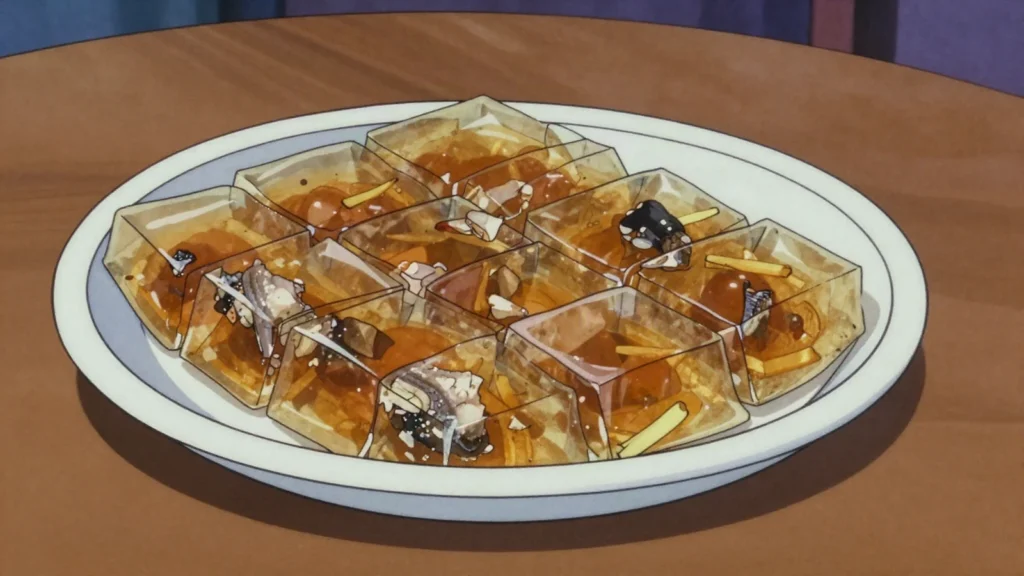
- Pour it into a shallow wide dish. About three centimetres deep is right. Cool it to room temperature quickly. Set the dish in a bowl of cold water. Warm fish standing out is a real risk. Get it cold and then refrigerate it. Cut it into squares or slices. Use a sharp knife dipped in hot water. Lift the pieces out with a spatula. It is flattened dry rice flakes.
Technique
- This is cooked fish set in jelly and eaten cold, so it must be kept genuinely cold throughout — cooked fish left warm grows bacteria and fish spoils faster than most meat. It traditionally sets overnight in cold Kathmandu winter air, but night air varies enormously and is not cold enough in most places, so the atlas recommends a refrigerator, which holds a reliably safe temperature. Cool it fast in a bowl of cold water first. It keeps two days at most, and any sour or ammoniac smell means discard it entirely.
- Check the flaked fish very thoroughly for bones under good light on a pale plate, running your fingers through every flake: bones are hidden completely in the jelly, nobody expects them in a set dish and bites down without care, and a bone can lodge in the throat.
- The jelly sets from the fish itself, so heads and bones are essential rather than optional — fillets alone will not set at all, since the collagen is in the heads, bones and skin. Test before setting by refrigerating a spoonful: it should set firm within ten minutes, and if it stays liquid, reduce the stock by a third to concentrate the gelatine.
Substitutions
- Sichuan pepper stands in for timur, Nepali pepper, which gives a citrusy numbing tingle on the tongue — a genuine physical effect quite distinct from chilli heat, and characteristic of Newar cooking.
- Heat mustard oil until it just begins to smoke and then let it cool before cooking with it, which is standard Nepali practice and mellows its harsh pungency; ventilate the kitchen, since the smoking oil smells very strong and fills the room quickly.
Variations
- Simmer the stock about one hour only, at the barest bubble: fish bones give up their gelatine fast and long boiling extracts bitterness instead, which is a genuine difference from meat stock. A hard boil also emulsifies the fat in and makes the jelly cloudy and greasy.
- Cut the gills out and discard them, since they make stock bitter and cloudy, and rinse all blood away for the same reason. Skim the scum thoroughly in the first ten minutes and strain through muslin without pressing the solids, which pushes cloudiness through.
- Salt it until it tastes slightly over-salted while warm, since cold food needs more salt than hot and it will taste right once set; stir the coriander in only once the liquid is cool, since hot liquid turns it dark and limp.
History
A Newar winter dish set overnight in cold Kathmandu air without gelatine and served at festival feasts.
Frequently asked questions
What is Sanya Khuna?
Sanya Khuna is a salad & side from Nepal: jellied fish aspic set with ginger and spices, eaten cold in winter. A Newar winter dish set overnight in cold Kathmandu air without gelatine and served at festival feasts.
How long does Sanya Khuna take to make?
Sanya Khuna takes 40 minutes of preparation and 1 hour, plus setting of cooking. The recipe makes serves 8. It is rated hard to make.
What can I substitute in Sanya Khuna?
Yes, within limits. Sichuan pepper stands in for timur, Nepali pepper, which gives a citrusy numbing tingle on the tongue — a genuine physical effect quite distinct from chilli heat, and characteristic of Newar cooking. Heat mustard oil until it just begins to smoke and then let it cool before cooking with it, which is standard Nepali practice and mellows its harsh pungency; ventilate the kitchen, since the smoking oil smells very strong and fills the room quickly.
What is the most important thing to get right in Sanya Khuna?
Cool it fast and keep it cold. Use a refrigerator rather than cold air. Cold night air varies enormously. Discard it if it smells at all off. Do not take chances with set fish. Discard it entirely if it does. It is usually heated until it smokes.