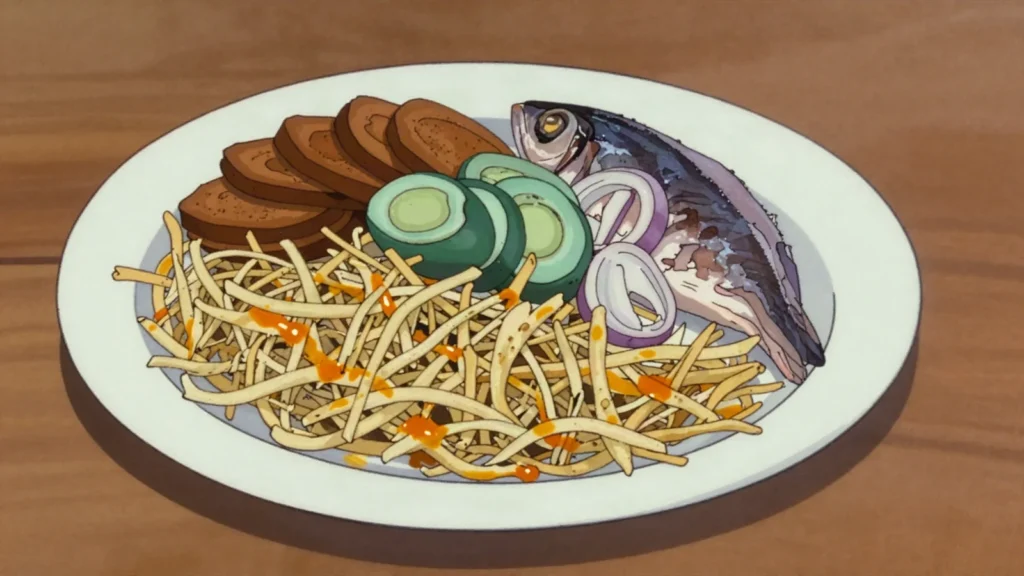

Ingredients
Cassava
- 300 gdried shredded cassava, abacha
Palm oil sauce
- 200 mlred palm oil
- 1 tspakanwu or ngu, edible potash, dissolved in 3 tbsp water
- or 1 tsp bicarbonate of soda, as a substitute
Seasoning
- 2 tbspground crayfish
- 1 tspground ehu or ehuru, calabash nutmeg
- 2scotch bonnets, blended
- 1stock cube
- salt
To add
- 150 gugba, fermented oil bean, shredded
- 4garden eggs, sliced
- 1onion, sliced
- 2 tbspchopped utazi leaves, or a little bitter leaf
Sometimes
- smoked fish, flaked
- kpomo, cow skin, boiled and sliced
- a boiled egg
To serve
- at room temperature, as a snack or a light meal
Directions
- Soak the dried abacha in cold or lukewarm water for about ten minutes. Use cold or warm water rather than boiling, since hot water turns the shreds soft and slimy within moments. The point is to make them pliable while keeping a distinct bite, which is what abacha should have.
- Drain it as soon as it softens and squeeze out the excess water. If you have bought it fresh rather than dried, it needs only a rinse. Use it sparingly, since too much gives a soapy, bitter, unpleasantly alkaline taste that cannot be corrected.
- Add it gradually and stop as soon as the oil has thickened and turned yellow. Stir vigorously and continuously as you add it, which is what brings the emulsion together. Stir in ground crayfish, blended pepper, calabash nutmeg and a stock cube. Ehu, calabash nutmeg, is the aromatic that marks this as an Igbo dish, and it should be freshly ground.
- Taste the sauce now and season it firmly, since the bland cassava will mute everything considerably. It is an acquired taste and it is what makes abacha taste of itself, so it should not be left out lightly.
- Rinse it briefly if it seems very strong, and add it to the sauce. Fold the drained abacha through the thickened palm oil sauce until every strand is coated. Mix it gently rather than beating it, since the shreds break up easily. It should end up a uniform yellow-orange with no dry patches.
- Add the sliced onion, garden eggs, ugba and shredded utazi leaves. Utazi is a bitter leaf used sparingly across Igbo cooking, and its bitterness against the rich oil is the balance the dish needs.
- Use it in small quantity, since too much dominates everything. Now serve it at room temperature rather than hot or chilled. Add smoked fish, kpomo or a boiled egg on top if you want a fuller plate. It does not keep well once dressed, so mix only what will be eaten.
Technique
- Akanwu, edible potash, is what thickens red palm oil into a yellow cream.
- Soak the dried cassava in cold water, since hot water makes it slimy.
- Ugba, fermented oil bean, is what makes it taste of itself.
Substitutions
- Bicarbonate of soda in place of akanwu, used sparingly.
- Bitter leaf in place of utazi.
Variations
- Abacha with kpomo and smoked fish, as a fuller meal.
- Ugba na abacha, with a greater proportion of oil bean.
- Made without ugba, which is milder.
History
Called African salad in the east, it uses cassava sliced, boiled and dried for storage, revived in cold water and dressed at the table.
Frequently asked questions
What is Abacha?
Abacha is a salad & side from Nigeria: shredded dried cassava tossed with ugba, palm oil and garden eggs. Called African salad in the east, it uses cassava sliced, boiled and dried for storage, revived in cold water and dressed at the table.
How long does Abacha take to make?
Abacha takes 30 min plus soaking of preparation and 20 min of cooking. The recipe makes 6 servings. It is rated medium to make.
What can I substitute in Abacha?
Yes, within limits. Bicarbonate of soda in place of akanwu, used sparingly. Bitter leaf in place of utazi.
What is the most important thing to get right in Abacha?
Soak the dried abacha in cold or lukewarm water for about ten minutes. Use cold or warm water rather than boiling, since hot water turns the shreds soft and slimy within moments. The point is to make them pliable while keeping a distinct bite, which is what abacha should have.