
Ingredients
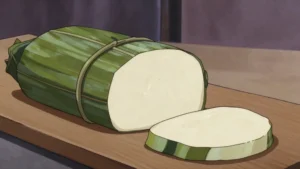
The palm heart
- 1fresh palm heart
- or 600 g tinned
- drained and rinsed
The dressing
- juice of 2 lemons
- 3 tablespoonsoil
- 1 teaspoonmustard
- optional
- salt and black pepper
Sometimes added
- 1onion, sliced very thin
- 2tomatoes, diced
- chopped parsley
- smoked marlin, slivered
- for the non-vegetarian version
To serve
- chilled
- at weddings
- or at Sunday tables
Directions
- Cut palm heart browns in the air. Strip off the tough outer layers. Peel the layers away one at a time. Keep going until it turns tender. The tender part is pale and smooth. Press a fingernail into the layer. It should mark easily if tender.
- Keep peeling until they do not. Trim off the base and any woody parts. Cut away anything that resists a knife. Discard all of the rest entirely. Drain and rinse the tinned hearts. Rinse off all of the packing brine.
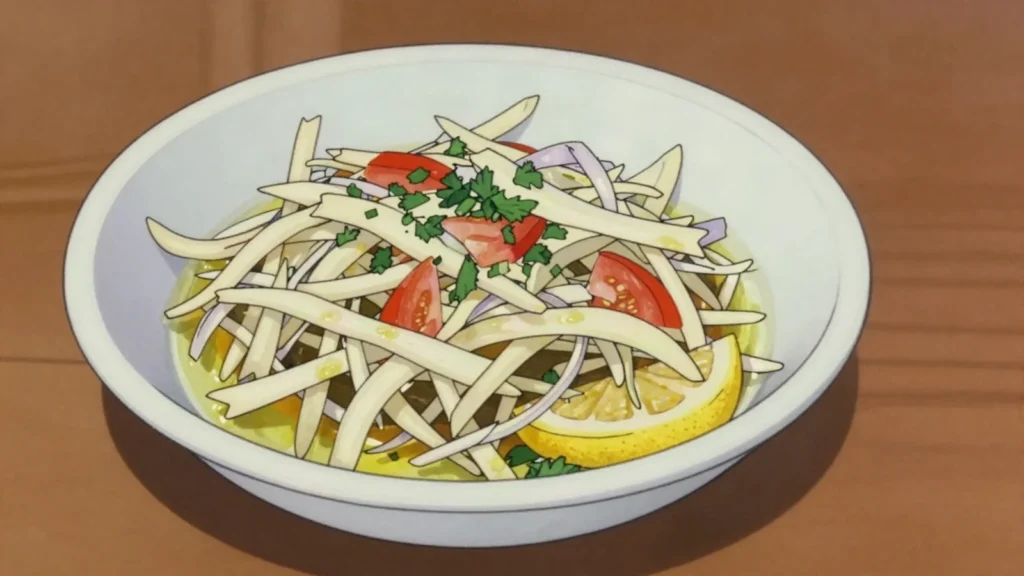
- Rinse them under cold running water. Pat them dry thoroughly afterward. Shred the palm heart very finely. Shred it lengthwise along the grain. Work slowly and quite carefully. Slice them thinly rather than grating. Squeeze lemon over the shreds at once. Lemon stops the browning entirely.
- Whisk the lemon juice with the oil. Add the mustard if you are using it. One full teaspoon is quite enough. Season the dressing with salt and pepper. Taste before adding much salt. Fresh hearts need rather more.
- Adjust it to what you are using. Pour the dressing over the shreds. Toss it gently rather than stirring. Lift and turn them with two forks. Coat every one of the shreds evenly. Fold diced tomato through the salad. Deseed it so it does not water the salad. Dice the tomato small and even. Fold thin sliced onion through it.
- Slice it as thin as you possibly can. Thick onion overwhelms the palm heart. Rinse the onion first to mellow it. Then dry the onion thoroughly. Scatter slivered smoked marlin over it. Sliver it as thin as you possibly can. Scatter it rather than mixing it in. Keep it visible on the surface. Refrigerate it for thirty minutes.
- Turn it out into a serving dish. Pile it loosely rather than pressing it. Scatter chopped parsley over the top. Serve it cold from the fridge. It keeps one day refrigerated.
Technique
- The palm heart is the single growing bud at the top of the trunk and a palm has only one growing point, so removing it stops all growth and the tree dies for one heart — exactly why it is called millionaire’s salad. Wild harvesting is a real concern with some species over-harvested; plantation-grown palms, fast varieties harvested at a few years old, avoid that, so buy plantation-grown or tinned where you can.
- Cut palm heart browns in the air, so squeeze lemon over the shreds the moment they are cut. Dress it close to serving too: lemon softens the shreds over time and an hour is about the maximum before it loses its crispness.
- Smoked marlin makes the salad non-vegetarian and slivered fish is easy to miss, so say clearly if you have used it — fish allergy can be severe. The plain version has none at all and both are genuinely made.
Substitutions
- Tinned palm heart is the practical route for most; rinse the packing brine off thoroughly, and slice it thinly rather than grating, since it is softer and falls apart more readily.
- Mustard in the dressing emulsifies it, holding the oil and lemon together and adding a sharp background — a French vinaigrette character reflecting the colonial food history.
Variations
- Peel the tough outer layers of a fresh heart away one at a time until a fingernail marks it easily, then trim the base and anything woody and use only the pale smooth core. Shred it lengthwise along the grain into long delicate threads and toss gently with two forks, since the shreds break easily.
- Scatter the slivered marlin over the top rather than mixing it in: mixed through it dominates everything, where scattered on the surface it is a highlight. A little goes a very long way, since it is strongly flavoured and salty.
- The atlas also carries Seychellois salad palmis, the same dish on another island with the same French colonial history; the Mauritian version uses lemon and often smoked marlin where the Seychellois uses lime.
History
Harvesting the heart kills the palm, which is why it is called millionaire’s salad; it is served at weddings and at Sunday tables.
Frequently asked questions
What is Salade de palmiste?
Salade de palmiste is a salad & side from Mauritius: shredded raw heart of palm dressed with lemon, called millionaire’s salad. Harvesting the heart kills the palm, which is why it is called millionaire’s salad; it is served at weddings and at Sunday tables.
How long does Salade de palmiste take to make?
Salade de palmiste takes 30 minutes of preparation and no cooking at all. The recipe makes serves 6. It is rated easy to make.
What can I substitute in Salade de palmiste?
Yes, within limits. Tinned palm heart is the practical route for most; rinse the packing brine off thoroughly, and slice it thinly rather than grating, since it is softer and falls apart more readily. Mustard in the dressing emulsifies it, holding the oil and lemon together and adding a sharp background — a French vinaigrette character reflecting the colonial food history.
What is the most important thing to get right in Salade de palmiste?
Keep peeling until they do not. Trim off the base and any woody parts. Cut away anything that resists a knife. Discard all of the rest entirely. Drain and rinse the tinned hearts. Rinse off all of the packing brine.