
Ingredients
The dough
- 500 gplain flour
- 3eggs
- 60 gbutter, melted
- 2 tablespoonssugar
- 1 teaspoonsalt
- 1 teaspoonbaking powder
- 1 teaspoonaniseed
- toasted and ground
- about 100 ml warm milk
- or aguardiente
The syrup
- 400 gpanela
- or dark brown sugar
- 500 mlwater
- 6dried figs, halved
- 2 stickscinnamon
- 6cloves
- a strip of orange peel
- a few allspice berries
To fry
- oil, for deep frying
- a deep heavy pot
To serve
- warm, in the syrup
- at Christmas
Directions
- Warm milk is the plain substitute. Toast the aniseed briefly in a dry pan. Shake the pan constantly for a minute. It should smell strongly aromatic.
- Take it off as soon as it smells. Grind the toasted aniseed finely. Grind it in a mortar or grinder. Mixing the dry is the next step. Put the flour in a large bowl. Add the sugar, salt and baking powder. Add the ground aniseed to them. Whisk them all together thoroughly.
- Add the eggs and the melted butter. Add the milk or aguardiente gradually. Bring it together into a dough. It should be a firm smooth dough. Add liquid a splash at a time. Knead it for about five minutes. It should become smooth and elastic. Cover it over and let it rest. Give it about thirty full minutes.
- Put the panela and water in a pot. Add the figs and all the spices. Add the whole strip of orange peel. Grate or chop the panela first. Warm it until it dissolves fully. Bring it up to a gentle simmer.
- Let it cook for about thirty minutes. It should coat a spoon lightly. Leave the figs in the warm syrup. Never touch or taste it while hot. Keep children well away from the pan. Roll the dough out on a floured surface. Roll it about three millimetres thick. Thin enough to fry up properly crisp.
- Keep it even across the sheet. Cut the rings with two cutters. About eight centimetres across is usual. Make small cuts around the outer edge. Cut inward about a centimetre. Use a small and very sharp knife. Fold or twist each cut section.
- Pinch each section over on itself. This takes real time for a batch. Take your time over the shaping. Heating the oil takes attention. Pour the oil into a deep heavy pot. Fill it no more than half full.
- Heat it to about one hundred and seventy degrees. A deep pot of hot oil is genuinely dangerous. Keep a lid nearby to smother a flare-up. Never put water on an oil fire at all. Keep children well away from the pot. Too hot and the outside burns first. Turn them and give two more minutes. They cook quite fast in hot oil.
- Lift them out onto a wire rack. Let all the excess oil drip away. That softens them within minutes. Warm the syrup if it has cooled. Dip them shortly before serving. Soaked too early they go soft. Serve the syrup figs alongside. Spoon a few figs onto each plate. They are eaten warm at Christmas. Keep the syrup separate to store them. Soaked ones go soft overnight.
Technique
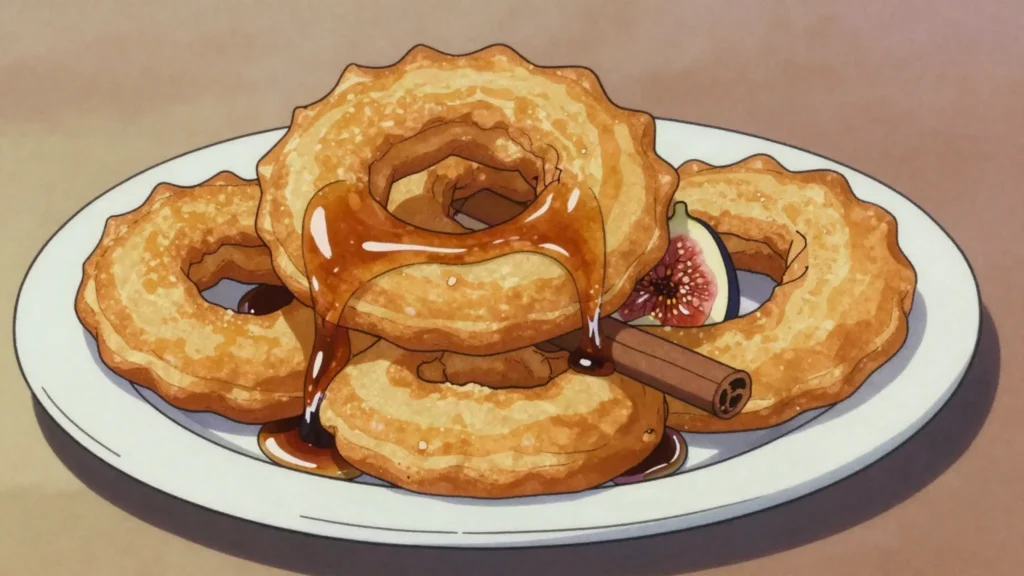
- The frilled edge is functional as well as decorative: cutting inward around the ring and twisting or folding each section creates more crisp edges and gives the syrup more to catch on. Six or eight cuts is usual and it is fiddly work, but it is what makes them pristiños.
- Fry at a moderate one hundred and seventy degrees, since the dough is fairly rich and browns fast. Watch the frilled edges particularly — they crisp and darken first and will burn before the centre does.
- Boiling sugar syrup is far hotter than boiling water, sticks to skin and burns badly. Never touch or taste it hot and keep children well away from the pan.
Substitutions
- Dark brown sugar stands in for panela; grate or chop either first, since it is hard and dissolves slowly.
- A little aguardiente in place of the milk is a genuine traditional addition: the alcohol evaporates fast in hot oil, creating extra steam and crispness and reducing oil absorption, and cooks off entirely.
Variations
- Toast the aniseed briefly in a dry pan until aromatic, shaking constantly since small seeds burn very fast, then grind it — whole seeds are unpleasant to bite.
- Dip or pour the syrup shortly before serving rather than early, since some crispness should remain and that contrast is part of the pleasure.
- The dried figs simmered in the syrup soften, plump and flavour it, and are served alongside as part of the dish.
History
Eaten at Christmas across Ecuador, fried in batches and dipped in warm miel de panela.
Frequently asked questions
What is Pristiños?
Pristiños is a dessert from Ecuador: ribbon-edged fried dough rings soaked in panela and fig syrup. Eaten at Christmas across Ecuador, fried in batches and dipped in warm miel de panela.
How long does Pristiños take to make?
Pristiños takes 40 minutes plus resting of preparation and 30 minutes of cooking. The recipe makes about 24 rings. It is rated medium to make.
What can I substitute in Pristiños?
Yes, within limits. Dark brown sugar stands in for panela; grate or chop either first, since it is hard and dissolves slowly. A little aguardiente in place of the milk is a genuine traditional addition: the alcohol evaporates fast in hot oil, creating extra steam and crispness and reducing oil absorption, and cooks off entirely.
What is the most important thing to get right in Pristiños?
Put the panela and water in a pot. Add the figs and all the spices. Add the whole strip of orange peel. Grate or chop the panela first. Warm it until it dissolves fully. Bring it up to a gentle simmer.