
Ingredients
The veal
- 8thin veal escalopes
- about 80 g each
- beaten flat
- salt and black pepper
The filling
- 150 gkajmak
- or cream cheese
- 150 gpršut
- or other dry-cured ham, sliced
- 100 ghard cheese, grated
The coating
- 100 gplain flour
- 3eggs, beaten
- 200 gfine dry breadcrumbs
- salt and black pepper
To fry and serve
- oil, for shallow frying
- lemon wedges
- chips or potatoes
- tartare sauce
Directions
- Beat it between two sheets of plastic. That stops it tearing and spreading mess. Use a meat mallet or a heavy pan. Work out from the centre outward. Do not pound it straight down.
- Keep the filling well inside the edges. Roll it tightly with no gaps at all. Chill the rolls before frying. Cold firm cheese leaks far less. Flour gives the egg something to grip. Lay an escalope between two sheets of plastic. Beat it out until it is very thin. Aim for about three millimetres.
- Work each one of them out evenly. Beat it into a rough rectangle. Trim it square if you like to. Keep the trimmings for something else. Season the beaten veal with pepper. Season with pepper only at this stage. Salt the outside lightly if at all. Taste will come from the filling. Lay a slice of ham on the veal.
- Spread the kajmak out over that. Scatter grated cheese over it. Keep everything well inside the edges. Leave a clear centimetre all round. Do not overfill the roll at all. Roll it up from one short end. Fold both of the sides in as you go.
- Roll it tightly rather than loosely. The two ends must be tucked in. Fold them over before rolling on. Check them once it is all rolled. Pin it with a cocktail stick if needed.
- Put the flour out on one plate. Beat the eggs in a shallow bowl. Put the breadcrumbs on another plate. Season the flour and the crumbs. Season each stage rather than only the meat. Roll each one of them in the flour. Shake off all the excess flour. Shake it off properly each time.
- Roll it all in the beaten egg. Coat it completely all over it. Let all the excess egg drip off. Roll it firmly in the breadcrumbs. Press the crumbs into the egg. Press the ends particularly firmly. Give them another twenty minutes. Pour oil into a wide heavy pan. Fill it about a centimetre deep. Heat it to about one hundred and seventy degrees. Too hot and the crumb burns first.
- Keep a lid nearby to smother a flare-up. Never put water on an oil fire at all. Set them seam side downward first. It stops them unrolling in the pan. Turn them to brown them all round. They are round so need turning several times. Turn them a quarter at a time. Use tongs and support them as you turn. Judging them takes a careful look.
- Cut the first one open to check. There should be no pink remaining. Lift them out onto a wire rack. That softens the crust within minutes. Let them rest for five minutes. Five minutes makes a real difference. Remove any cocktail sticks first. Serve them whole or cut across.
- Cut them at the table if you like. Serve chips or potatoes alongside. Serve tartare sauce with them. They are eaten hot with a knife and fork.
Technique
- The atlas also carries Njeguški stek from Montenegro, which is also meat stuffed with cured ham and cheese — but that is a thick pork steak with a pocket cut into it where these are thin veal escalopes rolled around the filling. One is a pocket and one is a roll, and they are genuinely different dishes sharing an idea.
- Cheese melts and wants to escape, so keep the filling a clear centimetre inside the edges, roll tightly with the sides folded in as you go, tuck the ends in, and chill the rolls thirty minutes before coating and again after — cold filling leaks far less and the roll holds its shape. Set them seam side down in the pan first so the seam seals immediately.
- Beat the escalopes very thin, about three millimetres, between two sheets of plastic, striking with a glancing blow rather than pounding straight down, which tears the meat. A thick escalope will not roll and cooks unevenly.
Substitutions
- Cream cheese with a little sour cream mixed in stands in for kajmak, a rich clotted Balkan dairy product made from simmered milk skin that is thick, salty and slightly sour.
- Egging and crumbing them twice seals a leaky filling far better and gives a thicker crust.
Variations
- Season the beaten veal with pepper only, since the ham and cheese are both salty and the taste comes from the filling.
- Fry at a moderate one hundred and seventy degrees, since a hotter pan burns the crumb before the veal cooks; browning them and finishing in the oven for ten minutes is useful with thick rolls.
- Rest them five minutes before cutting, which lets the molten filling firm slightly — cutting straight in lets it all run out.
History
A Montenegrin restaurant staple in the Balkan stuffed-schnitzel family, filled with local kajmak or cheese and cured ham.
Frequently asked questions
What is Popeci?
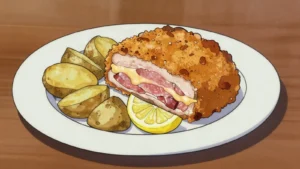
Popeci is a main from Montenegro: veal rolls filled with cheese and pršut, breaded and fried. A Montenegrin restaurant staple in the Balkan stuffed-schnitzel family, filled with local kajmak or cheese and cured ham.
How long does Popeci take to make?
Popeci takes 40 minutes of preparation and 20 minutes of cooking. The recipe makes serves 4. It is rated medium to make.
What can I substitute in Popeci?
Yes, within limits. Cream cheese with a little sour cream mixed in stands in for kajmak, a rich clotted Balkan dairy product made from simmered milk skin that is thick, salty and slightly sour. Egging and crumbing them twice seals a leaky filling far better and gives a thicker crust.
What is the most important thing to get right in Popeci?
Beat it between two sheets of plastic. That stops it tearing and spreading mess. Use a meat mallet or a heavy pan. Work out from the centre outward. Do not pound it straight down.