
Ingredients
The porridge
- 150 gfine maize meal
- or millet flour
- 1.2 litreswater
- a pinch of salt
To sweeten and sharpen
- sugar, to taste
- juice of 2 limes
- or to taste
Sometimes added
- a little coconut milk
- or evaporated milk
- a pinch of grated nutmeg
- a strip of lime peel
To serve
- thin, from a bowl
- drunk rather than spooned
- at breakfast
Directions
- Add it right at the very last moment. It also takes far longer to cook. Use the finest meal you can find. Tipping it into hot water guarantees lumps. Mix the meal with cold water first. That makes a completely smooth slurry. Put all the maize meal in a bowl. Add about a third of the water. Use cold water for the slurry. Hot water starts cooking the starch.
- Whisk it into a smooth thin slurry. It should have no lumps at all. Whisk it properly rather than briefly. Break up any lumps against the bowl. It should pour like thin cream. Bring the rest of the water to a boil.
- Add the pinch of salt in to it. Even a sweet porridge needs a little salt. Pour the slurry into the boiling water. Whisk constantly as you pour it. Pour it in a thin steady stream. Whisk the whole time it goes in. Take your proper time over the pour. Let it cook for about twenty minutes. It needs real cooking to lose that.
- Stir it regularly all the way through. Stir right into all the corners. Keep the heat low and quite steady. Thick porridge spits as it bubbles. Keep the heat low to reduce it. Stand well back as you stir it. Use a long handled wooden spoon. It should be thin and pourable.
- Add hot water if it is too thick. Make it thinner than you want it. Stir in a little coconut or evaporated milk. Take the pot right off the heat.
- Let it stop bubbling entirely. Heat destroys its fresh aroma. Let it cool for a moment first. Stir in the sugar to your taste. But it should not be cloying at all. Add it gradually and keep tasting. Squeeze in all of the lime juice. Stir it through the pot thoroughly. It should be clearly sour as well as sweet. Add more of it in if it is not. Taste it as you go along adding.
- Add the lime off the heat and stir well. Add less milk if it separates. Grate a little nutmeg over it. Grate it fresh if you possibly can. Serving it is done while warm. Pour it out into bowls or cups. It is not spooned like thick porridge.
Technique
- Maize meal lumps readily and tipping it into hot water guarantees lumps that never disperse. Mix it with cold water first into a smooth thin slurry — cold, since hot water starts cooking the starch immediately — then pour that into the boiling water in a thin steady stream, whisking the whole time.
- Cook it a full twenty minutes at least, since raw maize meal tastes chalky and needs real cooking to lose that, stirring regularly right into the corners because maize porridge catches and burns on the bottom and taints the whole pot. It spits as it bubbles and those spits are genuinely hot, so keep the heat low, use a long spoon and stand back.
- Add the lime off the heat at the very end: boiling drives off its fresh aroma and turns the flavour dull. It should be clearly sour as well as sweet, with neither dominating — that balance is what makes this porridge distinctive.
Substitutions
- Millet flour stands in for maize and gives a darker earthier porridge; both grains are grown locally and both are genuinely used.
- A little coconut milk or evaporated milk makes it richer; add the lime off the heat and stir well, since lime in a milky porridge can curdle it, and use less milk if it separates.
Variations
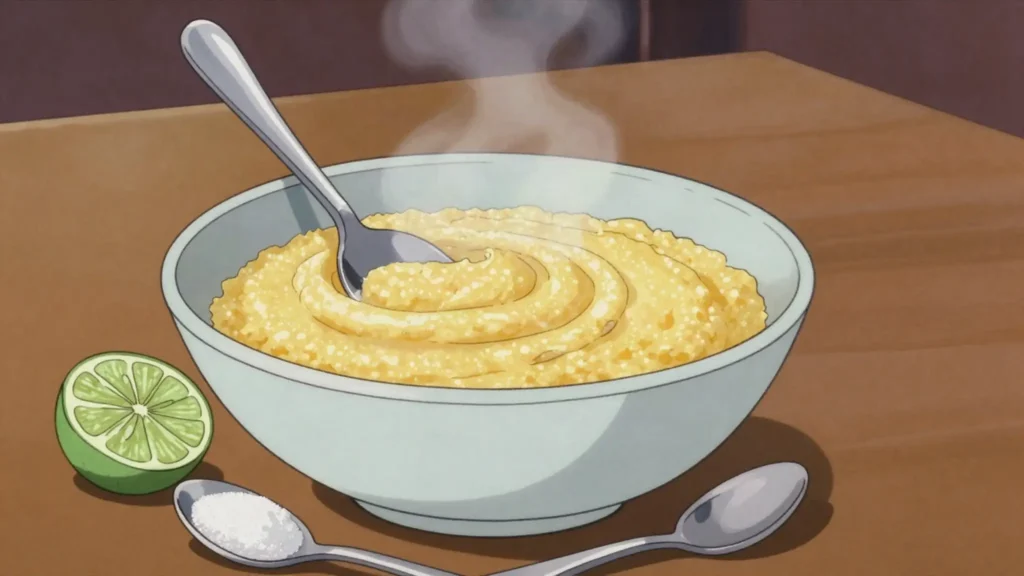
- It is deliberately thin and drunk from a bowl or cup rather than spooned, which suits a breakfast eaten quickly and makes it as much a drink as a food.
- Make it thinner than you want it, since it thickens considerably as it cools.
- Use the finest maize meal you can find, since coarse meal gives a gritty porridge and takes far longer to cook.
History
A Creole breakfast porridge cooked thin and drunk from a bowl, reflecting the Portuguese-Creole vocabulary of the coastal towns.
Frequently asked questions
What is Papa de milho?
Papa de milho is a breakfast from Guinea-Bissau: maize or millet porridge sweetened and sharpened with lime. A Creole breakfast porridge cooked thin and drunk from a bowl, reflecting the Portuguese-Creole vocabulary of the coastal towns.
How long does Papa de milho take to make?
Papa de milho takes 5 minutes of preparation and 25 minutes of cooking. The recipe makes serves 4. It is rated easy to make.
What can I substitute in Papa de milho?
Yes, within limits. Millet flour stands in for maize and gives a darker earthier porridge; both grains are grown locally and both are genuinely used. A little coconut milk or evaporated milk makes it richer; add the lime off the heat and stir well, since lime in a milky porridge can curdle it, and use less milk if it separates.
What is the most important thing to get right in Papa de milho?
Whisk it into a smooth thin slurry. It should have no lumps at all. Whisk it properly rather than briefly. Break up any lumps against the bowl. It should pour like thin cream. Bring the rest of the water to a boil.