
Ingredients
The fruit
- 5 kgcashew apples
- ripe, red or yellow, fragrant
- with the nuts twisted off
- see the safety note on the nuts
- not bruised or fermenting already
The must
- 1.2 kgsugar
- or to a starting gravity you can measure
- 3 litreswater, boiled and cooled
- juice of 4 limes
- 1 teaspoonpectic enzyme
- optional but helpful
- 1crushed Campden tablet
- optional, see the note
- 1 teaspoonyeast nutrient
The yeast
- 1sachet wine yeast
- a neutral white wine strain
- or a champagne yeast
- see the note on wild yeast
Equipment
- a food-grade fermenting bucket
- a demijohn or carboy
- an airlock and bung
- essential, see the safety note
- a syphon tube
- muslin or a straining bag
- sanitiser
- a hydrometer, if you have one
Directions
- Twist the nut off the apple and set it aside. Wear gloves if you are handling many. Keep them apart and there is no problem. Never ferment in a sealed container. Use an airlock. It lets gas out and keeps air and insects from getting in.
- Leave a good third of the vessel empty. Stand it in a tray. People ask about methanol in home fruit wine. Check your own rules if you are unsure. It does not travel and it does not keep. Steam the apples briefly before pressing. Five minutes is enough. Heat precipitates some of the tannins.
- Rub the apples with salt and rinse them. Some astringency should remain. Rinse or use a no-rinse sanitiser as the label says. Twist the nuts off and set them aside. Wash the apples. Steam them five minutes and let them cool.
- Crush them by hand or press them. Strain the juice through muslin. Add it, then wait twenty-four hours before adding yeast. The sulphite must dissipate.
- Add it to the juice. It also helps the wine keep. Add it to the cooled must. Add yeast to cool must, never warm. Heat kills yeast. Below about thirty degrees is right. Cover the bucket and fit an airlock.
- Keep it around twenty to twenty-five degrees. Leave the sediment behind. Fill the demijohn nearly to the neck now. Bubbles become occasional and then stop.
- Serve it cool rather than cold. Anyone with a cashew or tree nut allergy should ask a doctor. Discard any that smells of vinegar or nail varnish.
Technique
- The nut, not the fruit, is the hazard. Cashew nutshell liquid contains anacardic acid and cardol, related to the urushiol in poison ivy, and causes severe skin blistering — contact dermatitis from handling raw cashews is well documented. Twist the nut off the apple, do not crack or crush the shells, and wear gloves if handling many.
- Never roast raw in-shell cashews indoors. The smoke carries the same irritant and inhaling it causes documented respiratory injury; traditional roasting is done outdoors and upwind.
- Cashews sold as raw are not raw — they have been steamed or roasted to remove the shell liquid. A truly raw in-shell cashew is not a food item. The apple itself is entirely safe and pleasant; keep the two apart and there is no problem.
- Never ferment in a sealed container. Fermentation produces carbon dioxide continuously, a sealed vessel builds pressure, and glass demijohns burst. An airlock is not optional equipment. The first few days ferment hard, so leave a third of the vessel empty and stand it in a tray.
- On methanol, which people ask about: fermenting pectin-rich fruit produces trace methanol, true of all fruit wine including commercial. Fermentation does not concentrate it — distillation does, which is precisely why the atlas declines distilling and not this. Home fruit wine is not a methanol hazard, and the atlas says so rather than leaving a worry hanging. Home winemaking is legal in most countries where home distilling is not.
- Cashew apples are astringent because they are high in tannins, which bind to proteins in the mouth. Steaming them five minutes before pressing precipitates some of the tannins so they settle out; rubbing with salt and rinsing is the other traditional fix, and fining with gelatine binds them chemically. Some astringency should remain — it is part of the character.
- Sanitise everything that touches the must. Wild bacteria turn wine to vinegar, Acetobacter is everywhere, and most failed home wines fail this way. Sanitiser is not detergent: clean first, then sanitise.
- Add a Campden tablet twenty-four hours before the yeast, not with it — the sulphite must dissipate or it kills your yeast too. Campden tablets are sulphites, some people react to them, and sulphites in wine must be declared in many countries. You can skip it and let the wine yeast dominate, which is what village winemaking does — it works more often than not, and fails more often than a sulphited batch.
- Cashew apples carry their own yeasts and traditional cashew wine ferments on those. Wild ferments are less predictable, can be more interesting and can go wrong; a packet of wine yeast is the reliable route.
- Add yeast to cool must, below about thirty degrees. Heat kills yeast.
- Syphon rather than pour when racking. Pouring stirs sediment and adds oxygen, and oxygen at that stage spoils wine. Fill the demijohn nearly to the neck — once the violent stage is over, air in the headspace is the enemy rather than pressure.
- Do not bottle a wine that is still fermenting. It will referment, and wine bottles are not built for pressure — they burst. A hydrometer reading stable over three days means finished.
- Rack it off the sediment once or twice more over months. Wine left on dead yeast too long tastes of it.
- Give it three to six months. Young country wine tastes harsh and yeasty and time settles it.
- Cashew apples bruise the moment they are picked and neither travel nor keep, which is why the crop becomes wine, juice or nothing.
- Cashew is a tree nut allergen and this wine is made from the fruit rather than the nut. Whether that is safe for someone with a cashew allergy is a medical question the atlas does not answer — ask a doctor.
- Discard any bottle that smells of vinegar or nail varnish.
- Do not drink alcohol if you are pregnant or driving.
Substitutions
- Any soft juicy tropical fruit ferments the same way — guava, mango, pineapple.
- Champagne yeast replaces a white wine strain for a drier, stronger result.
- Lemon juice replaces lime for the acidity.
- Wild yeast replaces a packet yeast, less predictably.
- Cashew apple juice, unfermented, is drunk fresh across the tropics.
- Bottled cashew wine is sold in Belize and in parts of India and Africa.
Variations
- Feni in Goa is the distilled cashew spirit, made commercially under protection.
- Cashew juice, unfermented, is the everyday drink where the fruit grows.
- Cashew jam and cashew syrup use the same fruit.
- A drier version uses less sugar and a champagne yeast.
- Country wines from sorrel, ginger or blackberry are made the same way in Belize.
- Roasted cashew nuts are the other half of the same harvest.
History
Made in the Creole village of Crooked Tree, where cashew trees were planted in colonial times and an annual Cashew Festival marks the May harvest.
Frequently asked questions
What is Cashew wine?
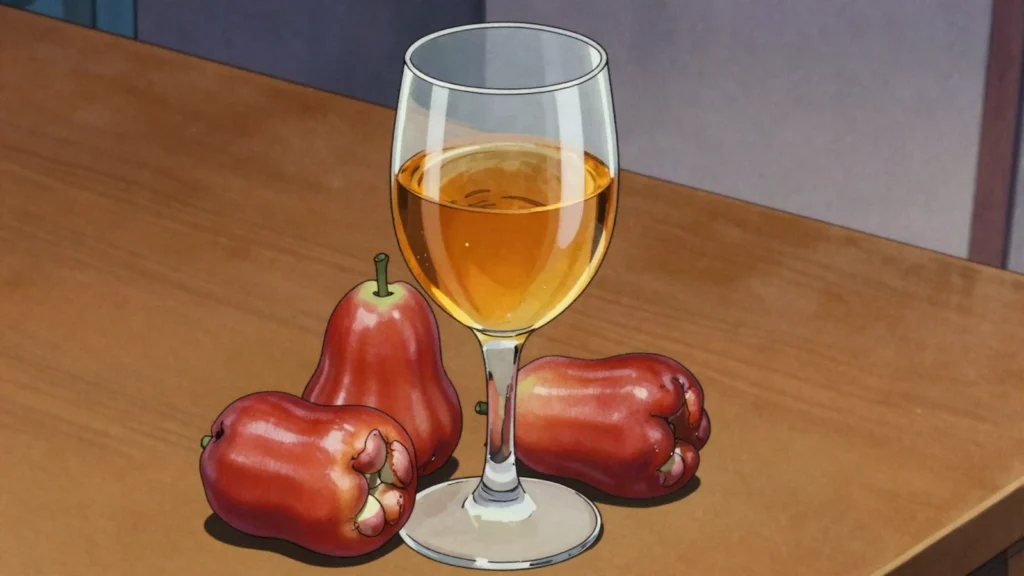
Cashew wine is a wine & spirit from Belize: sweet amber country wine fermented from cashew apples. Made in the Creole village of Crooked Tree, where cashew trees were planted in colonial times and an annual Cashew Festival marks the May harvest.
How long does Cashew wine take to make?
Cashew wine takes 1 hour plus 3 to 6 months of preparation and 20 minutes of cooking. The recipe makes makes about 4 litres. It is rated medium to make.
What can I substitute in Cashew wine?
Yes, within limits. Any soft juicy tropical fruit ferments the same way — guava, mango, pineapple. Champagne yeast replaces a white wine strain for a drier, stronger result. Lemon juice replaces lime for the acidity. Wild yeast replaces a packet yeast, less predictably. Cashew apple juice, unfermented, is drunk fresh across the tropics. Bottled cashew wine is sold in Belize and in parts of India and Africa.
What is the most important thing to get right in Cashew wine?
Twist the nut off the apple and set it aside. Wear gloves if you are handling many. Keep them apart and there is no problem. Never ferment in a sealed container. Use an airlock. It lets gas out and keeps air and insects from getting in.