
Ingredients
The oysters
- 300 gsmall shucked oysters
- drained and patted dry
- read the safety note first
The batter
- 100 gsweet potato starch
- or tapioca starch
- 30 grice flour
- half a teaspoon salt
- a quarter teaspoon white pepper
- about 250 ml cold water
For the pan
- 6 tablespoonsoil
- or lard, traditionally
- or more, generously
- 4eggs, beaten
- 3 clovesgarlic, finely chopped
- 3spring onions, sliced
- a handful of coriander
The dipping sauce
- 4 tablespoonschilli sauce
- a Singapore-style one
- 2 tablespoonsrice vinegar
- or lime juice
- 1 clovegarlic, crushed
- a pinch of sugar
To serve
- hot from the pan
- chilli vinegar
- white pepper
- lime wedges
Directions
- Keep them cold until you cook them. Cook them the day you buy them. Anyone with liver disease should avoid lightly cooked oysters. Use small oysters for this. Drain them thoroughly. Pat them dry with kitchen paper. Toss the dried oysters in a little starch. It protects them and helps them hold together.
- Whisk the starch, rice flour, salt and pepper. Whisk in cold water gradually. Whisk until completely smooth. It should be thin, like single cream. Rest it twenty minutes. Whisk it again before every use. Oil works perfectly well. Use more than feels comfortable. A dry pan gives a pale soft pancake.
- Heat the oil until it shimmers. Add the chopped garlic briefly. It burns fast in hot oil. Whisk it and pour it into the hot pan. Let it spread into a thin layer. The centre stays soft and translucent.
- Scatter them over the batter. Press them lightly in. Added now they warm through only. Pour the beaten eggs over the top. Let them set for a minute.
- Break the pancake up with a spatula. Cut it into large rough pieces. Turn those pieces over. Fry the pieces two or three minutes more. Press them down to crisp them. Add more oil if the pan is dry. Fry less for a gluier result.
- Fry longer and press harder for a crisper one. Scatter over the spring onions. Toss briefly and take it off the heat. It softens within minutes.
- Scatter coriander over. Grind over white pepper. Mix chilli sauce with vinegar and garlic. Add a pinch of sugar. Let it stand ten minutes. It should be sharply sour and clearly hot. Whisk it hard before using. The dipping sauce keeps a week.
Technique
- Sweet potato starch is what makes this orh luak rather than something else — it gives the distinctly chewy, gluey centre. Tapioca starch is the closest substitute and cornflour gives a softer, less chewy set.
- Keep the batter thin, like single cream, and whisk it again before pouring. Starch settles as it stands, and a thick batter gives a heavy dense pancake.
- Add the oysters after the batter has set at the edges. Added earlier they overcook and toughen; added then, they only warm through.
- Dry the oysters thoroughly and toss them in a little starch. Wet oysters release liquid that stops the batter crisping and makes the oil spit.
- Use more oil than feels comfortable. This is shallow frying, and the oil is what crisps the edges — a dry pan gives a pale soft pancake.
- Break the pancake into large rough pieces with a spatula and turn those. A whole one is hard to turn and cooks unevenly; breaking it exposes more surface and gives more crisp edges. That is the hawker method.
- Decide which texture you want. Less frying gives a gluier centre, more frying and pressing gives a crisper result — both are correct, and hawkers will cook it either way on request.
- Oysters are filter feeders that concentrate whatever is in the water, including Vibrio bacteria — Vibrio vulnificus can be fatal in people with liver disease or who are immunocompromised — and norovirus. This dish cooks them only briefly, deliberately, since long cooking ruins them. Buy from a reputable source and monitored waters, keep them cold and cook them the same day.
- Anyone with liver disease, anyone immunocompromised, anyone pregnant, young children and older people should not eat lightly cooked oysters. Cook them through fully for those people, or leave them out.
- Shellfish also accumulate algal biotoxins, which cooking does not destroy — which is why authorities close harvesting areas after monitoring. Do not gather oysters from unknown shores.
- Shellfish allergy is common and can cause anaphylaxis, and molluscs and crustaceans are separate allergens. Say plainly what is in the dish.
- The garlic burns in seconds in hot oil. Give it fifteen seconds, or add it with the batter.
- Serve it the moment it leaves the pan. The crispness goes within minutes and there is no reheating it.
Substitutions
- Tapioca starch replaces sweet potato starch, giving a slightly less gluey centre.
- Cornflour replaces both at the cost of the chew.
- Lard replaces oil and is traditional, giving a distinct flavour.
- Mussels or small clams replace oysters, making the dish a different member of the same family.
- Any decent chilli sauce with vinegar makes the dipping sauce.
- A version with no shellfish at all, just batter and egg, is sold as a cheaper option.
Variations
- Hoy tod in Thailand is the closest relative, crisper and served with sriracha.
- O-a-tsian in Taiwan uses sweet potato starch and a sweet pink sauce.
- Orh jian in Malaysia is the drier, crisper Teochew version.
- Orh luak cooked extra crisp on request is a standard hawker variation.
- Fried carrot cake, chai tow kway, is the other great Teochew Singapore griddle dish.
- Char kway teow is cooked on the same griddles at the same stalls.
Frequently asked questions
What is Orh Luak?
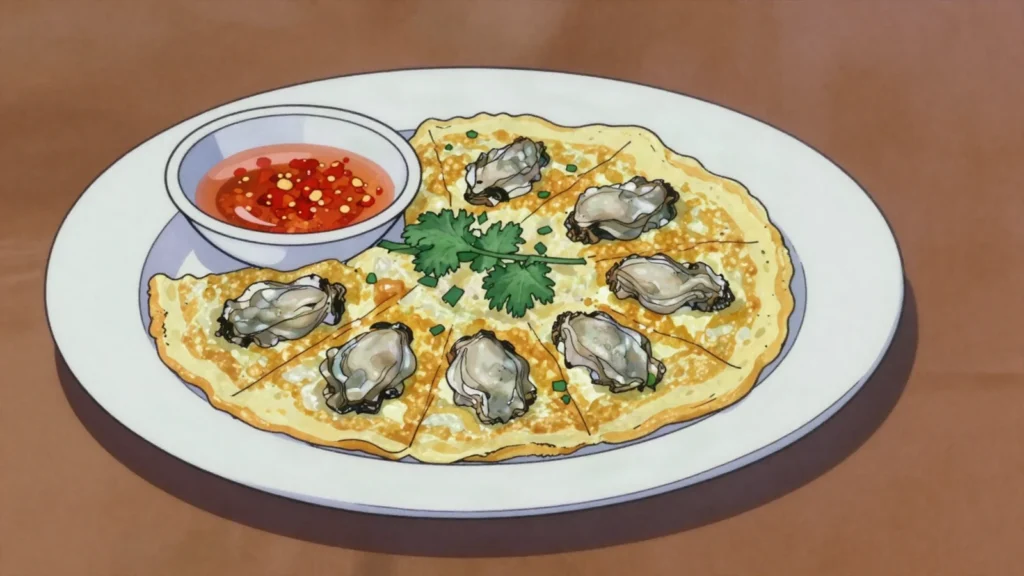
Orh Luak is a street food from Singapore: oysters fried into a soft starchy egg batter with crisp edges, served with chilli vinegar.
How long does Orh Luak take to make?
Orh Luak takes 20 minutes of preparation and 20 minutes of cooking. The recipe makes serves 4. It is rated medium to make.
What can I substitute in Orh Luak?
Yes, within limits. Tapioca starch replaces sweet potato starch, giving a slightly less gluey centre. Cornflour replaces both at the cost of the chew. Lard replaces oil and is traditional, giving a distinct flavour. Mussels or small clams replace oysters, making the dish a different member of the same family. Any decent chilli sauce with vinegar makes the dipping sauce. A version with no shellfish at all, just batter and egg, is sold as a cheaper option.
What is the most important thing to get right in Orh Luak?
Sweet potato starch is what makes this orh luak rather than something else — it gives the distinctly chewy, gluey centre. Tapioca starch is the closest substitute and cornflour gives a softer, less chewy set.