
Ingredients
The extract
- 50 gdried halva root
- soapwort or Gypsophila root
- 1.5 litreswater
- for soaking and boiling
The syrup
- 400 gsugar
- 150 mlwater
- 1 teaspoonlemon juice
To flavour
- 1 tablespoonrosewater
- 1 tablespoonorange blossom water
To serve
- karabij Halab
- semolina biscuits stuffed with nuts
- as a dip
Directions
- Rinse the dried root thoroughly. Cover it with cold water in a bowl. Leave it to soak there overnight. The root is hard and very dry. Put the root and its water in a pot. Add more water to make up the volume.
- Bring the pot up to a full boil. Simmering it takes a long time. Stir the liquid vigorously in the pot. It should foam up quite readily. Reduce it further if it does not. Do not reduce it far beyond that. Strain the liquid through a fine cloth. Press the root against the cloth.
- Discard all of the boiled root. Strain it twice if it is cloudy. Let the extract cool completely. Cold extract whips to a stiffer foam. Warm extract foams only loosely. Refrigerate it if you have time. Put the sugar and water in a pan. Warm it until the sugar dissolves.
- Add the lemon juice once it boils. Acid stops the sugar crystallising. Let it boil without stirring it. Bring it up to a thread stage. Never touch it or taste it while hot.
- Keep children well away from the pan. Put the cold extract in a large bowl. Whip it with an electric whisk. Use a bowl far larger than it looks to need. Judging it takes a careful look. Keep the whisk running throughout. Pour the hot syrup in a thin stream.
- Pour it down the side of the bowl. A thin steady stream is essential. Take a full minute over the pour. Keep whipping after the syrup is in. Give it a good ten full minutes. Whip in the rosewater and orange blossom.
- Add them in right at the very end. Too much tastes soapy and perfumed. Add them gradually and taste as you go. Judging it takes a look and a taste. Spoon it out into a shallow bowl. Set the karabij Halab around it. It keeps a week in the refrigerator. Whip it briefly to bring it back.
Technique
- There is no cream, no dairy and no egg in natef — it is a whipped saponin foam, closer to a meringue or marshmallow creme, and calling it a cream misstates what it is. The root is also never whipped and never eaten: it is boiled, reduced and thrown away, and what gets whipped is the strained extract. Saponins foam because they lower surface tension the way soap does, where egg white foams because of its proteins; the result looks similar but the chemistry is genuinely different.
- The saponin hazard is route-dependent and worth stating precisely. Saponins lyse red blood cells on direct blood contact, which is why they are sold as laboratory reagents — but intact saponins are poorly absorbed from the gut and broken down in the digestive tract, so eating a dipped biscuit is not a blood risk. The genuine oral hazard is dose-dependent mucosal irritation: soapwort root at high concentration causes nausea, vomiting, diarrhoea and throat irritation. The failure mode is over-concentrating the decoction or using a strong commercial extract, not the dish as normally served — so follow the proportions rather than strengthening them, and stop reducing once the extract foams readily.
- Traditional natef contains no egg and therefore carries no raw-egg risk, but modern shortcut recipes that add egg white reintroduce it in full, because the foam receives no heat after whipping — the syrup is hot, but the foam is never cooked.
Substitutions
- Ask for halva root, which is the trade name; the English gloss is usually soapwort while the food-industry identification is Gypsophila, and the atlas records that disagreement rather than settling it.
- Cold extract whips to a stiffer foam than warm, so refrigerate it before whipping if there is time.
Variations
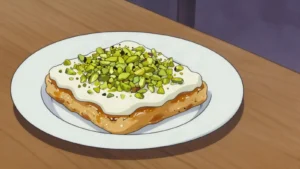
- Karabij Halab, small semolina biscuits stuffed with pistachio or walnut, are dipped into it and the two are served as a pair.
- It is an Aleppo preparation and equally standard in Lebanon rather than a Syrian national dish.
- A bitter natef means the extract was over-concentrated, and that cannot be corrected afterwards.
History
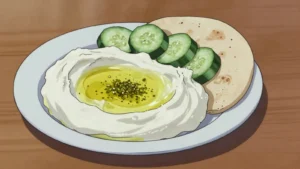
Soapwort root boiled to a saponin-rich liquid whips like egg white, giving a dairy-free cream used for karabij.
Frequently asked questions
What is Natef?
Natef is a sauce & condiment from Syria: glossy white cream whipped from soapwort root and sugar syrup, used as dip. Soapwort root boiled to a saponin-rich liquid whips like egg white, giving a dairy-free cream used for karabij.
How long does Natef take to make?
Natef takes 30 minutes plus soaking of preparation and 1 hour of cooking. The recipe makes about 500 ml. It is rated hard to make.
What can I substitute in Natef?
Yes, within limits. Ask for halva root, which is the trade name; the English gloss is usually soapwort while the food-industry identification is Gypsophila, and the atlas records that disagreement rather than settling it. Cold extract whips to a stiffer foam than warm, so refrigerate it before whipping if there is time.
What is the most important thing to get right in Natef?
Bring the pot up to a full boil. Simmering it takes a long time. Stir the liquid vigorously in the pot. It should foam up quite readily. Reduce it further if it does not. Do not reduce it far beyond that. Strain the liquid through a fine cloth. Press the root against the cloth.