
Ingredients
Seeds
- 1 kgAfrican locust bean seeds, nere, from the Parkia biglobosa tree
Also
- wood ash or coarse sand, for hulling
- water
- clean banana leaves or a lidded basket
To use
- dropped whole into soups and stews
- or crumbled into a sauce
To serve
- as a seasoning, in small amounts
Directions
- Boil the seeds for several hours, sometimes as long as twelve, until the hard coats soften.
- Rub the boiled seeds with wood ash or coarse sand and wash them repeatedly to remove the coats. The ash acts as an abrasive and the alkali helps loosen the coats.
- Rinse until the water runs clear and no coats remain, which takes many changes of water. Boil the hulled cotyledons again for an hour or so until soft. Drain the boiled seeds thoroughly.
- Wrap the warm drained seeds in clean leaves or put them in a lidded basket, packed together. Keep them warm for two to four days. Warmth is essential, since the fermentation is driven by Bacillus bacteria that need it.
- Discard the batch if it shows coloured mould or smells rotten rather than ammoniacal. If you are at all unsure, buy it rather than making it. Use it in small amounts, since it is extremely strong. One or two cakes is enough for a large pot of soup.
- Drop the cakes whole into the pot early in the cooking, where they dissolve. Give it time in the pot, since it needs to dissolve and mellow. Season the finished dish separately.
- Keep the dried cakes in a sealed container, since the smell permeates everything nearby. It keeps for months dried, and refrigerating it slows any further change.
Technique
- The ammonia smell is the expected result of the fermentation, not a fault.
- It works like soy sauce or miso, breaking protein into savoury amino acids.
- It is not salty, so it does not replace salt in a dish.
Substitutions
- Iru, soumbala or netetou, which are the same product under other names.
- A little miso or fermented soybean at a pinch, though the flavour differs.
Variations
- Sold loose rather than pressed into cakes.
- Made from soybeans, which is a modern substitute in some places.
- Ground into a powder for easier use.
History
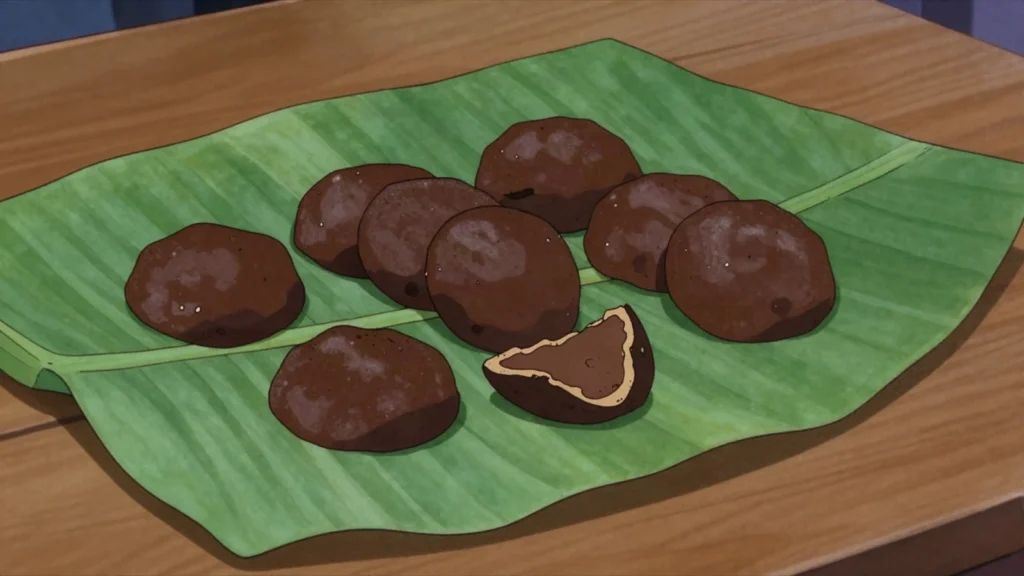
Nere seeds are boiled, hulled and fermented for days until they blacken and smell of ammonia, then pressed into cakes; Hausa cooks use it as a stock base.
Frequently asked questions
What is Daddawa?
Daddawa is a sauce & condiment from Niger: fermented locust-bean cakes, sharply pungent, dropped whole into soups. Nere seeds are boiled, hulled and fermented for days until they blacken and smell of ammonia, then pressed into cakes; Hausa cooks use it as a stock base.
How long does Daddawa take to make?
Daddawa takes 1 hr plus 5 days processing of preparation and 3 hr of cooking. The recipe makes about 20 cakes. It is rated hard to make.
What can I substitute in Daddawa?
Yes, within limits. Iru, soumbala or netetou, which are the same product under other names. A little miso or fermented soybean at a pinch, though the flavour differs.
What is the most important thing to get right in Daddawa?
Discard the batch if it shows coloured mould or smells rotten rather than ammoniacal. If you are at all unsure, buy it rather than making it. Use it in small amounts, since it is extremely strong. One or two cakes is enough for a large pot of soup.