
Ingredients
Semolina base
- 300 gcoarse semolina
- 150 gghee or clarified butter
- 100 gplain flour
- about 200 ml water
- a pinch of salt
Syrup
- 300 gsugar
- 150 mlwater
- 1 teaspoonlemon juice
- 1 tablespoonorange-blossom water
- 1 tablespoonrosewater
Ashta
- 500 mlwhole milk
- 250 mldouble cream
- 3 tablespoonscornflour
- 2 tablespoonssugar
- 1 tablespoonorange-blossom water
- or 400 g thick clotted cream
To top
- 100 gpistachios, chopped
- 50 gpine nuts, toasted
- 50 galmonds, toasted
- a little syrup, to drizzle
Directions
- Put the sugar and water in a small pan. Warm it until the sugar dissolves. Bring the pan up to a full boil. Add the lemon juice once it boils. Those sugars stop the syrup crystallising. Let it boil for about eight minutes. Do not stir it once it is boiling.
- Brush the sides down with water instead. Judging the syrup takes a look. Take it off the heat entirely. Stir in the flower waters now. Let it cool right down completely. Cold syrup on a hot base soaks in cleanly. Make the syrup first so it has time. Mix the cornflour with a little cold milk. Whisk it into a smooth thin paste.
- Put the rest of the milk and cream in a pot. Add the sugar to it as well now. Warm it gently over a medium heat. Thickening it up takes real care.
- Pour the cornflour paste in slowly. Whisk it hard as you pour it in. Bring it all up to a bare simmer. Let it thicken for about three minutes. Judging the ashta takes a look. Stir in the orange-blossom water off the heat. Press film down onto the surface. Refrigerate it until it is cold.
- Heat a dry pan over a medium heat. Add the pine nuts and almonds. Shake the pan constantly as they toast. Give them about three minutes. Tip them out of the pan immediately. Melt the ghee in a wide heavy pan. Use a pan with a good thick base.
- Add the semolina and the flour to it. Stir them through the melted ghee. It helps the mixture bind as it cooks. Cook it over a medium low heat. Stir it constantly the whole time. Give it a good fifteen minutes.
- Stir right into the corners each time. Do not stop stirring at any point. Take it to a deep gold colour. Take the pan off the heat for a moment. Add the water carefully and gradually. Water into hot fat spits violently. Stand well back as you add it. Add it in a very little at a time. Return it all to a very low heat. Work it hard with a wooden spoon.
- Press and rub it against the pan. Judging the texture takes a feel. Add water very gradually and watch it. Take the pan right off the heat. Pour cold syrup over the hot crumb. Hot base and cold syrup is the pairing.
- Add about two thirds of the syrup first. Work it through and let it absorb. Add more only if it still looks dry. It should be moist and glossy. Keep the rest of the syrup for the table. Press the crumb into a wide shallow dish. Press it firmly enough to hold together. Do not compact it into a solid block. Let it cool to room temperature. Then refrigerate it for an hour.
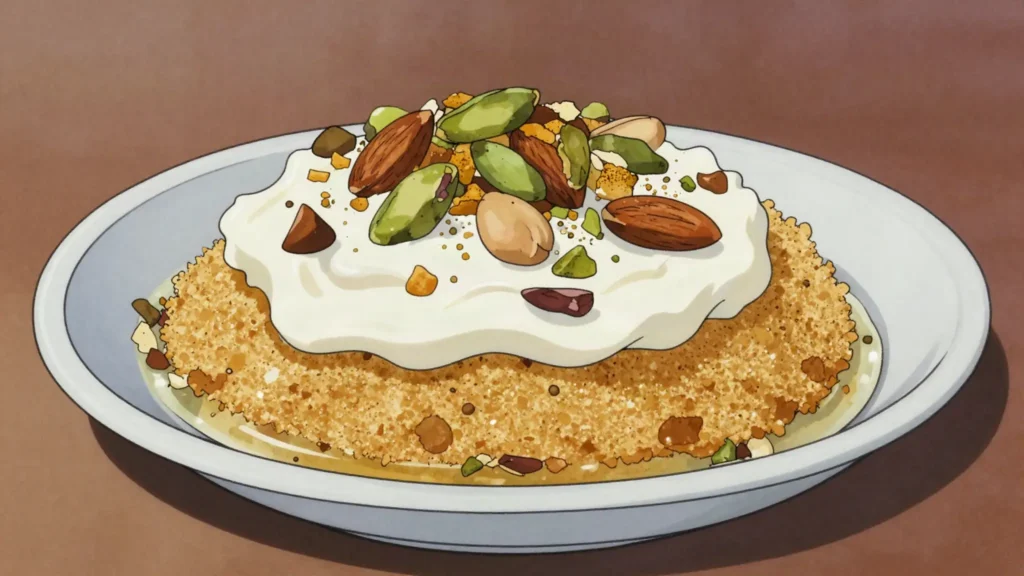
- Spread the cold ashta over the base. Spread it evenly right to the edges. Work gently so as not to disturb the crumb. Use a palette knife or a spoon back. Spread it in one direction only. Scatter the chopped pistachios generously. Add the toasted pine nuts and almonds. Serving it is always done cold. Cut it into squares in the dish. It keeps two days refrigerated.
Technique
- The semolina is toasted in a great deal of ghee, half its own weight, and worked constantly until it breaks into a coarse crumb; that toasting is the whole flavour and reducing the ghee gives a dry disappointing base. The texture takes practice — too much water makes a paste and too little leaves it sandy, so add it very gradually.
- Cold syrup goes onto the hot crumb, which absorbs it as it cools and swells; hot syrup on a hot base makes it soggy instead, so make the syrup first and let it cool completely.
- The pistachios go on raw and bright green rather than toasted, since that green against the white ashta is the look and toasting dulls it; the pine nuts and almonds are toasted, and pine nuts go from pale to black in moments, so watch them constantly.
Substitutions
- Thick clotted cream stands in for ashta directly.
- Ashta made by thickening milk and cream with cornflour is what most kitchens now use, though it is not the skimmed original.
Variations
- It is served beside Layali Loubnan and other milk puddings in Tripoli pastry houses.
- The nuts vary, with pistachio, pine nut and almond the usual three.
- Extra syrup is offered at the table to drizzle over.
History
A Tripoli speciality from the city’s pastry houses, richer and more buttery than the milk puddings it sits beside.
Frequently asked questions
What is Mafrouke?
Mafrouke is a dessert from Lebanon: crumbled semolina dough in syrup, buried under ashta and toasted nuts. A Tripoli speciality from the city’s pastry houses, richer and more buttery than the milk puddings it sits beside.
How long does Mafrouke take to make?
Mafrouke takes 30 minutes of preparation and 45 minutes of cooking. The recipe makes serves 8. It is rated hard to make.
What can I substitute in Mafrouke?
Yes, within limits. Thick clotted cream stands in for ashta directly. Ashta made by thickening milk and cream with cornflour is what most kitchens now use, though it is not the skimmed original.
What is the most important thing to get right in Mafrouke?
Put the sugar and water in a small pan. Warm it until the sugar dissolves. Bring the pan up to a full boil. Add the lemon juice once it boils. Those sugars stop the syrup crystallising. Let it boil for about eight minutes. Do not stir it once it is boiling.