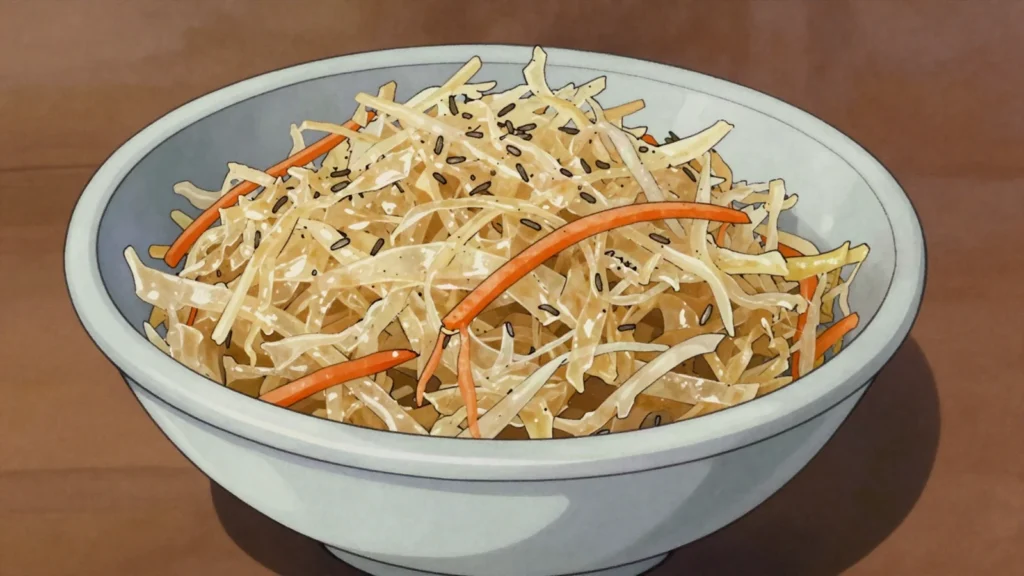

Ingredients
The cabbage
- 2.5 kgwhite cabbage
- firm, heavy, late-season heads
- outer leaves removed and kept
- see the note
The salt
- 50 gnon-iodised salt
- that is 2 percent of the cabbage weight
- weigh it, see the note
- sea salt or pickling salt
The additions
- 2carrots, coarsely grated
- 1 tablespooncaraway seeds
- optional
- a handful of cranberries
- optional, traditional
- 1tart apple, sliced
- optional
- several bay leaves
- 1 teaspoonblack peppercorns
- a few dill seed heads
- optional
Equipment
- a large bowl
- a crock, a wide jar, or a food-grade bucket
- not aluminium or copper
- see the note
- a weight
- a plate, a bag of brine, or a clean stone
- a cloth
Directions
- Use firm heavy late-season white cabbage. It should feel heavy for its size. Take two or three clean outer leaves off and set them aside. Do not wash the cabbage heart. Cut the core out and discard it. Shred the cabbage fine. Use a knife, a mandoline or a shredder. Thick pieces stay dry and take far longer. Use the guard. Never freehand the last piece.
- Salt draws the juice out of the cabbage. Lactic bacteria tolerate salt and spoilage organisms mostly do not. Salt crystals differ enormously in density. Too little salt and it goes soft and can spoil. Use non-iodised salt. Mix the salt through the cabbage and squeeze it hard. Give it ten minutes. Squeeze, twist and press.
- Salt it and leave it half an hour, then squeeze. Enough liquid to cover the cabbage when it is packed down. Pack first, then judge. Mix the grated carrot and any spices through. They also add acid, which helps at the start.
- Use glass, ceramic, or food-grade plastic. They work and they are hard to keep clean. Pack the cabbage into the vessel in layers. Press each layer down hard with your fist.
- Leave at least a third of the vessel empty. Stand the vessel in a tray. Lay the reserved outer leaves over the top. Put a plate on the leaves and a weight on the plate. Everything must stay under the brine. Wait an hour and press again. If it still does not cover, add brine at two percent salt. Cover the vessel with a cloth. Never seal a fermenting vessel tightly.
- Pierce the cabbage to the bottom with a clean wooden stick each day. It is done for the first week. Skim any foam off the top. A thin white film may appear on the surface. Discard the batch. Cabbage gone soft and grey throughout.
- Taste it every few days with a clean fork. It is ready when it tastes right to you. Rinse it if it is too sour or too salty. Do it only if you need to. Squeeze it out before cooking. Keep the juice. Add it back to taste rather than all at once. Anyone watching their salt should know that. Keep everything under the brine.
Technique
- Nothing is added but salt — no vinegar, no starter, no water. The liquid is the cabbage’s own juice drawn out by salting and squeezing, which surprises people who expect to add brine.
- Weigh the salt at two percent of the shredded cabbage weight. Crystal densities differ enormously — a spoon of flaky salt weighs about half a spoon of fine — and guessing goes wrong in both directions. Too little and it goes soft and can spoil; too much and the fermentation stalls and it stays merely salty. Use non-iodised salt, since iodine inhibits the bacteria.
- Do not wash the cabbage heart. The bacteria that ferment live on the leaves, and the inner leaves of a tight head are clean anyway.
- Everything must stay under the brine. Anything above the surface grows mould, and this single rule decides whether the batch works. If the brine does not cover, wait an hour and press again; only as a last resort add brine at two percent salt — twenty grams to a litre — and never plain water, which dilutes the salt and weakens the whole batch.
- Never seal a fermenting vessel tightly. Fermentation produces carbon dioxide, and a sealed jar builds pressure and can burst. Cover it with a cloth.
- Leave at least a third of the vessel empty and stand it in a tray. The brine rises as it ferments and a full vessel overflows onto the floor — that happens to everyone once.
- Pierce the cabbage to the bottom with a clean stick daily for the first week. Gas gets trapped in the packed shreds and makes it bitter; this is a genuine traditional step rather than a superstition.
- Squeezing the salted cabbage is real physical work — ten minutes of squeezing, twisting and pressing to break the cell walls. Salting it and leaving it half an hour first lets the salt do some of the work.
- The liquid looks insufficient in the bowl and covers once the cabbage is packed tight. Pack first, then judge.
- Cloudy brine is correct — it is the bacteria working. Clear brine after a week means nothing is happening.
- A thin flat white wrinkled film is usually kahm yeast: harmless, unpleasant-tasting, simply skimmed off. Fuzzy or coloured growth — blue, green, black or pink — is mould, which sends threads below the surface, so scraping the top does not remove it and some moulds produce toxins. Discard the batch.
- Discard it also for a slimy or ropy brine, a putrid or yeasty rather than clean sour smell, or cabbage gone soft and grey throughout. If you are unsure, throw it out.
- Use late-season autumn cabbage. It has more sugar, which means a stronger fermentation; summer cabbage is watery and ferments weakly.
- Reserve two or three clean outer leaves to lay over the top under the weight. It is a genuinely useful trick for holding shreds down.
- Warmer ferments faster and softer, cooler slower and crisper, and very cold may not start at all. Around eighteen to twenty degrees is ideal.
- Fermented cabbage retains vitamin C and was a real winter source of it. Cooking destroys much of that, and rinsing washes away some along with the bacteria — so rinse only if it is genuinely too sour or salty.
- Squeeze it out before cooking and keep the juice, adding it back to taste rather than all at once. The juice is intensely sour, and it is also drunk in the region as a hangover remedy — the atlas records the practice without endorsing the claim.
- Use glass, ceramic or food-grade plastic, never aluminium or copper. A mandoline is the commonest cause of kitchen cuts, so use the guard and never freehand the last piece.
Substitutions
- Red cabbage ferments the same way and gives a deep purple kraut.
- Beetroot, celeriac or turnip can be shredded in with the cabbage.
- Juniper berries, dill seed and coriander seed all belong in variant spice mixes.
- Lingonberries or sour apple replace cranberries.
- Any wide non-reactive vessel replaces a crock, including a food-grade bucket.
- Sunflower oil is traditional for dressing it; any oil works.
Variations
- Kiszona kapusta in Poland and kvashenaya kapusta in Russia are the same thing.
- Whole salted cabbage heads are fermented in some households for stuffed leaves.
- Cabbage fermented with beetroot comes out pink and sweeter.
- Bigos stews it with meat and sausage over several days.
- Kapusniak is the sour cabbage soup built on it.
- Kvashanyya agurki applies the same brine logic to cucumbers.
History
Autumn cabbage was shredded and salted in wooden barrels; sour cabbage sustained Belarusian households through long winters.
Frequently asked questions
What is Kvashanaya kapusta?
Kvashanaya kapusta is a fermented & pickled from Belarus: cabbage salted and fermented in barrels for the winter. Autumn cabbage was shredded and salted in wooden barrels; sour cabbage sustained Belarusian households through long winters.
How long does Kvashanaya kapusta take to make?
Kvashanaya kapusta takes 45 minutes plus 1 to 3 weeks of preparation and none of cooking. The recipe makes makes about 2 kg. It is rated medium to make.
What can I substitute in Kvashanaya kapusta?
Yes, within limits. Red cabbage ferments the same way and gives a deep purple kraut. Beetroot, celeriac or turnip can be shredded in with the cabbage. Juniper berries, dill seed and coriander seed all belong in variant spice mixes. Lingonberries or sour apple replace cranberries. Any wide non-reactive vessel replaces a crock, including a food-grade bucket. Sunflower oil is traditional for dressing it; any oil works.
What is the most important thing to get right in Kvashanaya kapusta?
Use firm heavy late-season white cabbage. It should feel heavy for its size. Take two or three clean outer leaves off and set them aside. Do not wash the cabbage heart. Cut the core out and discard it. Shred the cabbage fine. Use a knife, a mandoline or a shredder. Thick pieces stay dry and take far longer. Use the guard. Never freehand the last piece.