
Ingredients
The bed
- 1 kgraw rice bran (nuka)
- 1 litrewater
- 130 gcoarse non-iodised salt — 13% of the water’s weight
- 1 piecekombu, 10 cm
- 2dried chillies
- a handful of vegetable offcuts, for the starter weeks
To pickle
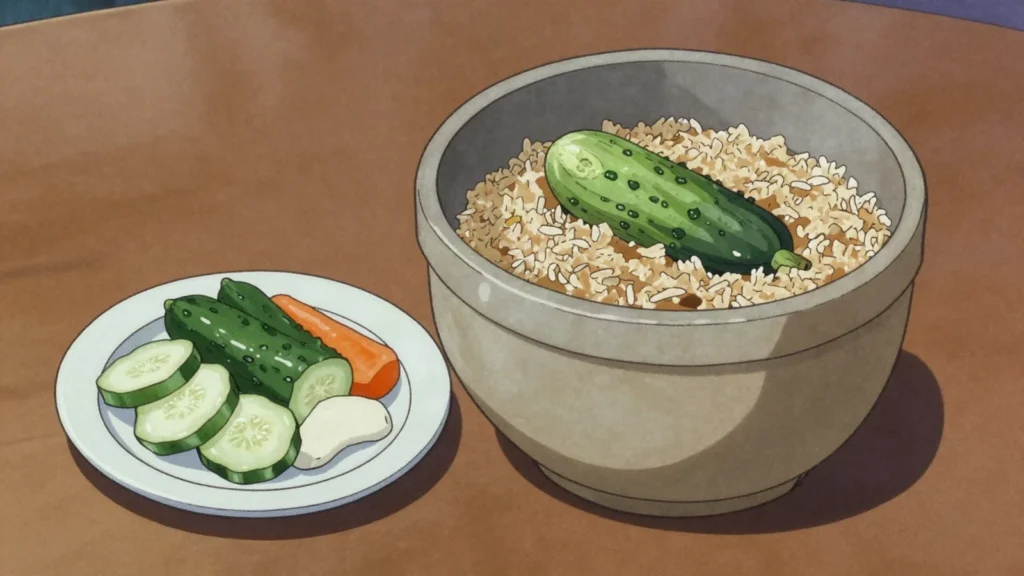
- cucumber, daikon, carrot, turnip or aubergine, whole or halved
- a little extra salt, to rub the vegetables
Equipment
- a wide crock, wooden tub or plastic container with a lid
Directions
- Dissolve the salt in the water and let it cool, then stir it into the bran a little at a time until the bed has the texture of damp sand — it should hold together when squeezed but crumble when poked.
- Bury the kombu and chillies in it, then push in a handful of vegetable offcuts — cabbage cores, carrot tops, whatever is going.
- Every day for the first week to ten days, take out the old offcuts, push in fresh ones, and turn the whole bed thoroughly with your hands, right down to the bottom.
- The daily turning is the entire practice. It brings oxygen to the surface bacteria and buries the anaerobic ones, and a bed left unturned for a few days goes sour, then slimy, then off. This is why nukazuke is described as something you keep rather than something you make.
- After a week or so the bed will smell pleasantly sour and yeasty rather than of raw bran. It is now alive and ready.
- To pickle, rub a vegetable with salt, bury it completely, and smooth the surface. A cucumber takes half a day; daikon takes two.
- Lift it out, rinse off the bran and slice. Turn the bed each time you take something out.
- If you go away, put the whole thing in the fridge, where it slows to needing a turn every few days. Beds are handed down for decades this way.
Technique
- Turn it every day, hands in, right to the bottom. This is not optional and it is why people give up.
- Wet bed, sour smell, white film — all normal. Fuzzy coloured mould or an ammonia smell means it needs more bran, more salt and a rest.
- The bed absorbs water from each vegetable, so top it up with fresh bran and salt every few weeks as it loosens.
Substitutions
- Roasted bran, which is easier to find and starts faster than raw.
- A shop-bought ready-fermented nuka bed, which skips the ten-day start entirely.
- Beer or a spoonful of miso stirred in at the start to speed the culture.
Variations
- Takuan is dried daikon cured in a bran bed for months, which is a different and much longer preparation.
- Some households add mustard powder or ginger to the bed for flavour and to slow spoilage.
History
Spread in the Edo period when polished rice created surplus bran; households turn the bed daily by hand for decades.
Frequently asked questions
What is Nukazuke?
Nukazuke is a fermented & pickled from Japan: vegetables buried in a live rice-bran bed; sour, salty, faintly effervescent. Spread in the Edo period when polished rice created surplus bran; households turn the bed daily by hand for decades.
How long does Nukazuke take to make?
Nukazuke takes 30 min to build, then 5 min a day of preparation and no cooking at all. The recipe makes a bed that runs for years. It is rated medium to make.
What can I substitute in Nukazuke?
Yes, within limits. Roasted bran, which is easier to find and starts faster than raw. A shop-bought ready-fermented nuka bed, which skips the ten-day start entirely. Beer or a spoonful of miso stirred in at the start to speed the culture.
What is the most important thing to get right in Nukazuke?
Every day for the first week to ten days, take out the old offcuts, push in fresh ones, and turn the whole bed thoroughly with your hands, right down to the bottom.