
Ingredients
Plums
- 1 kgripe yellow ume plums
- 180 gcoarse non-iodised salt — 18% of the fruit’s weight
Colour
- 1large bunch red shiso leaves
- 2 tbspsalt, for the shiso
Equipment
- a wide crock or food-grade tub
- a weight equal to the fruit’s own weight
- flat baskets or trays for drying
Directions
- Use ume that have turned yellow and smell fragrant — for umeboshi, unlike umeshu, they must be ripe. Green ones stay hard and never soften.
- Soak them in cold water for four hours, drain, and pick the stems out of the dimples with a skewer.
- Dry each plum completely, then toss with the salt. Eighteen percent is high and it is deliberate: umeboshi is a long ambient cure and the salt is the entire preservation. Traditional recipes run to 20% and modern low-salt versions require refrigeration.
- Pack the salted plums into the crock and set a weight on top equal to the plums’ own weight.
- Within two or three days the plums will be sitting in their own liquid — umezu, the plum vinegar. If they are not, the salt was not enough or the weight was too light. Everything must stay submerged.
- Leave three weeks. Meanwhile rub the shiso leaves with their 2 tablespoons of salt, discard the dark bitter liquid that comes out, and repeat, then add the leaves to the crock, where they will turn the whole thing crimson.
- In the hottest part of summer, lift the plums out and lay them on baskets in full sun for three days, bringing them in at night and returning them to the umezu overnight. That cycle of sun and brine is the doyōboshi and it is what gives umeboshi its texture.
- Pack the dried plums into jars with a little umezu. They keep for years and improve for the first several.
Technique
- Eighteen percent salt, weighed against the fruit. At lower salt this becomes a refrigerated pickle, not a shelf-stable one.
- If liquid does not cover the plums within three days, something is wrong. Add more weight before you add more salt.
- Keep the umezu that is left over. It is a superb seasoning in its own right.
Substitutions
- Apricots or unripe plums where ume are unavailable — a real substitute in texture, though not in flavour.
- Skip the shiso for the pale unbleached version, which is what many households actually make.
Variations
- Low-salt umeboshi at 8 to 10% is common commercially and must be refrigerated.
- Umezu, the crimson brine, is bottled and sold as a seasoning.
History
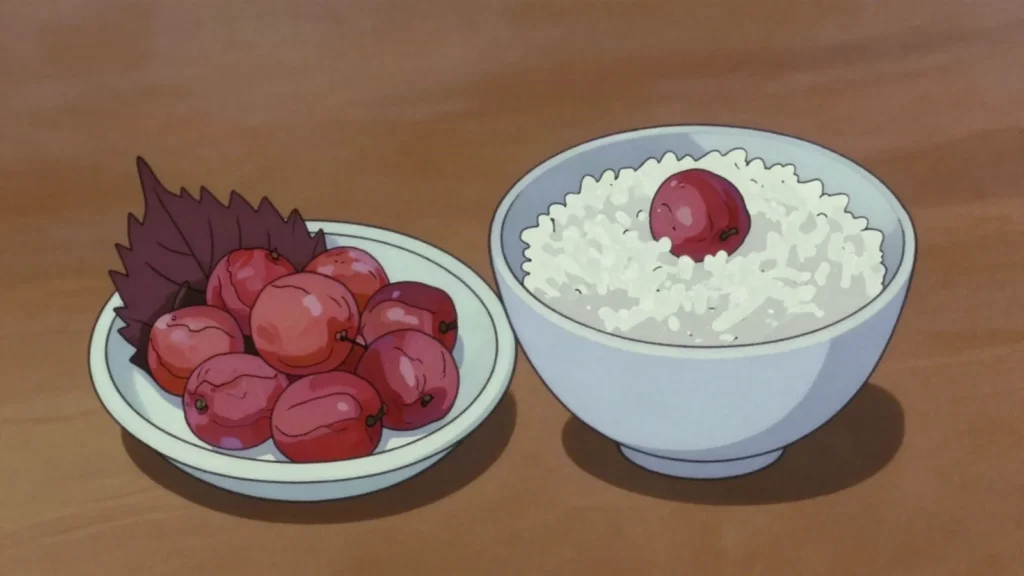
Eaten since the Heian period as medicine; samurai carried them as field rations and they centre the flag-like hinomaru bento.
Frequently asked questions
What is Umeboshi?
Umeboshi is a fermented & pickled from Japan: fiercely sour salt-pickled plums dyed red with shiso, one per rice box. Eaten since the Heian period as medicine; samurai carried them as field rations and they centre the flag-like hinomaru bento.
How long does Umeboshi take to make?
Umeboshi takes 1 hour plus 3 weeks salting and 3 days drying of preparation and no cooking at all. The recipe makes makes about 1 kg. It is rated medium to make.
What can I substitute in Umeboshi?
Yes, within limits. Apricots or unripe plums where ume are unavailable — a real substitute in texture, though not in flavour. Skip the shiso for the pale unbleached version, which is what many households actually make.
What is the most important thing to get right in Umeboshi?
Use ume that have turned yellow and smell fragrant — for umeboshi, unlike umeshu, they must be ripe. Green ones stay hard and never soften.