
Ingredients
Dough
- 250 gunsalted butter, softened
- 80 gicing sugar
- 1egg yolk
- 2 tbspbrandy or ouzo
- 400 gplain flour
- 100 galmonds, toasted and chopped
- 1 tspbaking powder
- a pinch of salt
To finish
- rose water
- 500 gicing sugar, for burying
Optional
- 1whole clove per biscuit
Directions
- Beat the softened butter alone for a full 10 minutes, until it is white, light and doubled in volume.
- Beat it far longer than seems necessary. There is very little sugar and no liquid to speak of, so the only lift comes from air beaten into the butter, and this is what makes kourabiedes melt rather than crumble.
- Beat in the icing sugar, then the yolk and the brandy.
- Fold in the sifted flour, baking powder and salt with the toasted chopped almonds, stopping the moment it comes together.
- Do not knead it. Working the flour develops gluten and the biscuit turns hard, when it should collapse on the tongue.
- Chill the dough 30 minutes, until firm enough to shape without the butter smearing.
- Shape into crescents or small rounds and set them well apart on lined trays.
- Press a whole clove into the top of each if you want the traditional finish.
- The clove is decorative and aromatic, and it is picked out before eating rather than chewed.
- Bake at 170°C (340°F) for 18 to 20 minutes.
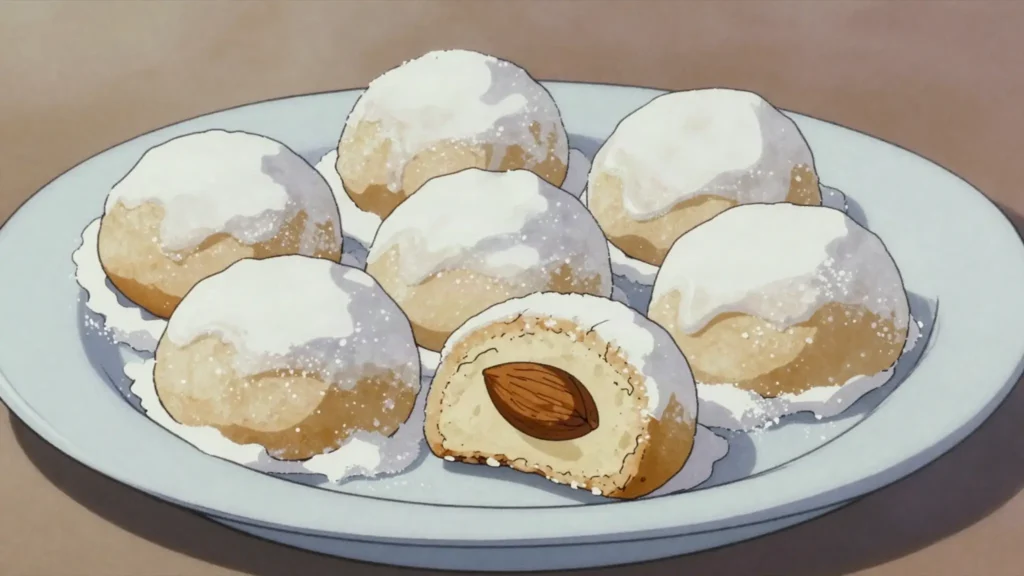
- They must not colour. A proper kourabies is pale ivory with only the faintest tinge at the base, and a golden one has been overbaked.
- Take them out and let them cool for 5 minutes only, until they can just be handled.
- Now sprinkle each one with a few drops of rose water while still warm.
- The rose water goes on warm, and it does two jobs: it perfumes the biscuit and it dampens the surface so the sugar sticks.
- Sift a thick layer of icing sugar into a deep tray, lay the warm biscuits on it, then bury them completely under more sifted icing sugar.
- Bury them, do not dust them. Kourabiedes are meant to be under a snowdrift of sugar, and a light dusting is a different and lesser thing.
- Leave them in the sugar to cool completely and store them in it.
- They are Christmas baking above all, made alongside melomakarona, and Greek households argue over which of the two is better.
Technique
- Melomakarona are the honey-syrup ones and kourabiedes the sugar-buried ones, and every Greek has a firm preference.
- They keep for weeks in their sugar in a sealed tin.
- Expect icing sugar on everything within a metre of the plate.
Substitutions
- Ouzo or metaxa in place of brandy.
- Walnuts or pistachios instead of almonds.
Variations
- Shaped as rounds rather than crescents.
- Without the clove, which many now leave out.
- With a little semolina in the flour for a sandier crumb.
History
The other Greek Christmas biscuit, made with clove-scented butter and sold beside melomakarona.
Frequently asked questions
What is Kourabiedes?
Kourabiedes is a dessert from Greece: buttery almond shortbread buried under thick icing sugar. The other Greek Christmas biscuit, made with clove-scented butter and sold beside melomakarona.
How long does Kourabiedes take to make?
Kourabiedes takes 30 min plus 30 min chilling of preparation and 20 min of cooking. The recipe makes about 30. It is rated easy to make.
What can I substitute in Kourabiedes?
Yes, within limits. Ouzo or metaxa in place of brandy. Walnuts or pistachios instead of almonds.
What is the most important thing to get right in Kourabiedes?
Beat it far longer than seems necessary. There is very little sugar and no liquid to speak of, so the only lift comes from air beaten into the butter, and this is what makes kourabiedes melt rather than crumble.