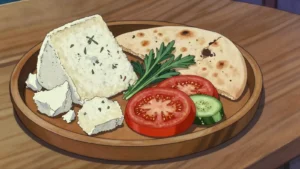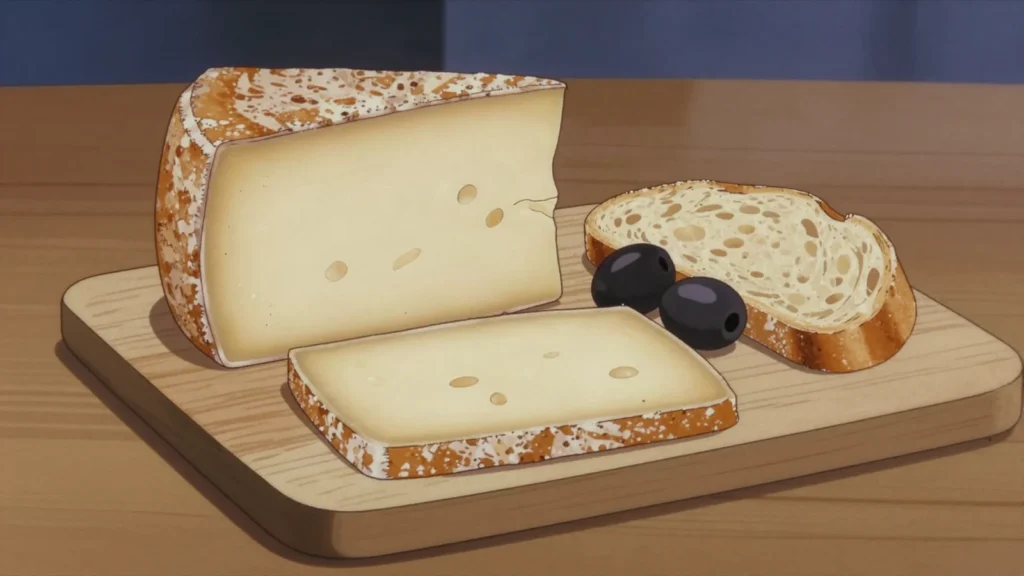

A hard, nutty gruyère-style cheese from Crete, Naxos and Epirus, introduced to Greece in the twentieth century on the Swiss model. The Cretan and Naxos versions hold PDO status, and it is the country’s most-eaten hard cheese.
It is a scalded, pressed, PDO cheese matured for months in a controlled cellar — a dairy operation tied to specific islands and pastures.
What goes into it
- sheep’s milk, or cow’s milk on Naxos, sometimes with goat
- rennet
- a whey starter
- salt
How it is made
The milk is set with rennet, the curd cut fine and scalded, then pressed into large wheels. These are brined and matured for months in a cool cellar, turned and rubbed as a hard rind forms. The Cretan version is made from sheep’s milk on mountain pasture and is sharper than the Naxos one.
How long it takes: three months minimum, often five or more
How it is eaten
In slices with bread and olives, fried as saganaki, or grated over pasta.
History
Introduced to Greece in the twentieth century on the Swiss gruyère model; the Cretan and Naxos versions hold PDO status.
Frequently asked questions
What is Graviera?
Graviera is a cheese & dairy from Greece: hard, nutty gruyère-style cheese from Crete, Naxos and Epirus. Introduced to Greece in the twentieth century on the Swiss gruyère model; the Cretan and Naxos versions hold PDO status.
How is Graviera made?
The milk is set with rennet, the curd cut fine and scalded, then pressed into large wheels. These are brined and matured for months in a cool cellar, turned and rubbed as a hard rind forms. The Cretan version is made from sheep’s milk on mountain pasture and is sharper than the Naxos one. It takes three months minimum, often five or more.
Can I make Graviera at home?
No, and the atlas gives no method for it. It is a scalded, pressed, PDO cheese matured for months in a controlled cellar — a dairy operation tied to specific islands and pastures.
What goes into Graviera?
Sheep’s milk, or cow’s milk on Naxos, sometimes with goat, rennet, a whey starter, salt.
How is Graviera eaten?
In slices with bread and olives, fried as saganaki, or grated over pasta.