Ingredients
The plantains
- 4very ripe plantains
- skins black or nearly so
- about 800 g peeled
- mashed
The seasoning
- a large thumb of fresh ginger
- grated finely
- 1hot chilli, finely chopped
- or to taste
- half a small onion, grated
- and squeezed dry
- half a teaspoon salt
- a pinch of ground cloves
- or nutmeg, optional
To bind
- 80 gmaize flour
- or plain flour
- or a mixture
- a little water, only if needed
For frying
- 1 litrevegetable oil
- or palm oil
- or enough for 6 cm depth
To serve
- hot, on their own
- with roasted peanuts
- with a pepper sauce
- as a street snack
Directions
- Cut off both ends. Score the skin lengthways in two or three places. Peel the strips away with your thumb. Mash them thoroughly with a fork.
- Leave a little texture. A completely smooth purée gives a flatter result. Grate the ginger finely rather than chopping. Use a generous amount of it. Add the chopped chilli. Add the ground cloves if you are using them. A pinch is enough, since they dominate quickly. Grate it rather than chopping it.
- Squeeze the grated onion dry. It carries a great deal of water otherwise. Add flour a little at a time. Mix it in until the mixture holds together. It should be a thick paste rather than a batter. Fry one ball before committing the batch. If it falls apart, add a little more flour. Taste the mashed plantain to judge. Ghanaian food uses hot chillies.
- Adjust the quantity to your tolerance. Never rub your eyes afterwards. Use a deep heavy pot. Fill it no more than one third full. Oil bubbles up when wet mixture goes in. Never leave hot oil unattended. Keep a lid within reach. If it catches fire, turn off the heat and cover it.
- Heat the oil to one hundred and seventy degrees. That is moderate rather than very hot. Roll walnut-sized balls. Fry five or six at a time only. Do not crowd the pot.
- Fry them for three or four minutes. Turn them so they colour evenly. They should be deep golden brown. Break it open and look inside. It should be cooked through and soft. Lift them out with a slotted spoon. Drain them on a rack over kitchen paper.
- Let the oil recover between batches. Serve them hot, within minutes. Serve roasted peanuts alongside. That combination of sweet, hot and salty is standard. Make it and fry it the same day. Reheat them from frozen in a hot oven.
Technique
- The atlas holds a separate entry for claclo from Côte d’Ivoire, which is the same snack under a related name and not a meaningfully different recipe. It is made across the coastal belt under several names, and recording it under each reflects that rather than inventing distinctions.
- Use plantains that are genuinely overripe, black-skinned and soft. Their starch has turned to sugar; an underripe plantain is starchy, bland and will not mash, which is the commonest mistake here.
- Do not refrigerate plantains while ripening. Cold blackens the skin without softening the flesh, so a black skin from the fridge tells you nothing.
- Squeeze the grated onion dry before it goes in. It carries a great deal of water that loosens the mixture.
- Fry at 170 degrees and watch them closely. Ripe plantain is full of sugar, which browns and burns fast, so the outside can blacken before the centre cooks.
- Fry one test ball before committing the batch. Falling apart means more flour; heavy means water or more plantain. That single test saves the batch.
- Grate the ginger rather than chopping it, and use plenty. Ginger is what makes this snack what it is, and its fibres are unpleasant in chunks.
- Use cloves sparingly — a pinch. They are characteristic of Ghanaian plantain snacks but dominate quickly.
- Add flour cautiously. Too much gives a heavy tough ball, too little and the mixture disperses in the oil; you want a thick paste that holds its shape when squeezed.
- Taste the mashed plantain for sweetness before the flour goes in. Very ripe fruit needs no sugar at all.
- Deep-frying rules apply: fill the pot no more than a third, never leave it unattended, keep a lid within reach, and if the oil catches fire turn off the heat and smother it. Never throw water on burning oil.
- Kelewele uses the same ginger and chilli spicing on cubes of plantain rather than mashing them, and tatale is the flatter pancake version. All three belong to the same Ghanaian family.
Substitutions
- Maize flour replaces wheat flour, or the two are mixed; maize gives a grittier crust.
- Scotch bonnet is the chilli actually used; any hot chilli substitutes.
- Palm oil replaces vegetable oil and gives a redder, more characteristic result.
- Nutmeg or cinnamon replace cloves, or all three are used.
- The onion is optional and many versions have none.
- A little sugar can be added when the plantains are not fully ripe.
Variations
- Claclo in Côte d’Ivoire is the same snack under a related name.
- Kelewele fries cubes of ripe plantain in the same spicing.
- Tatale is the flatter fried plantain pancake from the same tradition.
- Alloco in Côte d’Ivoire is plain fried ripe plantain slices.
- Bofrot and botokoin are the plain wheat-dough fried relatives.
- A version with grated coconut worked in is made in some places.
Frequently asked questions
What is Kaklo?
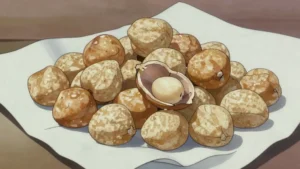
Kaklo is a snack from Ghana: balls of mashed overripe plantain spiked with pepper and ginger, deep fried.
How long does Kaklo take to make?
Kaklo takes 20 minutes of preparation and 20 minutes of cooking. The recipe makes makes about 24. It is rated easy to make.
What can I substitute in Kaklo?
Yes, within limits. Maize flour replaces wheat flour, or the two are mixed; maize gives a grittier crust. Scotch bonnet is the chilli actually used; any hot chilli substitutes. Palm oil replaces vegetable oil and gives a redder, more characteristic result. Nutmeg or cinnamon replace cloves, or all three are used. The onion is optional and many versions have none. A little sugar can be added when the plantains are not fully ripe.
What is the most important thing to get right in Kaklo?
Leave a little texture. A completely smooth purée gives a flatter result. Grate the ginger finely rather than chopping. Use a generous amount of it. Add the chopped chilli. Add the ground cloves if you are using them. A pinch is enough, since they dominate quickly. Grate it rather than chopping it.