
Ingredients
The pickled ginger
- 200 gyoung ginger
- peeled and shredded very finely
- 2 tablespoonssalt
- juice of 3 limes
- or 100 ml rice vinegar
- or shop-bought pickled ginger
- shredded
The crunchy elements
- 3 tablespoonsroasted peanuts
- roughly crushed
- 2 tablespoonsfried yellow split peas
- or fried chana dal
- 2 tablespoonstoasted sesame seeds
- 1 tablespoonfried garlic
- or crisp fried shallots
The fresh part
- 150 gwhite cabbage
- shredded very finely
- 1tomato, deseeded and diced
- optional
- 2green chillies, finely chopped
- or to taste
- a handful of coriander, chopped
The dressing
- 3 tablespoonspeanut oil
- or the oil from frying the garlic
- juice of 1 lime
- 1 tablespoonfish sauce
- or 1 teaspoon salt, for a vegan version
- 1 teaspoonsesame oil
- optional
To serve
- with rice and curry
- or on its own with green tea
- as a palate cleanser
Directions
- Soak split peas overnight, dry them and fry them. Dry them very thoroughly first. Rinse it and shred it finely. Reduce any sugar elsewhere to compensate. Peel the ginger with the edge of a spoon. Shred it as finely as you possibly can. Use a mandoline or a very sharp knife. Thick shreds of ginger are fibrous and harsh.
- Toss the shredded ginger with the salt. Leave it in a colander for an hour. Squeeze it out thoroughly. Pack the squeezed ginger into a clean jar. Pour lime juice or vinegar over to cover it. Seal it and refrigerate it. Leave it at least three days. Use a clean sterilised jar. Keep the ginger fully submerged in the acid.
- Keep it refrigerated rather than at room temperature. Use it within a month. Discard it if it smells wrong or grows mould. Slice garlic thinly and evenly. Put it in a cold pan with oil. Turn the heat to medium-low.
- Take it off while it is still pale gold. It keeps cooking in the residual heat. Strain it and keep both the garlic and the oil. Shred it as finely as you can. It also does not take the dressing. Toast sesame seeds in a dry pan.
- Shake them constantly for two minutes. They should turn golden and smell nutty. Tip them out of the pan immediately. Squeeze the pickled ginger out of its liquid. Put it in a bowl with the cabbage. Add the peanuts, fried peas and sesame. Add the fried garlic. Add the chillies, tomato and coriander. Add the peanut or garlic oil.
- Add the lime juice and fish sauce. Add sesame oil if you like. Toss it with your hands, not a spoon. Squeeze and lift the mixture repeatedly. Do that for a minute. Add more lime if it tastes flat. Add more oil if it seems dry.
- Toss it shortly before serving. Fifteen minutes ahead is about right. Serve it as one dish among several. Dressed, it keeps only a few hours.
Technique
- Toss it with your hands, squeezing and lifting rather than stirring. That is what thoke means — it distributes the oil properly and bruises the ingredients slightly, and a spoon does neither.
- Dress it shortly before serving, about fifteen minutes ahead. The fried pulses go soft in dressing and the crunch is the point of the dish.
- Shred the ginger as finely as you possibly can. Thick shreds are fibrous and harsh; fine threads soften in the pickle and distribute through the salad.
- Use young ginger with thin pale pink-tipped skin. It is juicier, far less fibrous and much less hot than mature ginger, which goes stringy when shredded.
- Pickle the ginger for at least three days and preferably a week. Raw ginger in this quantity is overwhelming, and the pickling both softens the heat and supplies the sourness.
- Keep the pickling ginger fully submerged in acid in a clean sterilised jar in the refrigerator. This is a fresh acid pickle rather than a preserved one — use it within a month and discard it if it smells wrong or moulds.
- The fried pulses are not a garnish. Fried split peas, broad beans and peanuts give a texture unlike anything else and are eaten in quantity; without them a thoke is just a salad. Burmese and South Asian grocers sell them ready fried.
- Take the frying garlic off the heat while it is still pale gold. It keeps cooking off the flame and darkens to golden; waiting for brown in the pan gives burnt bitter garlic. Keep the oil — it is the dressing here.
- Dry soaked split peas very thoroughly before frying your own. Wet pulses spit violently in hot oil.
- Toast the sesame in a dry pan and tip it out the moment it colours. It burns within seconds of turning golden.
- Burmese salads carry more oil than most, and that is characteristic rather than excessive. If it seems dry, it needs more.
- Shred the cabbage very finely. It bulks out the salad and cools the intensity of the ginger, and without it the dish is very strong indeed.
- This contains peanuts, sesame and fish sauce, all worth declaring. Replacing the fish sauce with salt makes it vegan, since everything else already is.
- Lahpet thoke, the fermented tea leaf salad, uses exactly the same crunchy elements. Gyin thoke swaps pickled ginger for the tea leaves and the construction is otherwise identical.
Substitutions
- Shop-bought pickled ginger, rinsed and shredded, replaces homemade; Japanese gari is sweeter, so cut back sugar elsewhere.
- Fried chana dal replaces fried yellow split peas and is easier to find.
- Crisp fried shallots from a jar replace homemade fried garlic.
- Salt or a soy-based sauce replaces fish sauce for a vegan version.
- Any neutral oil replaces peanut oil, though peanut oil suits the salad.
- Rice vinegar replaces lime in the pickle for a milder sourness.
Variations
- Lahpet thoke, the fermented tea leaf salad, is Myanmar’s most famous dish and the closest relative.
- Shauk thoke uses citron or lime in place of the ginger.
- Tohu thoke is made with Shan chickpea tofu.
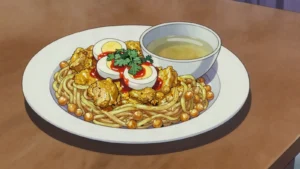
- Nan gyi thoke is a thick rice noodle salad with chicken.
- Samusa thoke chops samosas into a salad with the same crunchy elements.
- Ginger salad served with green tea after a meal is the everyday way it appears.
Frequently asked questions
What is Gyin Thoke?
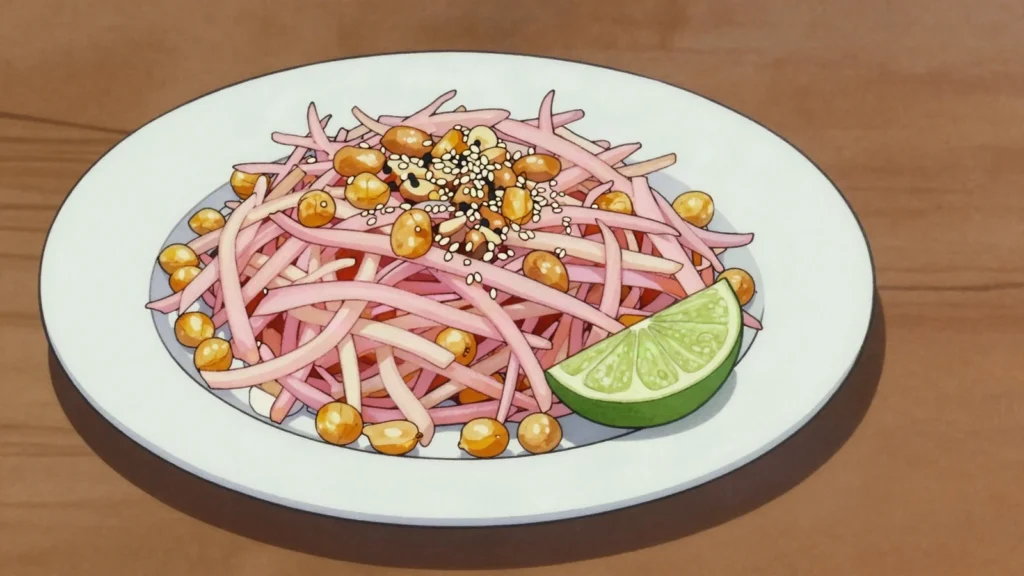
Gyin Thoke is a salad & side from Myanmar: shredded pickled ginger tossed with sesame, fried beans, cabbage and lime.
How long does Gyin Thoke take to make?
Gyin Thoke takes 25 minutes plus pickling of preparation and 10 minutes of cooking. The recipe makes serves 4 as a side. It is rated easy to make.
What can I substitute in Gyin Thoke?
Yes, within limits. Shop-bought pickled ginger, rinsed and shredded, replaces homemade; Japanese gari is sweeter, so cut back sugar elsewhere. Fried chana dal replaces fried yellow split peas and is easier to find. Crisp fried shallots from a jar replace homemade fried garlic. Salt or a soy-based sauce replaces fish sauce for a vegan version. Any neutral oil replaces peanut oil, though peanut oil suits the salad. Rice vinegar replaces lime in the pickle for a milder sourness.
What is the most important thing to get right in Gyin Thoke?
Keep it refrigerated rather than at room temperature. Use it within a month. Discard it if it smells wrong or grows mould. Slice garlic thinly and evenly. Put it in a cold pan with oil. Turn the heat to medium-low.