
Ingredients
Malanga
- 1 kgmalanga root
- or 1 kg taro or cocoyam
- juice of 1 lime, to stop browning
The batter
- 3eggs
- 6garlic cloves, crushed
- 3 tablespoonsplain flour
- 1 teaspoonsalt
- 1 teaspoonblack pepper
- a handful of parsley, chopped
- 1 teaspoonvinegar or lime juice
To fry
- oil, for deep frying
To serve
- lime wedges
- hot sauce
- a cold beer
Directions
- Peel it thickly with a sharp knife. Take off all the hairy brown skin. Take off any discoloured flesh beneath. Rinse the peeled corms under cold water.
- Keep them in water with lime juice. That stops them browning while you work. Grate the malanga root finely. Use the fine side of a box grater. It should come out as a wet pulp. Work quickly, since it discolours fast. Others leave it wet for a softer one.
- Squeeze it lightly if it is very wet. Do not squeeze it dry entirely. Put the grated malanga in a bowl. Beat the eggs and add them in. Add the crushed raw garlic to it. Add the flour, salt and black pepper.
- Add the chopped parsley as well. Add the vinegar or lime juice. Mix it all together thoroughly. It should be thick and hold its shape. Add more flour if it seems loose. Frying them needs the right heat. Pour oil into a deep pan to seven centimetres. Never fill a pan more than halfway with oil.
- Heat the oil to about 175C for frying. A drop of batter should sizzle up at once. Drop spoonfuls of batter into the oil. Use two spoons to push them off cleanly. Do not crowd the pan at any point.
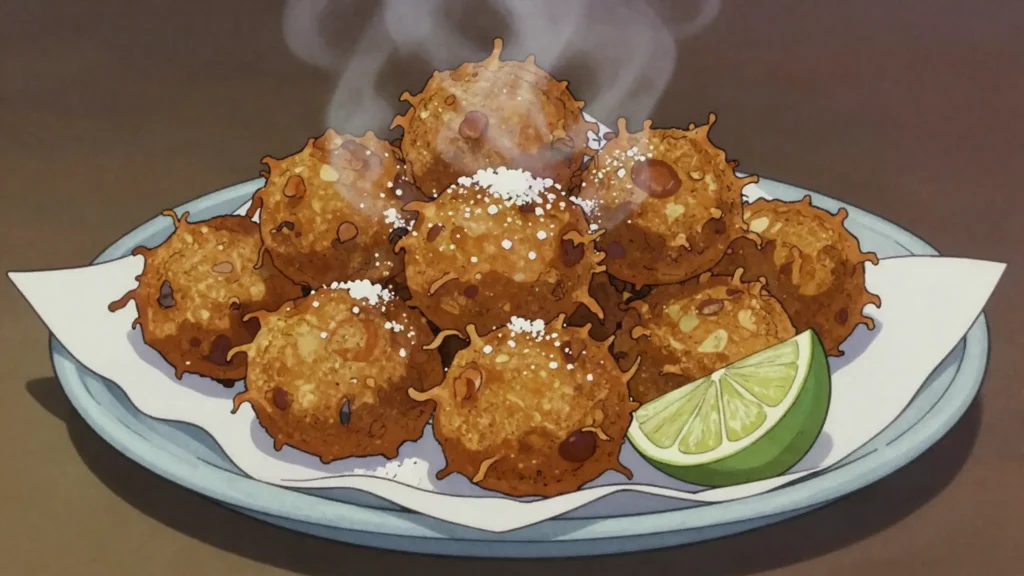
- Fry them for about four minutes. Turn them over as they colour. They should be deep golden all over. Break one open from the first batch. The inside should be cooked and creamy. Lift them onto kitchen paper or a rack. Let the excess oil drain away.
- Scatter a little salt over them while hot. Serving them is done immediately. Put hot sauce out on the table. A cold beer goes alongside them.
Technique
- Malanga is Xanthosoma sagittifolium, called cocoyam or tannia elsewhere, a relative of taro but a different plant, and a staple root across the Caribbean.
- Raw malanga contains calcium oxalate crystals that irritate skin, mouth and throat badly, so it must be peeled and grated with gloves and cooked thoroughly.
- The root is grated raw rather than boiled, and that raw starch is what binds the fritter and cooks through in the hot oil.
Substitutions
- Taro or cocoyam stand in for malanga and behave much the same way.
- Cassava can be used, though it gives a denser and chewier fritter.
Variations
- Some cooks squeeze the grated root dry for a crisper fritter.
- A version with a little grated cheese is made in some households.
- Frituras de bacalao, made with salt cod, are fried the same way.
History
Fritters made from grated malanga root, a starchy tuber related to taro, mixed with garlic and egg and fried until crisp, documented across Cuba as a traditional snack and side dish, reflecting malanga’s long-standing importance as a staple root vegetable across Cuban and wider Caribbean agriculture. Its preparation, grating the root finely before frying small spoonfuls into crisp, golden fritters, reflects a broader Caribbean tradition of transforming starchy root vegetables into flavourful fried snacks, closely related to similar root vegetable fritters found across other islands in the region. Frituras de malanga remain a popular traditional snack across Cuba, commonly served as an appetizer or alongside a main meal.
Frequently asked questions
What is Frituras de malanga?
Frituras de malanga is a snack from Cuba: garlicky malanga-root fritters. Fritters made from grated malanga root, a starchy tuber related to taro, mixed with garlic and egg and fried until crisp, documented across Cuba as a traditional snack and side dish, reflecting malanga’s long-standing importance as a staple root vegetable across Cuban and wider Caribbean agriculture. Its preparation, grating the root finely before frying small spoonfuls into crisp, golden fritters, reflects a broader Caribbean tradition of transforming starchy root vegetables into flavourful fried snacks, closely related to similar root vegetable fritters found across other islands in the region. Frituras de malanga remain a popular traditional snack across Cuba, commonly served as an appetizer or alongside a main meal.
How long does Frituras de malanga take to make?
Frituras de malanga takes 30 minutes of preparation and 20 minutes of cooking. The recipe makes about 24 fritters. It is rated medium to make.
What can I substitute in Frituras de malanga?
Yes, within limits. Taro or cocoyam stand in for malanga and behave much the same way. Cassava can be used, though it gives a denser and chewier fritter.
What is the most important thing to get right in Frituras de malanga?
Squeeze it lightly if it is very wet. Do not squeeze it dry entirely. Put the grated malanga in a bowl. Beat the eggs and add them in. Add the crushed raw garlic to it. Add the flour, salt and black pepper.