
Ingredients
Chicken
- 800 gchicken thigh, skin on, in 4 cm pieces
Marinade
- 3 tbspsoy sauce
- 2 tbspsake
- 1 tbspmirin
- 1 tbspgrated ginger
- 2 clovesgarlic, grated
- 1 tspsesame oil
- 1 tspsugar
Coating
- 100 gpotato starch
- 2 tbspplain flour
To fry
- oil, for deep frying
To serve
- lemon wedges
- Japanese mayonnaise
- shredded cabbage
Directions
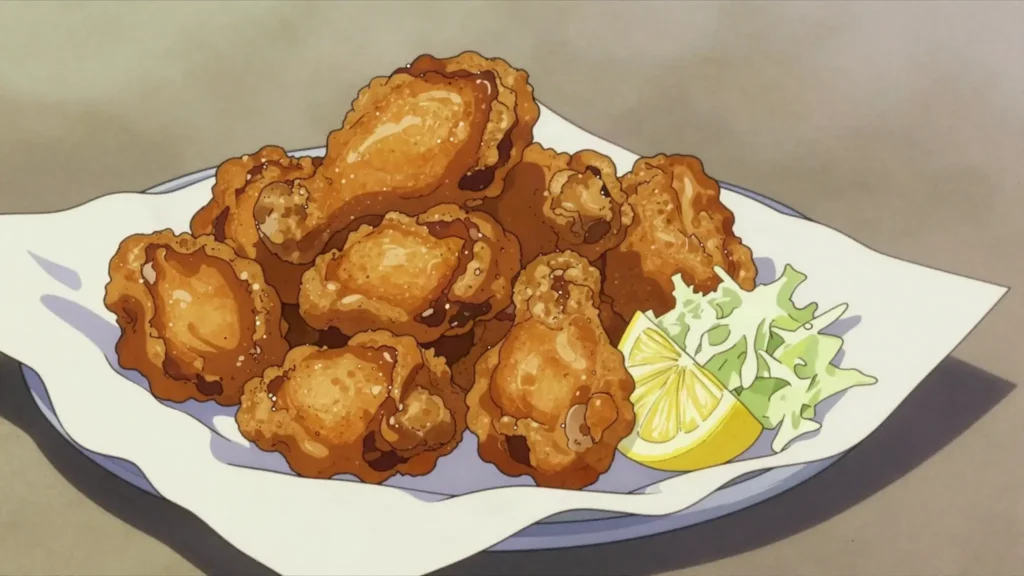
- Use thigh with the skin on and cut it into irregular pieces rather than neat cubes.
- Irregular pieces are what give karaage its craggy surface, and the skin crisps into the best part of it. Breast makes something dry and unremarkable.
- Mix the marinade and work it into the chicken with your hands for a minute.
- Massage it in properly. Thirty minutes is enough if you have worked it in; an hour of passive soaking does less.
- Marinate for 30 minutes, and no longer than an hour.
- Longer than an hour and the soy makes the surface too wet to coat and the meat too salty.
- Drain the pieces but do not wipe them dry, and let the excess marinade drip off.
- Mix the potato starch with the flour.
- Potato starch is what makes karaage rather than fried chicken. It gives a thin, shatteringly crisp shell where wheat flour gives a thicker, breadier crust.
- Toss the pieces in the starch mixture and press it on, then shake off the excess.
- Let them sit for 5 minutes so the coating hydrates and turns slightly pasty.
- That short rest is what stops the coating falling off in the oil.
- Heat the oil to 160°C (320°F) and fry the pieces for 3 minutes. They will be pale.
- Lift them out and rest them on a rack for 5 minutes.
- Raise the oil to 190°C (375°F) and fry them again for 1 to 2 minutes until deep golden and crisp.
- The double fry is the whole method: the low first fry cooks the chicken through, the hot second one crisps the shell without drying the meat.
- Drain on a rack rather than paper and serve immediately with lemon and mayonnaise.
- It belongs in bento boxes, in izakaya, and at convenience store counters, and Nakatsu in Ōita claims it as a local speciality.
Technique
- Potato starch, katakuriko, is worth buying and cornflour is the nearest substitute.
- It is good cold, which is why it is a bento staple.
- Squeezing lemon over is standard and mildly controversial when done to a shared plate without asking.
Substitutions
- Cornflour in place of potato starch.
- Chicken breast, brined first, if thigh is unavailable.
Variations
- Tatsuta-age, marinated more heavily and coated in starch alone.
- Nanban style, dipped in sweet vinegar and topped with tartare sauce.
- With shichimi in the coating for heat.
History
Popularised at a Tokyo restaurant in the 1930s to use surplus chicken; Oita’s Nakatsu now claims Japan’s densest concentration of karaage shops.
Frequently asked questions
What is Karaage?
Karaage is a snack from Japan: marinated chicken pieces dusted in potato starch and fried juicy and craggy. Popularised at a Tokyo restaurant in the 1930s to use surplus chicken; Oita’s Nakatsu now claims Japan’s densest concentration of karaage shops.
How long does Karaage take to make?
Karaage takes 20 min plus 30 min marinating of preparation and 20 min of cooking. The recipe makes 4 servings. It is rated easy to make.
What can I substitute in Karaage?
Yes, within limits. Cornflour in place of potato starch. Chicken breast, brined first, if thigh is unavailable.
What is the most important thing to get right in Karaage?
Use thigh with the skin on and cut it into irregular pieces rather than neat cubes.