
Ingredients
Pot
- 500 gchickpeas, soaked overnight in salted water
- 500 gbeef shin
- 1whole chicken leg
- 200 gtocino
- 1ham bone
- 1marrow bone
- 1onion studded with 2 cloves
- 4 litreswater
- salt
Cooked apart
- 2chorizo
- 2morcilla
- 4carrots
- 1turnip
- 2potatoes
- ½cabbage
Sopa
- 150 gfine noodles
To serve
- tomato sauce
- ground cumin
- pickled guindilla peppers
Directions
- Soak the chickpeas overnight in warm salted water. Salt in the soaking water softens chickpea skins, which is the opposite of the rule for beans and is correct here.
- Put the beef, chicken, tocino, ham bone and marrow bone into a large pot with the 4 litres of cold water, bring it to the boil and skim it thoroughly.
- Add the chickpeas in a net or a muslin bag, which keeps them together and makes them easy to lift out whole later.
- Simmer very gently for 2 hours. Never let it boil hard: that clouds the broth and toughens the chickpeas at the same time.
- Add the carrots, turnip and the studded onion and cook for another 30 minutes.
- Cook the cabbage separately in a ladleful of the broth, and the potatoes separately too. Cabbage cooked in the main pot colours and flavours the whole broth in a way Madrid cooks deliberately avoid.
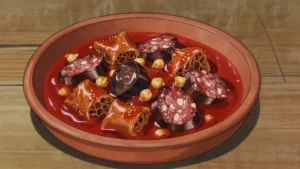
- Cook the chorizo and morcilla apart as well, for the last 20 minutes, in their own pan with some broth, so that their paprika and fat do not turn the main pot red.
- Strain off the broth and cook the fine noodles in it for 3 minutes.
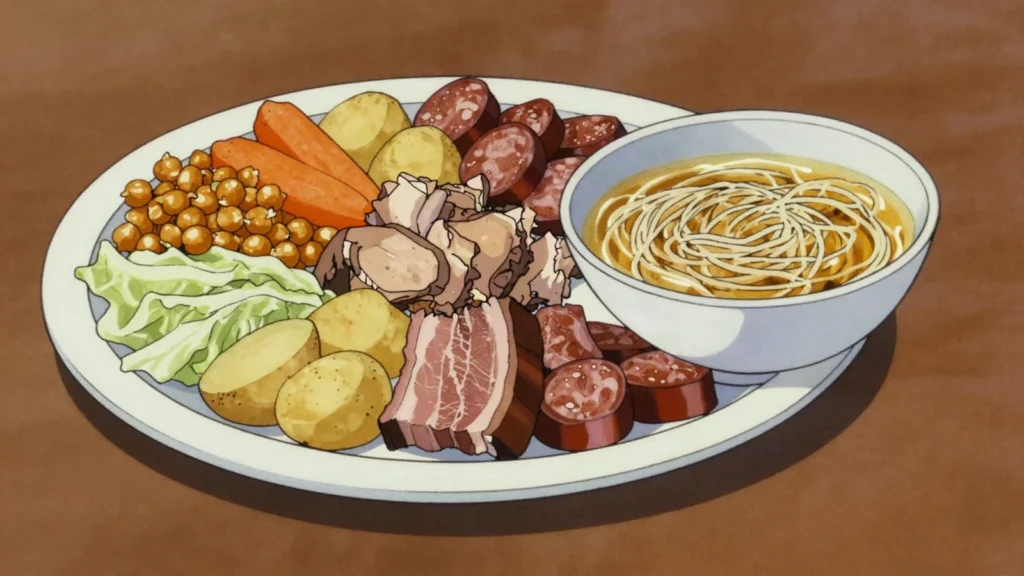
- Now serve it in three courses, in this order, which is how Madrid does it and is the entire architecture of the dish.
- First the sopa: the clear broth with its noodles, on its own.
- Then the chickpeas with the vegetables, dressed with a little of the broth.
- Then the meats, carved onto a platter, with tomato sauce, cumin and pickled peppers alongside.
Technique
- It descends from the medieval olla podrida and from adafina, the Sabbath stew of Spain’s Jews, and the three-course service is the Madrid contribution.
- Cooking the strong-flavoured items apart is the whole discipline. A single-pot cocido tastes of chorizo and nothing else.
- It is a lunch rather than a dinner, and traditionally eaten slowly across an afternoon.
Substitutions
- Any long-cooking beef cut, such as brisket or short rib.
- A smoked ham hock in place of the ham bone.
- Pancetta for tocino.
Variations
- With a pelota, a large pork and breadcrumb dumpling, poached in the pot.
- The leftovers fried the next day as ropa vieja.
- Escudella i carn d’olla, the Catalan relative, with its own large meatball.
History
A substantial stew combining chickpea, various meats including beef, chicken and chorizo, and vegetables, traditionally served in three separate courses, first the broth as a soup, then the chickpeas and vegetables, and finally the meats, documented across Madrid as the city’s most iconic traditional dish. Its distinctive three-course serving structure, dividing what is essentially a single pot of ingredients into sequential courses, reflects a specifically Madrid culinary tradition that transforms a humble one-pot stew into a more substantial, ceremonial meal, particularly associated with cold winter days and significant family gatherings. Cocido madrileño remains deeply tied to Madrid’s specific culinary identity within the broader landscape of Spanish regional cuisine.
Frequently asked questions
What is Cocido madrileño?
Cocido madrileño is a soup & stew from Spain: chickpea and meat boiled dinner served in courses. A substantial stew combining chickpea, various meats including beef, chicken and chorizo, and vegetables, traditionally served in three separate courses, first the broth as a soup, then the chickpeas and vegetables, and finally the meats, documented across Madrid as the city’s most iconic traditional dish. Its distinctive three-course serving structure, dividing what is essentially a single pot of ingredients into sequential courses, reflects a specifically Madrid culinary tradition that transforms a humble one-pot stew into a more substantial, ceremonial meal, particularly associated with cold winter days and significant family gatherings. Cocido madrileño remains deeply tied to Madrid’s specific culinary identity within the broader landscape of Spanish regional cuisine.
How long does Cocido madrileño take to make?
Cocido madrileño takes 30 min plus overnight soaking of preparation and 3 hr of cooking. The recipe makes 8 servings. It is rated medium to make.
What can I substitute in Cocido madrileño?
Yes, within limits. Any long-cooking beef cut, such as brisket or short rib. A smoked ham hock in place of the ham bone. Pancetta for tocino.
What is the most important thing to get right in Cocido madrileño?
Simmer very gently for 2 hours. Never let it boil hard: that clouds the broth and toughens the chickpeas at the same time.