
Ingredients
Leaves
- 500 groselle leaves, chin baung
- or 500 g sorrel leaves
- water, for washing
To fry
- 4 tablespoonsoil
- 8garlic cloves, sliced
- 1onion, sliced
- 4dried red chillies
- or 2 fresh green chillies, sliced
- 1 teaspoonturmeric
To season
- 3 tablespoonsdried shrimp, soaked and chopped
- or 1 tablespoon shrimp paste
- 1 tablespoonfish sauce
- 1 teaspoonsalt
- 1 teaspoonsugar
Sometimes added
- 150 gbamboo shoot, sliced
- 150 gprawns
- 150 gminced pork
To serve
- steamed rice
- a clear soup
- balachaung, optional
Directions
- Pick the leaves from their stems. Discard any thick or woody stalks. Wash them in several changes of cold water. Lift them out rather than pouring the water off.
- Shake the leaves dry in a colander. Chop them roughly if the leaves are large. Soak the dried shrimp in warm water. Give them about fifteen minutes. Drain them and chop them roughly.
- Keep the soaking water if you like. Do not be alarmed by the volume at the start. Heat a wok or wide pan until it is very hot. Add the oil and swirl it around. Add all of the sliced garlic to it.
- Fry it until it just begins to colour. Add the sliced onion and the chillies. Fry them for about two minutes. Add the turmeric and stir it through.
- Add the chopped soaked shrimp. Fry it for about a full minute. Add all the washed leaves at once. Toss them with tongs or two spoons. They wilt down within a minute or two.
- Keep turning them so they cook evenly. Add the fish sauce, salt and sugar. Toss everything together thoroughly. Add prawns or pork now if you are using them. Cook for another two or three minutes. The leaves should be soft but still green.
- Cook off any excess over a high heat. Taste it and adjust the salt and sugar. It should be markedly sour and savoury. Spoon it into a bowl for the table. It keeps two days refrigerated.
Technique
- Roselle is Hibiscus sabdariffa, the same plant whose red calyces make hibiscus tea, and this dish uses the sour green leaves instead.
- The leaves supply the sourness that Burmese cooking usually gets from tamarind.
- Dried shrimp and shrimp paste are shellfish, so the dish must be avoided by anyone with a shellfish allergy unless made without them.
Substitutions
- Sorrel is the closest widely available substitute and is sour in the same way.
- The dried shrimp can be left out entirely for a version free of shellfish.
Variations
- Bamboo shoot is added in many households.
- Versions with prawns or minced pork are also common.
- The red calyces of the same plant are made into a preserve in Myanmar.
History
A Burmese everyday dish; the tart leaves give the sourness that Burmese cooking usually gets from tamarind.
Frequently asked questions
What is Chin Baung Kyaw?
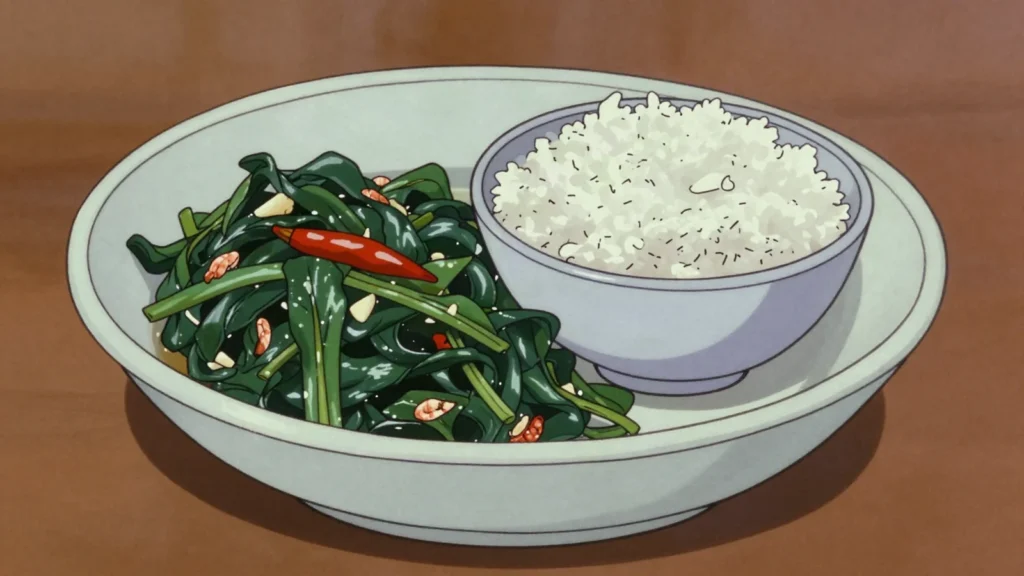
Chin Baung Kyaw is a main from Myanmar: sour roselle leaves stir-fried with garlic, chilli and often dried shrimp. A Burmese everyday dish; the tart leaves give the sourness that Burmese cooking usually gets from tamarind.
How long does Chin Baung Kyaw take to make?
Chin Baung Kyaw takes 20 minutes of preparation and 15 minutes of cooking. The recipe makes serves 4. It is rated easy to make.
What can I substitute in Chin Baung Kyaw?
Yes, within limits. Sorrel is the closest widely available substitute and is sour in the same way. The dried shrimp can be left out entirely for a version free of shellfish.
What is the most important thing to get right in Chin Baung Kyaw?
Pick the leaves from their stems. Discard any thick or woody stalks. Wash them in several changes of cold water. Lift them out rather than pouring the water off.