
Ingredients
Fish
- 800 gcatfish or snakehead, in thick steaks
- 1 teaspoonsalt
- black pepper
Broth
- 2 litreswater
- 80 gtamarind pulp
- 3 tablespoonsfish sauce
- 2 tablespoonssugar
- 2garlic cloves, sliced
- 1 tablespoonoil
Vegetables
- 200 gfresh pineapple, in wedges
- 3tomatoes, in wedges
- 6okra, sliced thickly
- 200 gbac ha, elephant ear stem
- 150 gbean sprouts
- 2chillies, sliced
Herbs
- a handful of rau om, rice paddy herb
- a handful of ngo gai, sawtooth coriander
- fried garlic, to finish
To serve
- steamed rice
- fish sauce with sliced chilli
Directions
- Peel the outer skin away completely. Never eat it raw or undercooked. Leave it out if you cannot find it prepared properly. Put the tamarind pulp in a bowl. Pour over 300 ml of hot water.
- Break it up with your fingers as it softens. Work it until the pulp separates from the fibres. Discard the seeds and the stringy fibre. Preparing the fish takes a few minutes.
- Cut the fish into thick steaks through the bone. Season them with salt and pepper. Let them sit for about ten minutes. Heat the oil in a large heavy pot. Fry the sliced garlic until it is golden.
- Lift half of it out for the garnish. Pour in the water and bring it to a simmer. Add the strained tamarind water. Add the fish sauce and the sugar. Taste it now, before anything else goes in. It should be clearly sour with a sweet edge. Adjust the tamarind and sugar until it balances. Never let the pot boil hard at all.
- Skim any foam off the surface. Simmer it gently for eight minutes. The flesh should flake at the thickest part. Lift the fish out and set it aside. Taking it out keeps it from overcooking. Add the pineapple first and give it three minutes. Add the bac ha and the sliced okra. Give them just two minutes only.
- Add the tomatoes and the chilli. Give them just one more minute. Add the bean sprouts and turn the heat off. The residual heat cooks them enough. Return the fish gently to the pot. Tear the herbs and scatter them over. Both should be added off the heat. Taste the broth one last time.
- Adjust the fish sauce, sugar and tamarind. Serving it is done immediately in a large bowl. Scatter the reserved fried garlic over the top. Serve it in the middle of the table to share. It does not keep well because of the vegetables.
Technique
- Rau om and ngo gai are both essential to the flavour and are sold fresh in Vietnamese shops.
- Neither has a close substitute, and leaving them out changes the soup noticeably.
Substitutions
- Prawns or firm white fish can replace the catfish.
- Tinned pineapple works but is sweeter, so reduce the sugar accordingly.
Variations
- A prawn version is common in restaurants.
- Canh chua chay is a vegetarian version made with tofu and mushroom.
- Some households use a sour fruit called me or a sour leaf in place of tamarind.
History
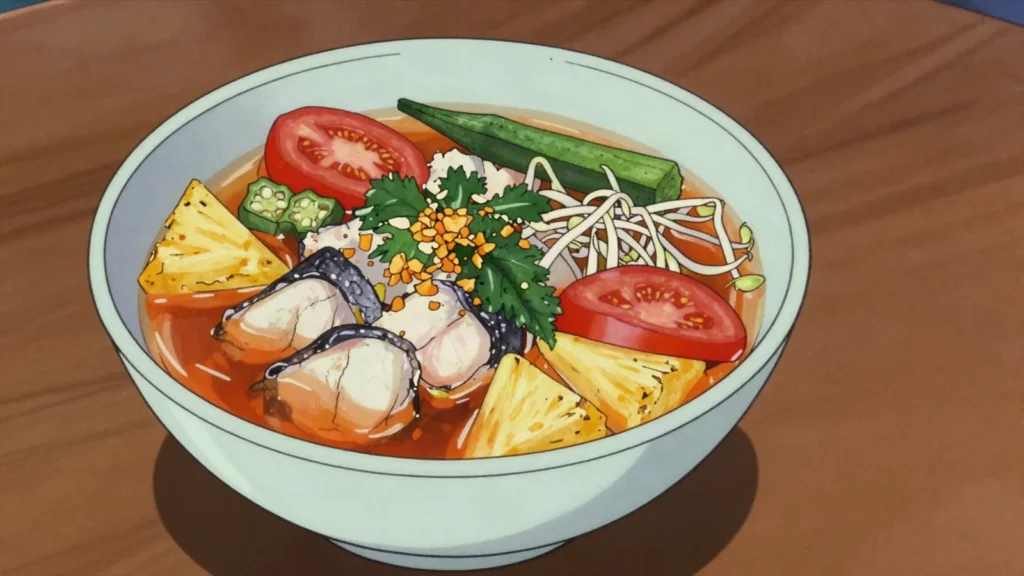
A sour and sweet soup, most commonly built on fish, souring agents including tamarind and pineapple giving the broth its defining tang, developed in southern Vietnam’s Mekong Delta region, a fertile, waterlogged agricultural area with abundant fresh fish and fruit that shaped the dish’s characteristic ingredients and flavour. Its combination of sour, sweet, savory and often mild spice reflects a broader southern Vietnamese culinary preference for complex, balanced flavour combinations within a single dish rather than a simpler, single-note broth. Canh chua remains one of the most iconic dishes specifically associated with the Mekong Delta and southern Vietnamese home cooking, commonly served as part of a shared family meal alongside rice and other dishes rather than eaten as a standalone soup course.
Frequently asked questions
What is Canh Chua?
Canh Chua is a soup & stew from Vietnam: sour Mekong soup of fish, tamarind, pineapple, okra and elephant-ear stem. A sour and sweet soup, most commonly built on fish, souring agents including tamarind and pineapple giving the broth its defining tang, developed in southern Vietnam’s Mekong Delta region, a fertile, waterlogged agricultural area with abundant fresh fish and fruit that shaped the dish’s characteristic ingredients and flavour. Its combination of sour, sweet, savory and often mild spice reflects a broader southern Vietnamese culinary preference for complex, balanced flavour combinations within a single dish rather than a simpler, single-note broth. Canh chua remains one of the most iconic dishes specifically associated with the Mekong Delta and southern Vietnamese home cooking, commonly served as part of a shared family meal alongside rice and other dishes rather than eaten as a standalone soup course.
How long does Canh Chua take to make?
Canh Chua takes 30 minutes of preparation and 30 minutes of cooking. The recipe makes serves 6. It is rated medium to make.
What can I substitute in Canh Chua?
Yes, within limits. Prawns or firm white fish can replace the catfish. Tinned pineapple works but is sweeter, so reduce the sugar accordingly.
What is the most important thing to get right in Canh Chua?
Peel the outer skin away completely. Never eat it raw or undercooked. Leave it out if you cannot find it prepared properly. Put the tamarind pulp in a bowl. Pour over 300 ml of hot water.