
Ingredients
Blood
- 1 litrefresh pig’s blood, with 2 tbsp vinegar stirred in
Filling
- 300 grice, cooked
- or 300 g stale bread, soaked
- 400 gpork fat or belly, finely chopped
- 2onions, finely chopped
- 6spring onions, chopped
- 6 clovesgarlic
- 1large bunch parsley and thyme, chopped
- 2hot peppers, chopped
- 2 tspground cloves
- 1 tspground cinnamon
- 1 tspallspice
- salt and plenty of black pepper
Casing
- natural pork casings, rinsed and soaked
To serve
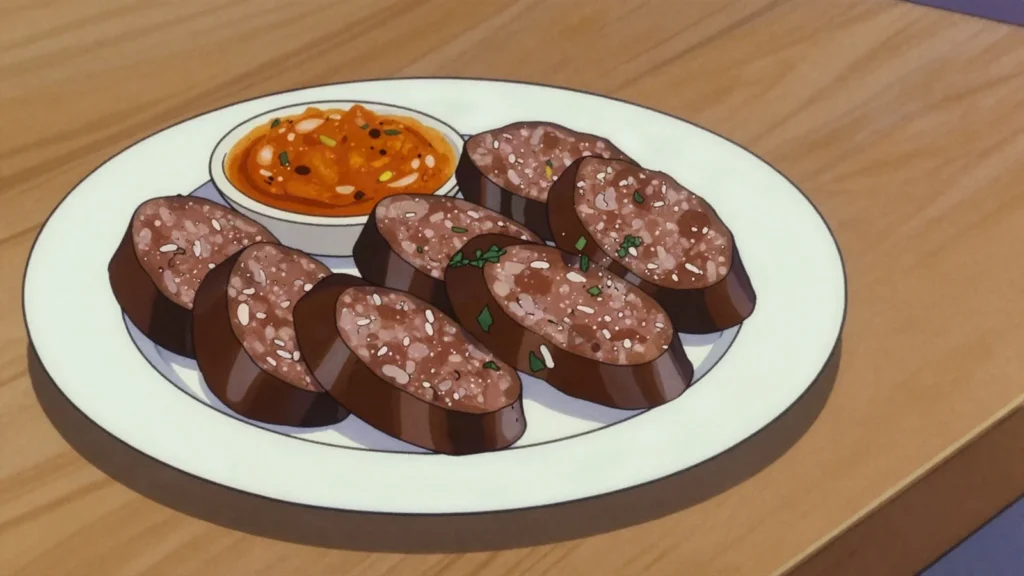
- sliced hot, with hot pepper sauce
- at a Friday night street party
Directions
- Use it fresh, within a day or two, and keep it refrigerated until it goes into the mixture. Strain it through a sieve before use to catch any clots. Natural pork casings are sold salted and must be rinsed thoroughly and soaked.
- Soak them in cold water for at least an hour, then run water through each length to check for holes. The filler absorbs the blood and stops the sausage being solid and heavy. Cook the rice slightly soft, since it will not soften much further inside the casing. Now the seasoning, which should be assertive.
- Season it more heavily than seems reasonable, since blood is rich and mutes seasoning. Use plenty of hot pepper, since bouden is meant to be hot. Fry a small spoonful of the mixture in a pan and taste it before filling anything. Adjust the salt, pepper and chilli then.
- Combine the strained blood, cooked rice, chopped fat, onions, herbs and spices. It should be loose and pourable rather than stiff. Pour or push the mixture in, working it along. Now the crucial point about how full to fill them.
- Fill the casings loosely, no more than about two-thirds. Tie the sausages off into lengths as you go, or twist them. Prick each sausage several times with a fine needle before cooking.
- Bring a large pot of water to a bare simmer, never a boil. The water should be around eighty degrees, with the surface barely moving. Prick one: the liquid that comes out should run clear rather than red. A skewer pushed in should meet firm set filling rather than liquid.
- Lift them out carefully and let them cool, which firms them considerably. Now serving them out while hot. Serve them hot with a fierce pepper sauce, on a paper plate. They keep three days refrigerated and they freeze well.
Technique
- The rice or bread filler is what distinguishes it from French boudin noir.
- Fill the casings only two-thirds full, since the rice swells.
- Poach at a bare simmer, since boiling water bursts the casings.
Substitutions
- Soaked stale bread in place of rice.
- Collagen casings, though natural ones are better.
Variations
- Made with bread rather than rice.
- Made hotter, with more scotch bonnet.
- Bouden blanc, made without blood.
History
Made at village pig killings and sold on Friday nights at street parties such as the Gros Islet jump-up.
Frequently asked questions
What is Bouden?
Bouden is a snack from Saint Lucia: creole blood sausage with rice, herbs and hot pepper, sliced hot. Made at village pig killings and sold on Friday nights at street parties such as the Gros Islet jump-up.
How long does Bouden take to make?
Bouden takes 1 hr of preparation and 1 hr of cooking. The recipe makes about 8 sausages. It is rated hard to make.
What can I substitute in Bouden?
Yes, within limits. Soaked stale bread in place of rice. Collagen casings, though natural ones are better.
What is the most important thing to get right in Bouden?
Use it fresh, within a day or two, and keep it refrigerated until it goes into the mixture. Strain it through a sieve before use to catch any clots. Natural pork casings are sold salted and must be rinsed thoroughly and soaked.