
Ingredients
The beetroot
- 1 kgraw beetroot
- firm, unblemished
- peeled and sliced thinly
- or cut into chunks
The starter
- 1 slicedark rye bread
- sourdough rye is best
- or 2 tablespoons rye flour
- or a little liquid from a previous batch
- or nothing at all, see the note
The brine
- about 1.5 litres water
- boiled and cooled
- or filtered water
- 1 tablespoonsalt
- non-iodised, if possible
The aromatics
- 6 clovesgarlic
- peeled and lightly crushed
- 2bay leaves
- 6allspice berries
- a few black peppercorns
- a little marjoram, optional
Equipment
- a large glass jar
- or a ceramic crock
- a weight, to hold things under
- a cloth and a rubber band
- clean bottles, to store
Directions
- Wash the jar thoroughly in hot soapy water. Rinse it and let it dry completely. Scald it with boiling water if you like. Wash your hands before handling anything. Salt inhibits harmful bacteria. Do not reduce the salt quantity. Use non-iodised salt if you can. Everything must stay under the brine. Use a weight to hold the beetroot down.
- Check it daily and push anything down. That single habit prevents most problems. Cover it with a cloth and a rubber band. Or use a proper airlock if you have one. Discard it if it smells rotten or putrid. Discard it if you see fuzzy mould. Do not skim mould off and keep the rest.
- Use raw beetroot, never cooked. Choose firm unblemished roots. Wash them but do not scrub them hard. Some cooks do not peel them at all. Peel the beetroot with a knife or peeler. Wear gloves if that bothers you. Slice the peeled beetroot thinly. Put the beetroot in the clean jar. Add the garlic, bay and allspice. Add the peppercorns and marjoram.
- Stir until it is completely dissolved. Pour it over to cover everything. Leave some space at the top of the jar. Put the weight on to hold everything under. Cover the jar loosely with a cloth. Leave the jar at room temperature. Leave it for five to seven days. Check the jar every single day.
- Skim any white film that forms. You should see bubbles within two days. Taste the liquid after five days. Use a clean spoon every single time. Never taste with a used spoon.
- Strain the liquid through a sieve. Discard the beetroot and the aromatics. Pour the liquid into clean bottles. Leave a little space at the top. Cold slows the fermentation right down.
- Make a broth of vegetables and dried mushrooms. Strain it until it is completely clear. Do not boil the zakwas at all. Warm it through and serve it at once. Season it with salt and a little sugar. Serve it with uszka floating in it. It keeps a month refrigerated. Discard it if it smells wrong. That is how households keep it going.
Technique
- The acid is not only for flavour. Betalain pigments hold their colour in acid and turn brown in neutral conditions, which is why boiling beetroot alone gives a dull brown soup and why a Christmas Eve barszcz built on zakwas comes out clear ruby red. That clarity matters at that table.
- Do not boil the zakwas when making barszcz. Add it off the heat at the very end and warm it through — boiling destroys both the colour and the sourness and leaves a dull brown soup.
- Everything must stay under the brine. Anything exposed to air will mould, so use a weight and check daily, pushing down whatever has floated. That single habit prevents most problems.
- Do not seal the jar. Fermentation produces carbon dioxide, and a sealed glass jar can build enough pressure to burst. Cover it with a cloth, a loosely resting lid, or a proper airlock. Bottled zakwas keeps fermenting slowly even cold, so do not seal bottles absolutely tight either.
- Use raw beetroot, never cooked. Heat kills the surface bacteria that do the fermenting.
- Do not reduce the salt. It inhibits harmful bacteria while letting the lactic acid bacteria work, and it is what keeps the ferment safe. Non-iodised salt is better, since iodine can inhibit fermentation.
- Taste with a clean spoon every time, never a used one. That introduces bacteria into the jar.
- A flat white film on the surface is usually kahm yeast — harmless but unpleasant tasting, and it can be skimmed. Fuzzy growth that is green, black or pink is mould and the batch must be discarded, not skimmed. If you cannot tell the difference, discard it, and trust your nose above everything.
- Rye bread acts as a starter, giving the ferment a head start and a little starch to feed on. It is traditional and it makes the process more reliable, but beetroot carries its own wild bacteria and ferments perfectly well without it, just more slowly.
- Zakwas is drunk in Poland for supposed health benefits. The atlas records that as a widespread claim and makes no health claim of its own — it is a fermented vegetable juice.
Substitutions
- Rye flour replaces a slice of rye bread as the starter, and a little liquid from a previous batch works best of all.
- The bread can be left out entirely; beetroot ferments on its own wild bacteria, just more slowly.
- Garlic, bay, allspice and marjoram are the usual aromatics; the plainest version uses beetroot, salt and water alone.
- Filtered or cooled boiled water replaces tap water, which may contain chlorine that inhibits fermentation.
- The fermented beetroot itself is edible, sour and quite good, and need not be discarded.
- Bottled zakwas is sold in Polish shops and is what many households now use for barszcz.
Variations
- Barszcz czerwony, the clear Christmas Eve beetroot soup with uszka dumplings, is the main use of zakwas.
- Zakwas is also drunk neat in small glasses, cold from the refrigerator.
- Żur and barszcz biały are the white soured soups of Poland, made from fermented rye rather than beetroot.
- Ukrainian and Belarusian beetroot ferments are close relatives under their own names.
- The fermented beetroot slices are eaten as a sharp pickle in their own right.
- Some households ferment beetroot with horseradish, giving a considerably sharper result.
History
Fermented for days with garlic and rye bread; the Christmas Eve barszcz is built on it.
Frequently asked questions
What is Zakwas buraczany?
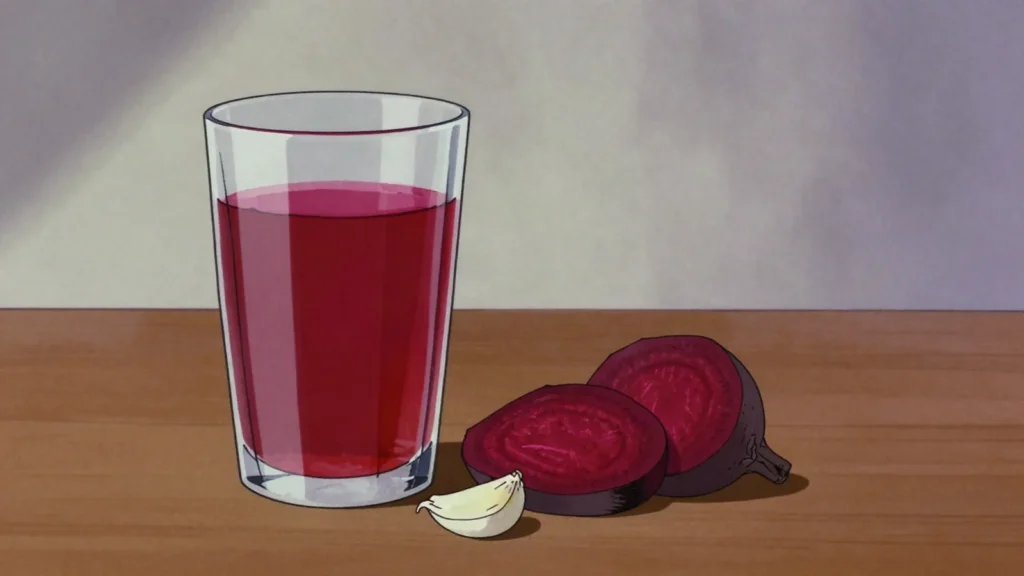
Zakwas buraczany is a drink from Poland: sour fermented beetroot juice drunk neat or used to build barszcz. Fermented for days with garlic and rye bread; the Christmas Eve barszcz is built on it.
How long does Zakwas buraczany take to make?
Zakwas buraczany takes 20 minutes of preparation and none, plus 5 to 7 days fermenting of cooking. The recipe makes makes about 1.5 litres. It is rated medium to make.
What can I substitute in Zakwas buraczany?
Yes, within limits. Rye flour replaces a slice of rye bread as the starter, and a little liquid from a previous batch works best of all. The bread can be left out entirely; beetroot ferments on its own wild bacteria, just more slowly. Garlic, bay, allspice and marjoram are the usual aromatics; the plainest version uses beetroot, salt and water alone. Filtered or cooled boiled water replaces tap water, which may contain chlorine that inhibits fermentation. The fermented beetroot itself is edible, sour and quite good, and need not be discarded. Bottled zakwas is sold in Polish shops and is what many households now use for barszcz.
What is the most important thing to get right in Zakwas buraczany?
Wash the jar thoroughly in hot soapy water. Rinse it and let it dry completely. Scald it with boiling water if you like. Wash your hands before handling anything. Salt inhibits harmful bacteria. Do not reduce the salt quantity. Use non-iodised salt if you can. Everything must stay under the brine. Use a weight to hold the beetroot down.