A root bred for sugar, for cattle and for the table from the same species, and the vegetable whose colour is a pigment strong enough to be used as a dye.
Where it comes from
Beet, Beta vulgaris, was first grown for its leaves around the Mediterranean; the swollen root is a later development. The same species gives chard, the sugar beet that supplies a large share of the world’s sugar, and the mangelwurzel grown for fodder.
It is central to Central and Eastern European cooking, where it keeps through winter and is fermented as well as cooked — the sour beet brine behind traditional borscht is a ferment, not simply beetroot and vinegar.
Varieties
- Red beetroot — The standard. Earthy, sweet, stains everything.
- Golden beetroot — Milder and sweeter, and it does not bleed — useful where colour would take over.
- Chioggia — Concentric red and white rings, which fade on cooking. Best raw and thinly sliced.
- Beet greens — The leaves, cooked like chard. Usually thrown away, and should not be.
- Sugar beet — White, industrial, and the source of about a fifth of the world’s sugar.
In the kitchen
The earthy note people either love or hate is geosmin — the same compound that makes soil smell of rain. Acid tempers it, which is why beetroot is so often paired with vinegar, citrus or soured cream.
Roasting whole in foil concentrates the sugars; boiling dilutes them and leaches colour. Leave the skin on and an inch of stalk, and the bleeding stops almost entirely.
Dishes with beetroot
 Samahonhome-distilled grain or beet spirit shared at village feasts
 Cold beet soupChilled pink kefir-beet soup with cucumber, egg, dill.
 Samogonhome-distilled grain, sugar or beet spirit
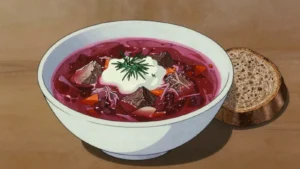 Borschtbeet soup with beef, cabbage, dollop of smetana
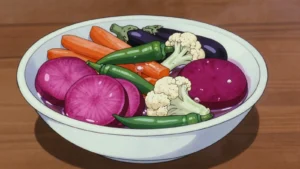 Torshisalt-brined turnips, carrots, limes and peppers, stained pink with beetroot
 Silķe kažokāLayered salad of herring under beetroot, potato and mayonnaise.
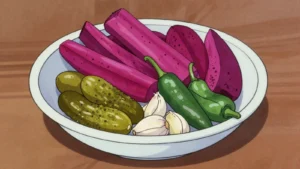 Kabeesbrined turnips dyed pink with beetroot, plus cucumbers and wild cucumber
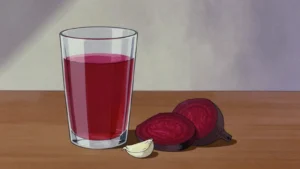 Zakwas buraczanySour fermented beetroot juice drunk neat or used to build barszcz
Beetroot is tagged on 24 dishes from 19 countries in the atlas. These notes are written from general knowledge and carry no per-fact citation — see About.