
Ingredients
The pot
- 500 mlwhole milk
- 500 mlwater
- 4 teaspoonsblack tea leaves
- a strong Kenyan CTC tea
- 4 tablespoonssugar, or to taste
Sometimes added
- 4cardamom pods, crushed
- 1cm fresh ginger, grated
- a small piece of cinnamon
- a pinch of black pepper
To serve
- mandazi, fried dough
- chapati
- bread with margarine
- at any time of day
Directions
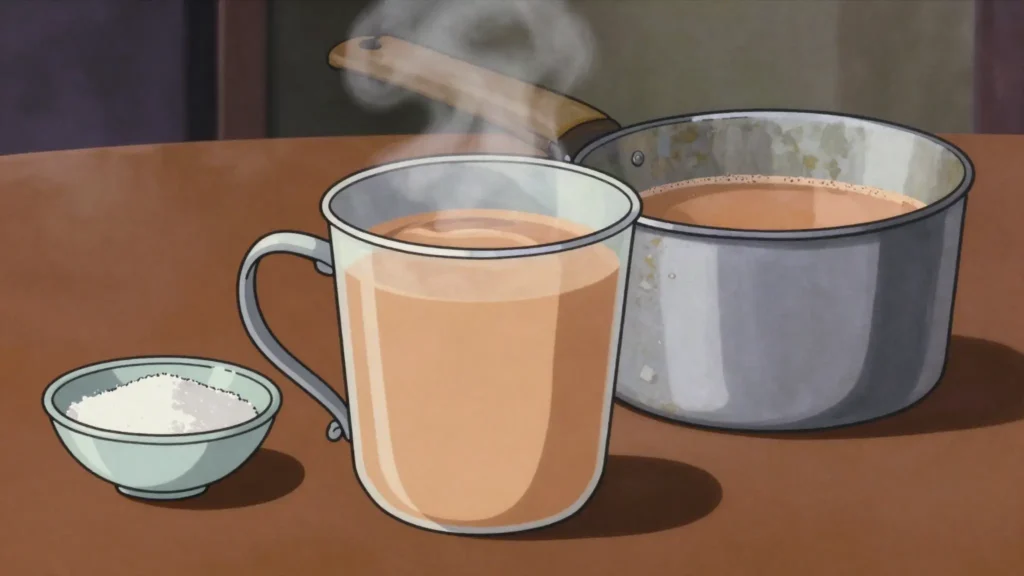
- Pour the milk and water into a saucepan. Use a pan larger than you think you need. Never walk away from a boiling milk pot.
- Warm the milk and water together. Bring it up towards a gentle boil. Crush the cardamom pods lightly. Add them with the grated ginger. Add the cinnamon and black pepper. Let them warm through in the liquid.
- Add the tea leaves to the hot liquid. Stir them through the milk and water. Bring it up to a rolling boil. Lift it off the heat as it rises.
- Let the foam subside and return it. Repeat that two or three times. Let it boil gently for five minutes.
- Keep watching it throughout that time. Judging the colour tells you when it is ready. Add the sugar and stir it through. Let it dissolve completely in the pot.
- Adjust it to taste when you make it yourself. Pour it through a fine sieve into cups. Pour it from a height for a little foam. Serving it is always done very hot.
- Pour it out into mugs or glasses. Serve mandazi alongside it to dip. It keeps for a day refrigerated.
Technique
- The tea is boiled in the milk rather than steeped, with milk, water, tea and sugar going in together and the whole pot brought to a boil, which extracts far more from the leaf than adding milk to brewed tea and gives a much stronger darker drink.
- Kenyan tea is mostly processed by the CTC method, crush, tear and curl, producing small hard granules rather than leaves that brew fast and very strong; they are made for exactly this kind of tea.
- Tea estates were established during colonial rule, with land in the highlands alienated from local people and the White Highlands reserved for settler farming; most Kenyan tea now comes from hundreds of thousands of smallholders delivering leaf to cooperative factories.
Substitutions
- All milk and no water gives chai ya maziwa, richer and heavier.
- Any strong CTC black tea works in place of Kenyan leaf.
Variations
- Plain unspiced chai is as common as the spiced version.
- Ginger gives chai ya tangawizi, with cardamom often alongside.
- It is drunk with mandazi, chapati or simply bread and margarine.
History
Tea was planted at Limuru in 1903 by settler G.W.L. Caine; Kenya is now the world’s largest exporter of black tea, drunk boiled with milk.
Frequently asked questions
What is Kenyan chai?
Kenyan chai is a drink from Kenya: strong milky tea boiled with sugar, drunk all day. Tea was planted at Limuru in 1903 by settler G.W.L. Caine; Kenya is now the world’s largest exporter of black tea, drunk boiled with milk.
How long does Kenyan chai take to make?
Kenyan chai takes 5 minutes of preparation and 15 minutes of cooking. The recipe makes serves 4. It is rated easy to make.
What can I substitute in Kenyan chai?
Yes, within limits. All milk and no water gives chai ya maziwa, richer and heavier. Any strong CTC black tea works in place of Kenyan leaf.
What is the most important thing to get right in Kenyan chai?
Pour the milk and water into a saucepan. Use a pan larger than you think you need. Never walk away from a boiling milk pot.