
Ingredients
Pork
- 800 gpork belly, rind removed, sliced 4–5 mm thick (24–30 slices)
- 1 tspfine salt
Persillesovs (parsley sauce)
- 50 gbutter
- 50 gplain flour
- 600 mlwhole milk, warmed
- 60 gflat-leaf parsley, leaves and fine stalks, finely chopped
- a good grating of nutmeg
- salt and white pepper
To serve
- 1 kgwaxy potatoes, peeled and boiled whole
- pickled beetroot
Directions
- Slice the belly across into thin, even slices no thicker than 5 mm. Thick slices stay flabby in the middle; this is the single most common mistake.
- Lay the slices in one layer on a rack over a baking tray, salt them lightly, and roast at 220°C (425°F) for 25–35 minutes, turning once, until they are deep gold, buckled and audibly crisp. No batter, no flour, no oil.
- Alternatively, fry in a dry heavy pan over medium heat for 6–8 minutes a side, pouring off fat as it renders so the slices fry rather than deep-fry.
- Boil the peeled potatoes in salted water for 18–20 minutes until a knife slides through with no grip. Keep them whole and hot.
- For the sauce, melt the butter, stir in the flour and cook the roux over medium-low heat for 2 minutes until it smells biscuity but stays pale.
- Add the warm milk a ladle at a time, whisking until each addition is smooth, then simmer gently for 8 minutes to cook out the flour. It should coat the back of a spoon and drop slowly.
- Stir in the chopped parsley off the heat, season with salt, white pepper and nutmeg, and serve within a couple of minutes: the sauce should be bright green, and long cooking turns it grey and bitter.
- Plate the whole potatoes, flood them with parsley sauce, and stack the crisp pork slices on top with pickled beetroot on the side. Eat immediately, before the crackle goes.
Technique
- Voted Denmark’s national dish in a public ballot in 2014, beating frikadeller. It is eaten as a stegt flaesk ad libitum, all you can eat, in country inns.
- The parsley must go in at the very end and be genuinely generous, at least a large bunch. A pale sauce with a scatter of parsley is a bechamel, not persillesovs.
- Rendering slowly and pouring the fat away is what turns the belly crisp all the way through instead of leaving a rubbery fat layer.
Substitutions
- No pork belly sliced thin: ask the butcher for it on a slicer, or use thick-cut streaky bacon, unsmoked, and shorten the cooking by 10 minutes.
Variations
- Some households add a spoon of the pork dripping to the sauce for a richer, less clean-tasting version.
- In parts of Jutland the sauce is made with half milk, half cream and finished with a squeeze of lemon.
History
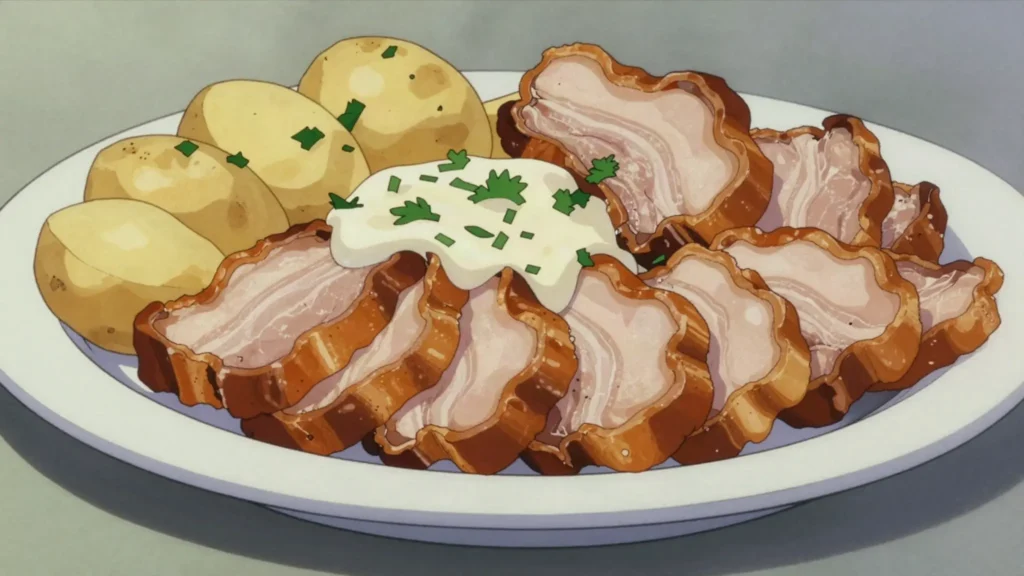
Fried pork belly with parsley sauce and potatoes, voted Denmark’s national dish in a public poll run by the food ministry in 2014.
Frequently asked questions
What is Stegt flæsk?
Stegt flæsk is a main from Denmark: crisp pork belly slices, parsley sauce, potatoes; voted national dish. Fried pork belly with parsley sauce and potatoes, voted Denmark’s national dish in a public poll run by the food ministry in 2014.
How long does Stegt flæsk take to make?
Stegt flæsk takes 20 min of preparation and 35 min of cooking. The recipe makes 4 servings. It is rated easy to make.
What can I substitute in Stegt flæsk?
Yes, within limits. No pork belly sliced thin: ask the butcher for it on a slicer, or use thick-cut streaky bacon, unsmoked, and shorten the cooking by 10 minutes.
What is the most important thing to get right in Stegt flæsk?
Alternatively, fry in a dry heavy pan over medium heat for 6–8 minutes a side, pouring off fat as it renders so the slices fry rather than deep-fry.