
Ingredients
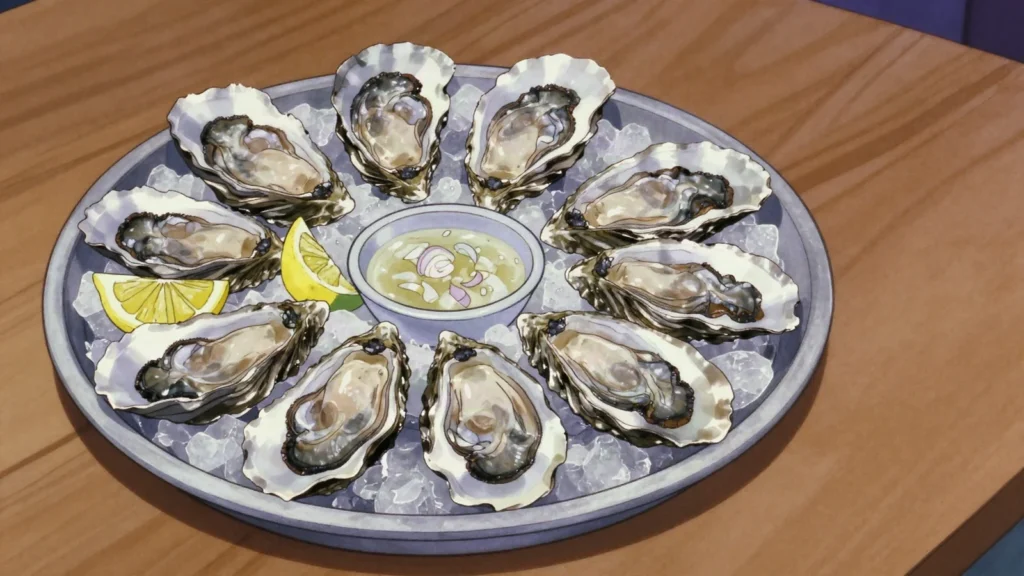
The oysters
- 24fresh live oysters
- shells tightly closed
- from a reputable supplier
- kept cold and flat
- see the safety notes carefully
To serve raw
- lemon or lime wedges
- freshly ground black pepper
- a mignonette sauce
- shallot, vinegar and pepper
- or a chilli and lime dressing
- crushed ice, to serve on
Sometimes served with
- buttered brown bread
- or a dry white wine
- or a cold Namibian lager
- Tabasco or a hot sauce
Equipment
- an oyster knife
- short, blunt-tipped and sturdy
- a thick folded cloth
- or a chainmail glove
- a stiff brush
Directions
- Warm water also increases bacterial growth. A dead one is not, and it must be discarded. Discard any with a cracked or broken shell. Check each one individually before shucking.
- Check each one again after opening it. The flesh should be plump and glossy. Keep them cold but never in water. Keep them in the fridge, cup side down. That keeps the liquid inside the shell.
- Cover them over with a damp cloth. Do not seal them in a plastic bag. Use them within a day or two at most. Eat them the same day if you can. Use a thick folded tea towel for that. Never hold an oyster in a bare hand.
- Set it on a firm surface instead. Use a proper oyster knife for this. It is too long and too flexible. Remove grit, mud and any weed. That grit ends up in the oyster otherwise.
- Wrap the oyster in the folded cloth. Hold it cup side down, flat side up. The hinge should point towards you. Keep the blade flat against that shell. Lift the top shell away and discard it. Cut the muscle attaching it below.
- Check for shell fragments and remove them. Keep the liquid inside the shell. Do not rinse the oyster after opening it. Serve them on a bed of crushed ice. That keeps them cold and holds them level. Serve them immediately after shucking. They lose freshness within an hour.
- Serve lemon or lime wedges alongside. Hot sauce is offered by many places. Check it is fully detached underneath. Bring the shell to your mouth. Tip it into your mouth with the liquor. Two or three chews is quite enough. Cook them until the flesh is firm and opaque. They are eaten with lemon and cold beer.
Technique
- Raw oysters carry documented risks: norovirus, hepatitis A, and Vibrio bacteria, of which Vibrio vulnificus can cause severe infection with a high fatality rate. People with liver disease including cirrhosis, haemochromatosis, diabetes, or any immune compromise, along with pregnant women and young children, should not eat oysters raw. Thorough cooking destroys these organisms and is the answer for those groups.
- Buy from a reputable supplier. Farmed oysters come from classified, tested waters and are purified before sale, which reduces bacteria considerably but does not reliably eliminate viruses. Never gather wild oysters yourself — water quality varies enormously, sewage outflows are not obvious, and algal toxins in shellfish are not destroyed by cooking.
- Check every oyster individually. The shell must be tightly closed, or must close when tapped; it should feel heavy with seawater and smell clean. Discard any that gape and stay open, feel light, are cracked, or smell sour. Check again after opening: plump glossy flesh in clear liquid is right, cloudy grey or dry is not. If in any doubt, throw it away.
- Store them cold, cup side down, under a damp cloth — never in fresh water, which kills them, and never sealed in plastic, which suffocates them.
- Shucking injuries are common and serious. Never hold an oyster in a bare hand or in your lap. Use a thick folded cloth or a chainmail glove, set it on a firm surface, and use a proper short blunt-tipped oyster knife — a kitchen knife is too long and flexible, and it bends, snaps or slips.
- Work the knife into the hinge gently and twist. Forcing it is exactly how the blade slips.
- Do not rinse the oyster after opening. The liquor in the shell is part of the flavour.
- Chew it. Swallowing an oyster whole misses the taste entirely, which is in the chewing.
- The old rule about months containing an R had real reasoning — oysters spawn in warm months and go thin, and warm water increases bacterial growth — but it is far less relevant to modern farmed oysters with refrigeration and water monitoring.
- The cold Benguela current upwelling that feeds these oysters is also why the Namib is one of the driest places on earth: cold water gives little evaporation. The same current makes both the desert and the oyster.
Substitutions
- Any farmed oyster from a reputable supplier can be treated the same way.
- Cooking — grilled with butter and garlic, grilled with cheese, or battered and fried — removes the raw oyster risks entirely and is the answer for anyone in a risk group.
- Lime replaces lemon and suits the chilli dressings used in the region.
- A mignonette of shallot, vinegar and cracked pepper is the classic dressing; a chilli and lime dressing is common in southern Africa.
- A chainmail glove replaces a folded cloth and is genuinely safer if you shuck often.
- Buttered brown bread is the standard accompaniment where oysters are eaten raw.
Variations
- Grilled oysters with garlic butter are widely served in Namibian restaurants.
- Oysters grilled with cheese are popular along the southern African coast.
- Battered and deep-fried oysters are eaten as a bar snack.
- Angolan and South African oyster farms produce closely related shellfish from the same current system.
- Some Walvis Bay restaurants serve them with a sharp chilli and coriander dressing.
- Oyster shooters, served in a glass with a spirit and hot sauce, are a modern bar preparation.
History
The cold Benguela current and nutrient-rich lagoon grow oysters to market size in under a year, and Namibia exports them across Africa and Asia.
Frequently asked questions
What is Walvis Bay oysters?
Walvis Bay oysters is a snack from Namibia: plump fast-growing oysters shucked fresh on the lagoon shore. The cold Benguela current and nutrient-rich lagoon grow oysters to market size in under a year, and Namibia exports them across Africa and Asia.
How long does Walvis Bay oysters take to make?
Walvis Bay oysters takes 20 minutes of preparation and none of cooking. The recipe makes serves 4 as a starter. It is rated medium to make.
What can I substitute in Walvis Bay oysters?
Yes, within limits. Any farmed oyster from a reputable supplier can be treated the same way. Cooking — grilled with butter and garlic, grilled with cheese, or battered and fried — removes the raw oyster risks entirely and is the answer for anyone in a risk group. Lime replaces lemon and suits the chilli dressings used in the region. A mignonette of shallot, vinegar and cracked pepper is the classic dressing; a chilli and lime dressing is common in southern Africa. A chainmail glove replaces a folded cloth and is genuinely safer if you shuck often. Buttered brown bread is the standard accompaniment where oysters are eaten raw.
What is the most important thing to get right in Walvis Bay oysters?
Warm water also increases bacterial growth. A dead one is not, and it must be discarded. Discard any with a cracked or broken shell. Check each one individually before shucking.