
Ingredients
The dough
- 400 gplain flour
- or 300 g maize flour
- plus 100 g plain flour
- or 400 g rice flour
- for a crisper fritter
- 100 gsugar
- or to taste
- 7 gsachet fast-action dried yeast
- half a teaspoon salt
The liquid
- about 350 ml warm water
- or warm milk
- for a richer dough
- 1egg, beaten
- optional
Sometimes added
- half a teaspoon ground cinnamon
- or grated nutmeg
- a mashed ripe banana
- grated coconut
- a little vanilla
For frying
- 800 mlvegetable oil
- or enough for 5 cm depth
To serve
- hot, in a paper cone
- or on a plate
- sugar, to dust
- sweet tea
Directions
- Use what you have and adjust the liquid. It should drop thickly from a spoon. Put the flour in a large bowl. Add the sugar and the yeast to one side. Add the salt to the opposite side. Keep salt and yeast apart until mixing.
- Add the cinnamon or nutmeg if using. Stir the dry ingredients together. Now add the warm liquid gradually. Add the beaten egg if you are using it. Mix it with a wooden spoon or by hand. Beat it hard for two or three minutes. The batter should be thick and smooth.
- Add more liquid if it is too stiff. Add more flour if it is too runny. Cover the bowl with a damp cloth. Leave it somewhere warm for an hour. It should roughly double in volume.
- Add the mashed banana now if using it. Fold it in gently after the rise. Now heat the oil ready for frying. Use a deep heavy pan or a pot. Fill it no more than one third full. Oil bubbles up sharply when batter goes in. Never leave hot oil unattended at all.
- Keep a well fitting lid within easy reach. If the oil catches fire, turn off the heat. Heat the oil to one hundred and seventy degrees. These are thick and they need time inside.
- Use two spoons to drop the batter in. Scoop with one and push off with the other. Or use a wet hand to pinch off pieces. Drop them in away from you, not towards. Fry four or five at a time only. Do not crowd the pan at any point.
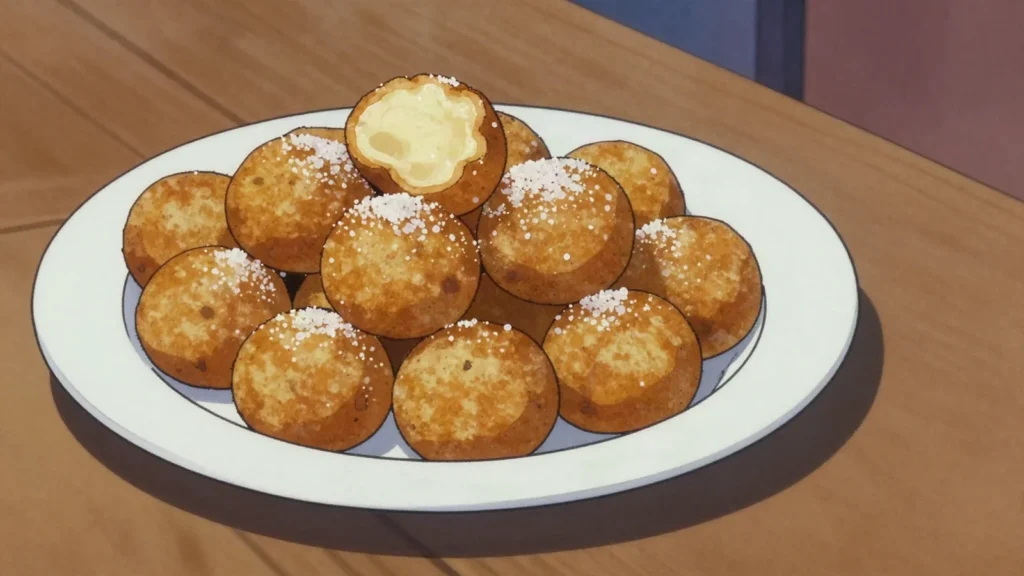
- Turn them as they cook so they colour evenly. Fry them for about five minutes in total. They should be deep golden all over. Break it open and look at the centre. It should be cooked through and airy. Lift them out with a slotted spoon. Drain them on a rack over kitchen paper. A rack keeps them far less greasy.
- Dust them with sugar while still hot. Hot fritters hold the sugar much better. Let the oil recover between batches. Now serve them while they are hot.
Technique
- This is a wet yeasted batter, not a dough. It should drop thickly from a spoon rather than be firm enough to shape by hand, and that wetness is exactly what makes the fritters light.
- Fry at 170 degrees, slightly cooler than for many fritters. These are thick and need time inside; hotter oil browns the outside while the centre stays raw and doughy, which is the commonest failure. Break the first one open and check before frying the rest.
- Deep-frying rules apply: fill the pan no more than a third, never leave it unattended, keep a lid within reach, and if the oil catches fire turn off the heat and smother it. Never throw water on burning oil.
- Beat the batter hard for two or three minutes before proving. That develops some structure and whips air in, and both show in the finished fritter.
- Maize flour has no gluten and will not hold together alone, so mix it with wheat flour. Rice flour gives a crisper exterior and is closest to the coastal original.
- Dust with sugar while still hot. Hot fritters hold it; cooled ones shed it.
- Drain on a rack rather than on paper alone. Sitting in absorbed oil on paper makes them greasy.
- The name comes from Swahili vitumbua, coastal rice-flour cakes cooked in a dimpled pan, but the Zambian version is usually deep-fried and often made with maize or wheat. The name travelled further than the method — a common pattern, and evidence of how far Swahili trade vocabulary reached inland.
- These are sold overwhelmingly by women at roadsides and bus stops. Street food selling needs little capital and fits around other work, and it is also poorly paid and physically hard.
Substitutions
- Plain wheat flour, a maize and wheat mixture, or rice flour all work; each gives a different texture.
- Warm milk replaces water for a richer dough.
- An egg gives a softer, richer fritter and can be left out.
- A mashed ripe banana folded in after the rise is a very common addition and makes them sweeter and moister.
- Cinnamon, nutmeg, cardamom or vanilla are all used; the plainest version has none.
- Grated coconut folded through points the fritter back towards its coastal relatives.
Variations
- Swahili vitumbua, made with rice flour and coconut milk in a dimpled pan, are the coastal relatives that gave the name.
- Mandazi, the East African fried dough triangle, is the closest widely known relative.
- Puff puff in West Africa and magwinya in southern Africa belong to the same family.
- A banana version is probably the most common household variation in Zambia.
- A less sweet version is eaten with savoury relish rather than as a sweet.
- Some sellers make them very large, sold as a single filling snack.
History
Fried maize or rice flour cakes sold at markets and bus stops, the name borrowed from the Swahili coast.
Frequently asked questions
What is Vitumbuwa?
Vitumbuwa is a snack from Zambia: sweet fried dough balls sold at roadsides. Fried maize or rice flour cakes sold at markets and bus stops, the name borrowed from the Swahili coast.
How long does Vitumbuwa take to make?
Vitumbuwa takes 20 minutes plus 1 hour rising of preparation and 25 minutes of cooking. The recipe makes makes about 24. It is rated easy to make.
What can I substitute in Vitumbuwa?
Yes, within limits. Plain wheat flour, a maize and wheat mixture, or rice flour all work; each gives a different texture. Warm milk replaces water for a richer dough. An egg gives a softer, richer fritter and can be left out. A mashed ripe banana folded in after the rise is a very common addition and makes them sweeter and moister. Cinnamon, nutmeg, cardamom or vanilla are all used; the plainest version has none. Grated coconut folded through points the fritter back towards its coastal relatives.
What is the most important thing to get right in Vitumbuwa?
Add the mashed banana now if using it. Fold it in gently after the rise. Now heat the oil ready for frying. Use a deep heavy pan or a pot. Fill it no more than one third full. Oil bubbles up sharply when batter goes in. Never leave hot oil unattended at all.