
Ingredients
Dough
- 500 gplain flour
- 3eggs
- 80 gbutter, melted
- 60 gsugar
- 100 mlmilk
- 2 tbsprum or kirsch
- 1 tspbaking powder
- 1 tspsalt
- grated zest of 1 lemon
To fry
- oil or lard, for deep frying
To finish
- caster or icing sugar
Equipment
- a rolling pin
- a knife or pastry wheel
To serve
- warm, at Carnival
Directions
- Beat the eggs with the sugar, then add the milk, melted butter, rum and lemon zest. Work in the flour, baking powder and salt to a soft but manageable dough. Keep it soft rather than firm, since verwurelter should be tender rather than crisp all through. The rum is traditional and it also helps the pastry absorb less fat.
- Knead it briefly, only until smooth. Do not over-knead it, since this is meant to be tender rather than elastic. Rest it, wrapped, for an hour. Now roll it out to about 4 mm. Roll it noticeably thicker than you would for the thin carnival wafers, since the soft interior is the whole character.
- Cut it into strips about 3 cm wide and 15 cm long. Tie each strip into a loose single knot. Tie them loosely, since the dough swells considerably in the oil and a tight knot ends up dense in the middle.
- Keep the oil moderate rather than fierce. These are thicker than the thin carnival wafers and they need time for the centre to cook through.
- Fry them a few at a time for 2 to 3 minutes, turning, until deep golden. Do not crowd the pan, which drops the temperature and makes them greasy. Turn them once or twice so they colour evenly. They are done when they are deep golden all over and no longer doughy inside.
- Break one open to check the first batch, since an undercooked centre is not obvious from outside. Drain them on a wire rack, not paper. Now sugar them while they are still warm.
- Toss them in caster sugar or dust them with icing sugar while warm, so it clings. Sugar on cold verwurelter simply falls off. Serve them warm, which is when they are best. They soften within a few hours and they are not a keeping pastry, unlike the thin brittle kinds.
Technique
- They are thicker and softer than the brittle carnival wafers of eastern Europe.
- Fuesent is the Luxembourgish carnival and Buergbrennen the bonfire that follows.
- They are best warm and do not keep well.
Substitutions
- Kirsch or brandy in place of rum.
- Any neutral oil for frying.
Variations
- Made with the pull-through twist instead of a knot.
- With vanilla in the dough.
- Dusted with cinnamon sugar.
History
Fried for Carnival, when households used up eggs and fat before Lent; the name means twisted or mixed up.
Frequently asked questions
What is Verwurelter?
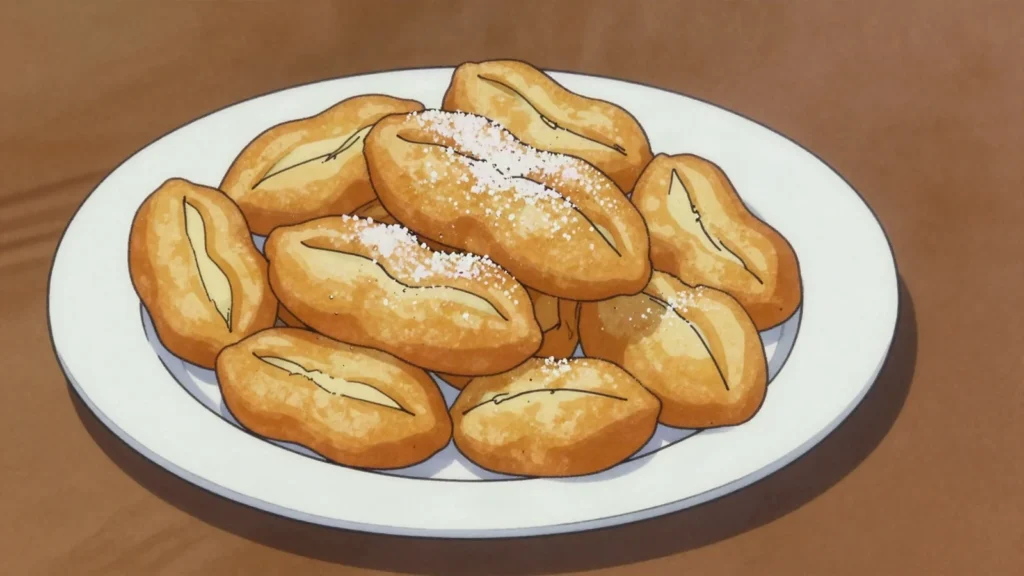
Verwurelter is a dessert from Luxembourg: twisted knot of fried dough dusted with sugar, eaten warm. Fried for Carnival, when households used up eggs and fat before Lent; the name means twisted or mixed up.
How long does Verwurelter take to make?
Verwurelter takes 40 min plus 1 hr resting of preparation and 25 min of cooking. The recipe makes about 24. It is rated medium to make.
What can I substitute in Verwurelter?
Yes, within limits. Kirsch or brandy in place of rum. Any neutral oil for frying.
What is the most important thing to get right in Verwurelter?
Beat the eggs with the sugar, then add the milk, melted butter, rum and lemon zest. Work in the flour, baking powder and salt to a soft but manageable dough. Keep it soft rather than firm, since verwurelter should be tender rather than crisp all through. The rum is traditional and it also helps the pastry absorb less fat.