
Ingredients
The chestnuts
- 1 kgfresh sweet chestnuts
- in their shells
- see the safety note on identification
- or 700 g vacuum-packed cooked chestnuts
- or 500 g unsweetened chestnut purée
For cooking the chestnuts
- 500 mlmilk
- or water
- 1vanilla pod, split
- or 1 teaspoon vanilla
- a pinch of salt
The purée
- 150 gicing sugar
- or to taste
- 50 gbutter, softened
- optional
- 2 tablespoonskirsch
- or rum, optional
- a little milk, to loosen
The meringue
- 3egg whites
- 170 gcaster sugar
- a pinch of salt
- or 6 bought meringue nests
The cream
- 400 mldouble cream
- well chilled
- 1 tablespoonicing sugar
- a little vanilla
Equipment
- a potato ricer
- or a vermicelles press
- or a piping bag with a very fine nozzle
- a food processor
- a fine sieve
Directions
- Steam builds inside the shell as they heat. The nut bursts and throws hot fragments. Cut through the shell with a sharp knife. Cut a cross or a long slit in the flat side. Cut through the shell and the inner skin. Do not skip this on any single nut. Score every chestnut as described above. Then boil them for about twenty minutes.
- Keep the rest hot while you peel. Wear gloves, since they are very hot. Remove the hard outer shell first. Then remove the thin brown inner skin. Put them in a pan with the milk. Add the split vanilla pod and a pinch of salt. Simmer them gently for twenty minutes. They should become completely soft.
- Drain them and keep the cooking milk. Add the icing sugar gradually. Taste as you go and stop when right. Add the butter if you are using it. Add the kirsch or the rum to it. Add reserved milk to loosen the purée. The purée must press into strands.
- Press a little through and look at it. Adjust with milk or with more purée. Beat the egg whites with a pinch of salt. Beat them to soft peaks first. Beat well between each addition. Continue until stiff and glossy. It should hold a firm peak on the whisk. Rub a little between your fingers. It should feel smooth, not gritty.
- Keep beating until it is smooth. Bake at one hundred degrees for ninety minutes. Turn the oven off and leave them inside. Let them cool in the oven completely. Use well chilled double cream. Whip it with the sugar and vanilla. Stop at soft peaks, not stiff ones. Put a meringue nest in each bowl or glass. Spoon whipped cream generously over it.
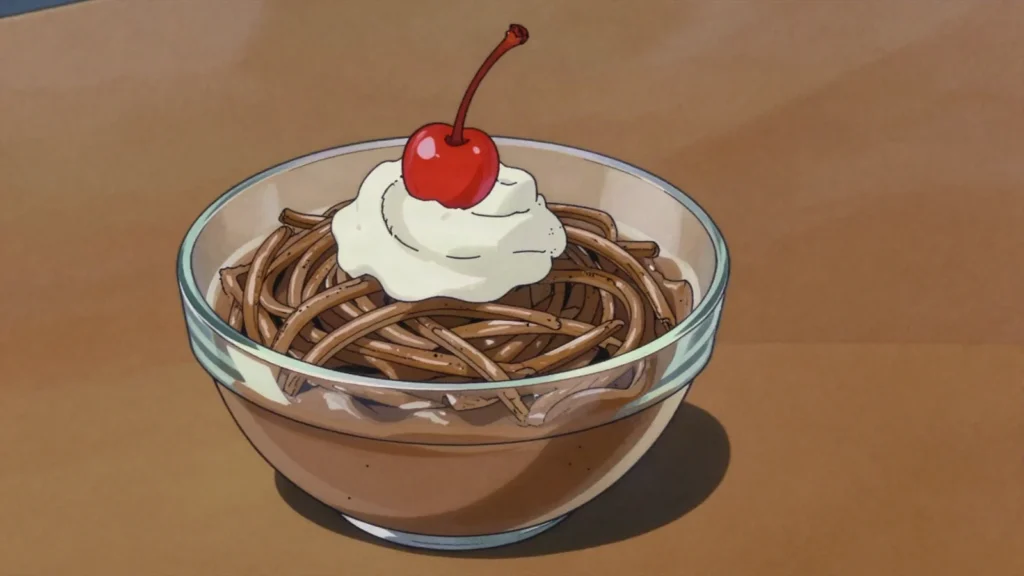
- Make a mound rather than a flat layer. Use the finest disc that it has. Press the purée through directly over the cream. Let the strands fall in a loose pile. Do not press them down or pack them.
- Serve it immediately once assembled. Within an hour it loses its crispness. Cover it, since it dries and darkens. Meringues keep two weeks in a tin. Keep them somewhere genuinely dry. Assembled vermicelles does not keep at all.
Technique
- Sweet chestnuts and horse chestnuts are entirely different plants and horse chestnuts are poisonous, causing vomiting and severe stomach pain. Sweet chestnuts have a pointed tip with a tassel, a flat side, and a densely spined husk holding several nuts; horse chestnuts are round and smooth with no point, in a husk with sparse thick spikes usually holding one. The leaves differ too — long and toothed versus hand-shaped fingers. Learn the difference from someone who knows, and buy from a shop if in any doubt.
- Always score chestnuts before cooking, cutting through both the shell and the inner skin. Steam builds inside an unscored nut and it bursts, throwing hot fragments — in ovens and open fires alike. One unscored nut is enough.
- Peel them while they are still hot, working in small batches and keeping the rest hot. The bitter inner skin, the pellicle, clings hard once the nuts cool and it must come off completely.
- Expect heavy losses. A kilo of chestnuts in the shell gives far less usable nut, which is exactly why bought purée and vacuum-packed chestnuts are popular — including in Swiss cafés.
- Test the purée consistency before committing the batch. It must be soft enough to press into strands and firm enough to hold them; press a little through first and adjust with milk.
- Do not press the strands down. The loose airy pile is the whole look of the dish.
- Stop the cream at soft peaks. Over-whipped cream turns grainy and buttery and cannot be rescued.
- Assemble at the last moment. The meringue softens under the cream within an hour, and the contrast of crisp and soft is the point of the dessert.
- Chestnuts were once a staple in the southern Swiss valleys, where chestnut flour made bread and polenta and the tree was called the bread tree. It fed people in mountain country where grain would not grow. Vermicelles is a later, richer, café use of the same harvest.
Substitutions
- Vacuum-packed cooked chestnuts replace fresh ones and remove all the peeling work. Unsweetened chestnut purée is easier still; reduce the added sugar accordingly.
- Water replaces milk for cooking the chestnuts, giving a lighter and less rich purée.
- Rum replaces kirsch, which is the traditional Swiss spirit here. Both can be left out.
- Bought meringue nests replace homemade, which is what most cafés use anyway.
- A potato ricer replaces the specialist vermicelles press; a piping bag with a very fine nozzle also works.
- The butter is optional; without it the purée is lighter and less glossy.
Variations
- Vermicelles served without meringue, as purée over cream alone, is a simpler and very common version.
- Some cafés serve it in a glass with layers of cream, meringue pieces and purée alternating.
- Mont Blanc is the closely related French and Italian dessert built on the same principle.
- Marrons glacés, candied chestnuts, are the other great use of the harvest and appear as decoration.
- A version with a splash of kirsch through the cream as well as the purée is made in some cafés.
- Chestnut purée is also served plain with cream as a simpler autumn dessert across the Alps.
History
An autumn dessert in Swiss cafés, made when chestnuts come down from the southern valleys.
Frequently asked questions
What is Vermicelles?
Vermicelles is a dessert from Switzerland: sweet chestnut purée piped in strands over meringue and cream. An autumn dessert in Swiss cafés, made when chestnuts come down from the southern valleys.
How long does Vermicelles take to make?
Vermicelles takes 45 minutes of preparation and 45 minutes of cooking. The recipe makes serves 6. It is rated medium to make.
What can I substitute in Vermicelles?
Yes, within limits. Vacuum-packed cooked chestnuts replace fresh ones and remove all the peeling work. Unsweetened chestnut purée is easier still; reduce the added sugar accordingly. Water replaces milk for cooking the chestnuts, giving a lighter and less rich purée. Rum replaces kirsch, which is the traditional Swiss spirit here. Both can be left out. Bought meringue nests replace homemade, which is what most cafés use anyway. A potato ricer replaces the specialist vermicelles press; a piping bag with a very fine nozzle also works. The butter is optional; without it the purée is lighter and less glossy.
What is the most important thing to get right in Vermicelles?
Steam builds inside the shell as they heat. The nut bursts and throws hot fragments. Cut through the shell with a sharp knife. Cut a cross or a long slit in the flat side. Cut through the shell and the inner skin. Do not skip this on any single nut. Score every chestnut as described above. Then boil them for about twenty minutes.