
Ingredients
The seeds
- 500 gbaobab seeds
- with their white pith still on
- from inside the dried pod
- or bought loose from a grocer
The syrup
- 300 gsugar
- 150 mlwater
- 1 teaspoonred food colouring
- or a natural red colouring
- see the note on colour
The spicing
- 1 teaspoonchilli powder
- or to taste
- half a teaspoon ground cardamom
- a pinch of ground black pepper
- a pinch of salt
- a little ground cinnamon, optional
Equipment
- a heavy pan
- a wooden spoon
- a tray lined with baking paper
- paper cones, to serve
Directions
- Wrap it in a cloth and hit it with a hammer. Wear eye protection if you use a hammer. Pick the seeds out of the fibrous interior. Discard the woody shell and the red fibres.
- Keep the seeds with their pith attached. Do not wash them at any point. Put the sugar and water in a heavy pan. Heat it gently until the sugar dissolves. Do not stir once it starts to boil.
- Swirl the pan gently instead of stirring. Boil it until it thickens noticeably. You want the soft ball stage roughly.
- Cool it for a full twenty minutes. Keep children well away from the pan. Take the pan off the heat first. Add the red colouring and stir it through. Add the chilli powder and the cardamom.
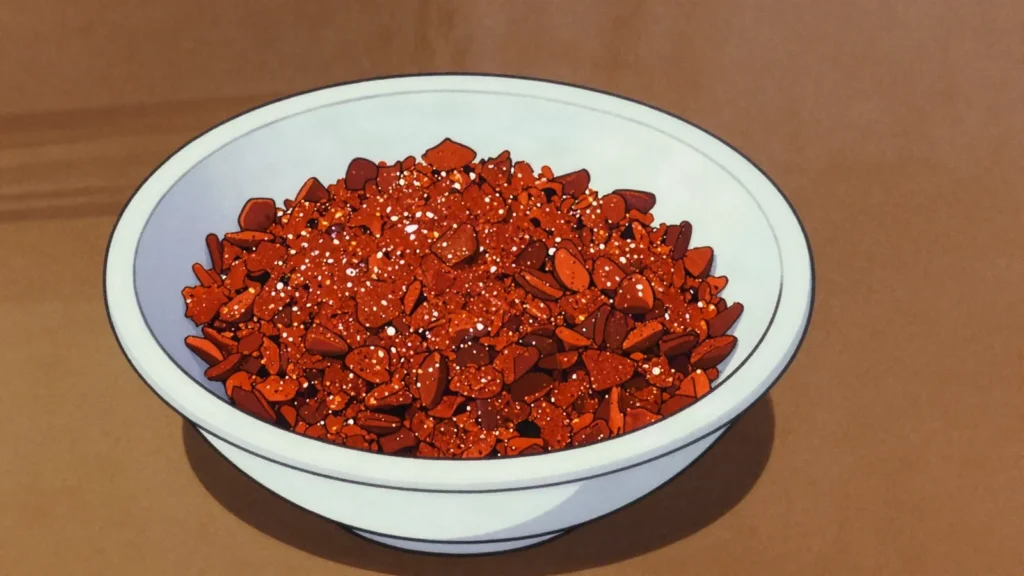
- Add the pepper, salt and cinnamon. Add them all at once and stir hard. Coat every single seed in the syrup. Keep stirring as the syrup cools. It turns from glossy to grainy and dry. Keep stirring until the seeds separate. They should not be stuck in a lump.
- Return the pan to a very low heat briefly. That helps the coating dry out further. Stir constantly so nothing burns. Spread them out in a single layer.
- Let them cool and dry completely. That cooling takes about an hour. Keep them somewhere cool and dry. Serve them in small paper cones. Roll a cone from a square of paper. Have somewhere ready to put them.
Technique
- The seeds are hard, small and not meant to be swallowed — the coating and pith are sucked off and the bare seed spat out. That makes them a genuine choking hazard for young children who do not know the sweet. Supervise children, explain clearly that the seed is spat out, and do not give it to very small children.
- Do not wash the seeds. The dry white pith clinging to them is the flavour of the sweet, and water dissolves it away completely.
- The bright red is added food colouring, not baobab. Baobab pith is white and sugar syrup is clear. It is not hidden and it is not a scandal — but the atlas states it. Beetroot or hibiscus give a natural red, and the sweet tastes identical with no colour at all.
- Keep stirring as the syrup cools. It should crystallise from glossy to grainy, which is what gives a dry coating rather than a sticky lump. Sticky seeds mean the syrup was boiled too thin.
- Boiling sugar syrup burns worse than boiling water because it is hotter and it sticks. Never taste it from the pan; cool a splash under running water for a full twenty minutes.
- Breaking a baobab pod takes force. Wrap it in cloth, use a hammer, and wear eye protection — shell fragments fly a surprising distance. Loose seeds with pith attached are sold and save the trouble.
- Baobab fruit dries on the tree, which is genuinely unusual: no processing is needed to preserve it. The pith is tart and high in vitamin C, and it has been eaten across Africa for millennia — the recent commercial trade in baobab powder did not discover it.
- The cardamom and cinnamon are not incidental. Zanzibar was a great spice trading centre, and that clove and spice economy rested on enslaved labour on plantations. The spice island reputation carries that history.
Substitutions
- Loose baobab seeds with pith, sold by African grocers, replace whole pods and save the breaking.
- Beetroot or hibiscus colouring replaces synthetic red, or leave the colour out entirely — the flavour is identical.
- Cardamom is characteristic; cinnamon, clove or a little ginger can join or replace it.
- The chilli can be reduced or left out for children, though a little heat is traditional.
- Brown sugar replaces white and gives a darker, more caramelly coating.
- Any small hard seed or nut can be coated the same way, though it will not be ubuyu.
Variations
- A version without chilli, sweet and spiced only with cardamom, is made for younger children.
- Some sellers use a much darker syrup with more spice and less colouring.
- Baobab pith is also mixed with water and sugar into a drink across the Sahel, sold as bouye or similar.
- Baobab powder scraped from the seeds is used in porridges and in ice cream.
- Related coated-seed sweets are sold across coastal East Africa under local names.
- Some Zanzibar sellers add a little tamarind to the syrup for extra sourness.
History
Sold in paper cones outside Zanzibar schools and at Forodhani, sucked until the seed is bare.
Frequently asked questions
What is Ubuyu?
Ubuyu is a snack from Tanzania: baobab seeds rolled in red sugar syrup with chilli and cardamom. Sold in paper cones outside Zanzibar schools and at Forodhani, sucked until the seed is bare.
How long does Ubuyu take to make?
Ubuyu takes 20 minutes of preparation and 20 minutes, plus drying of cooking. The recipe makes makes about 500 g. It is rated medium to make.
What can I substitute in Ubuyu?
Yes, within limits. Loose baobab seeds with pith, sold by African grocers, replace whole pods and save the breaking. Beetroot or hibiscus colouring replaces synthetic red, or leave the colour out entirely — the flavour is identical. Cardamom is characteristic; cinnamon, clove or a little ginger can join or replace it. The chilli can be reduced or left out for children, though a little heat is traditional. Brown sugar replaces white and gives a darker, more caramelly coating. Any small hard seed or nut can be coated the same way, though it will not be ubuyu.
What is the most important thing to get right in Ubuyu?
Keep the seeds with their pith attached. Do not wash them at any point. Put the sugar and water in a heavy pan. Heat it gently until the sugar dissolves. Do not stir once it starts to boil.